
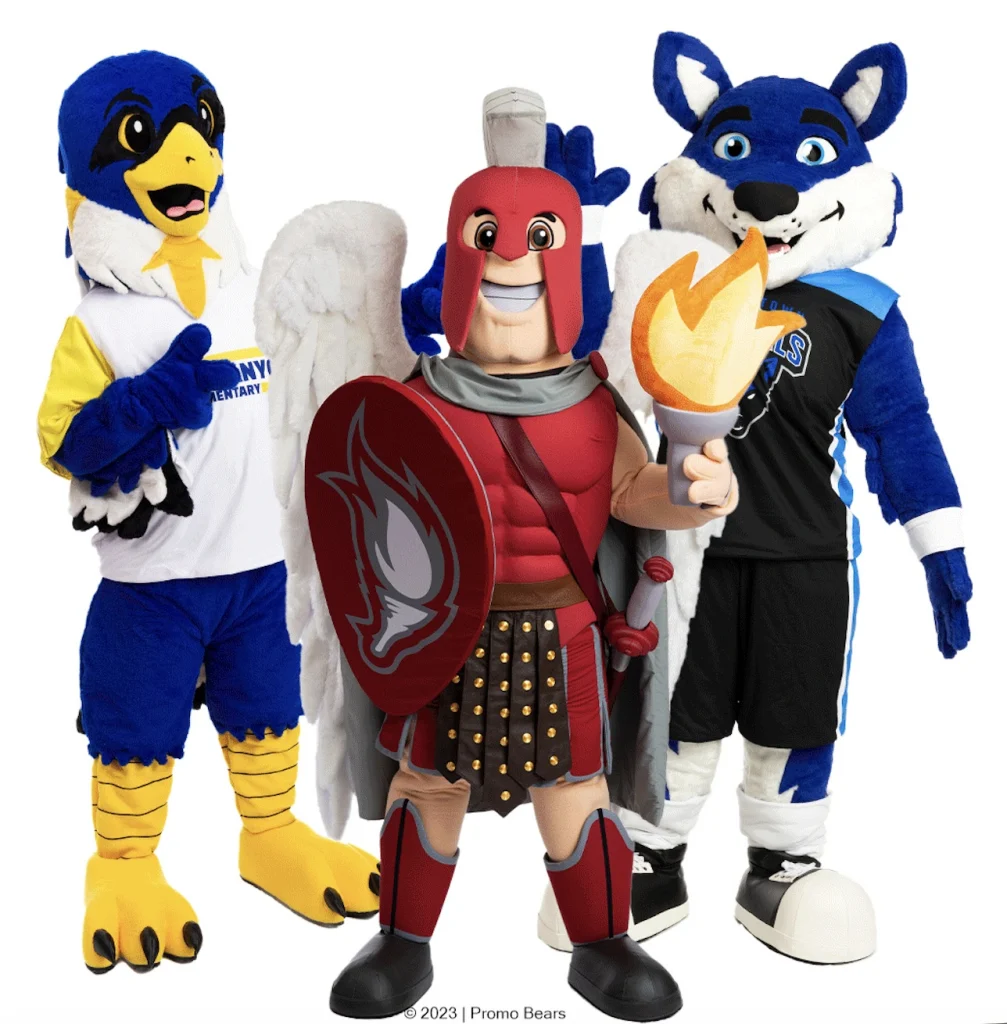
The most effective branded merchandise alternatives in 2026 go well beyond the standard pen or tote bag. Custom mascot costumes, plush toys, inflatables, enamel pins, and character-based merchandise consistently outperform generic giveaways when it comes to brand recall, emotional connection, and long-term visibility. The right choice depends on your goals, your audience, and how you plan to activate your brand. Below, we walk through the key questions every marketing manager should be asking right now.
Which branded merchandise formats actually drive brand recall?
The formats that drive the strongest brand recall are those that create an emotional or sensory experience. Items people interact with repeatedly, display publicly, or associate with a memorable moment tend to stick. Generic branded merchandise that sits in a drawer does not. The most effective formats in 2026 are those that feel personal, useful, or genuinely fun to own.
Research consistently shows that three-dimensional, character-driven merchandise outperforms flat printed items in recall tests. When someone receives a custom plush toy, a mascot stress ball, or a branded inflatable, the item triggers a memory of the brand every time they see or use it. That repeated exposure is what builds recognition over time.
- Custom plush toys: High perceived value, long shelf life, and strong emotional resonance, especially with consumer-facing brands
- Mascot-based merchandise: Turns your brand character into a tangible object that fans and customers want to keep
- Enamel pins and keychains: Wearable and collectible, they travel with your audience and generate organic visibility
- Stress balls in custom shapes: Desk items with daily touchpoints, particularly effective in B2B and office environments
- Giant inflatables: Impossible to ignore at events, creating instant brand presence and social media moments
The common thread across all high-recall formats is distinctiveness. If your merchandise looks like something anyone could have ordered from a catalog, it will be forgotten quickly.
What are the best alternatives to traditional branded giveaways?
The best alternatives to traditional branded giveaways are custom character merchandise, experiential products, and items tied to a mascot or brand identity. Instead of giving away another branded mug or notebook, forward-thinking brands are investing in products that tell a story, spark conversation, and generate social sharing on their own.
Traditional giveaways like pens, lanyards, and generic tote bags have their place, but they rarely move the needle on brand recognition. In 2026, the brands that stand out are the ones treating merchandise as a brand experience rather than a throwaway item.
Some of the strongest alternatives worth considering include custom plush toys that bring a mascot or character to life, mascot stickers that fans actually want to put on their laptops and water bottles, shoe charms and enamel pins that people wear proudly, and car air fresheners in a branded shape that stay visible for weeks. These are not novelty items. They are strategic touchpoints that keep your brand in front of your audience long after the event is over.
When you compare promotional tools side by side, the items with the highest longevity and the strongest emotional pull are almost always the ones rooted in a brand character or a distinctive shape rather than a logo slapped on a standard product.
How do custom mascots compare to standard promotional products?
Custom mascots outperform standard promotional products in nearly every measurable dimension of brand engagement. A mascot is not just a product. It is a living representation of your brand that can appear across merchandise, events, digital content, and activations, creating a consistent and recognizable identity that standard giveaways simply cannot achieve.
Standard promotional products are transactional. They serve a function and carry a logo. Custom mascots, by contrast, carry personality. They give your brand a face, a character, and a story. That distinction matters enormously when you are trying to build long-term brand loyalty rather than just short-term visibility.
From a practical standpoint, a custom mascot costume becomes the centerpiece of events and activations, while the mascot’s likeness can be reproduced across plush toys, stress balls, stickers, inflatables, and keychains, creating a cohesive merchandise ecosystem. This multiplier effect is something no standard promotional product can replicate.
Production timelines are worth factoring in when planning. A custom mascot costume typically takes 12 to 16 weeks from design approval to delivery. Mascot-based merchandise like plush toys runs 12 to 18 weeks depending on quantity and shipping method, while smaller items like mascot stickers can be ready in approximately 4 weeks. Planning ahead gives you the full range of options.
What types of branded merchandise work best for events and activations?
For events and activations, the branded merchandise that works best combines high visibility with high takeaway value. You want items that create impact on the day and continue working for your brand long after the event ends. The most effective event merchandise falls into two categories: presence pieces that draw attention on site, and takeaway pieces that travel home with your audience.
Presence pieces for on-site impact
Giant mascot inflatables are among the most powerful presence tools available. Ready in as little as 3 to 4 weeks, they create an unmistakable visual anchor at any event and generate organic social media content without any additional effort. Inflatable arches and player tunnels serve a similar function for sporting events and brand activations, turning your brand into part of the experience rather than a logo on a banner.
A custom mascot costume worn by a brand ambassador brings your character to life in a way that no static display can match. It invites interaction, photo opportunities, and a genuine emotional connection with your audience.
Takeaway pieces for lasting recall
On the takeaway side, the strongest performers are items that feel premium and personal. Custom plush toys, enamel pins, and shoe charms all have strong collectible appeal. Temporary tattoos are a fun, low-cost option for family-friendly events and can be produced in 3 to 4 weeks. Beach balls, frisbees, and drawstring bags work well for outdoor activations where participants are already in a playful mindset.
The key is matching the merchandise to the event’s energy. A corporate conference calls for something polished like a custom keychain or a well-crafted stress ball. A sports sponsorship activation calls for something bold, wearable, or collectible.
How do you measure the ROI of branded merchandise?
You measure the ROI of branded merchandise by tracking a combination of brand awareness metrics, engagement data, and downstream business outcomes. Unlike digital advertising, merchandise does not come with a built-in click-through rate, but that does not mean it is unmeasurable. The right metrics depend on your goals, but there are consistent indicators that show whether your investment is working.
For event-based merchandise, start with reach. How many people received the item, and how many of those items are likely to remain in use or on display? A custom plush toy that sits on someone’s desk for a year generates far more impressions than a pen that runs out of ink in a week. Longevity is a core ROI driver that is easy to overlook when comparing promotional tools purely on unit cost.
Social media is one of the clearest signals for character-driven merchandise. If people photograph your mascot costume, share your inflatable, or post their enamel pin collection, that organic reach has real monetary value. Tracking branded hashtags and mentions before and after an activation gives you a concrete picture of earned media generated by your merchandise investment.
For B2B contexts, tie merchandise to pipeline metrics where possible. If you distribute custom merchandise at a trade show, track how many of those contacts convert to qualified leads or meetings. That attribution is not always clean, but it gives you a directional read on whether the merchandise contributed to business outcomes.
What should you look for when choosing a branded merchandise supplier?
When choosing a branded merchandise supplier, look for a partner that offers end-to-end service, transparent pricing from the start, and a proven track record across the specific product types you need. The supplier’s ability to handle your project from concept through delivery without handoffs or gaps is one of the most important factors to evaluate, especially for complex or high-visibility merchandise.
A few non-negotiable criteria to apply when evaluating suppliers:
- Free concept illustration before commitment: Any credible supplier should be willing to show you what your product will look like before you sign anything. Unlimited revisions until the design is right is the standard you should expect.
- Dedicated project management: One point of contact who owns your project from start to finish prevents the miscommunication and delays that come from fragmented vendor relationships.
- Quality control with result photos: Before your order ships, you should receive photos of the finished product for final approval. This is standard practice among top-tier suppliers.
- Clear production timelines: Vague estimates lead to missed deadlines. A reliable supplier gives you specific timelines for each product type and flags rush options when needed.
- Range across product types: If you need a mascot costume, plush toys, inflatables, and small merchandise for the same campaign, working with one supplier who can deliver all of it saves time, ensures consistency, and simplifies your vendor management.
References and a portfolio of real client work matter too. A supplier who has delivered for globally recognized brands across multiple industries brings a level of proven capability that a newer or more generic vendor cannot match.
How Promo Bears helps with branded merchandise
We work with marketing managers and brand directors across North America who need a reliable, full-service partner for custom merchandise that actually makes an impact. From custom mascot costumes and giant inflatables to plush toys, stress balls, enamel pins, and stickers, we handle everything in-house from the first sketch to the final shipment.
Every project starts with a free concept illustration based on your design or logo, with unlimited revisions until it is exactly right. No upfront commitment, no vague estimates. Here is what you get when you work with us:
- A dedicated project manager who owns your project from concept to delivery
- Fully custom shapes and PMS color matching across all product types
- Production timelines you can plan around, from 3 to 4 weeks for inflatables to 12 to 16 weeks for mascot costumes
- Quality control with result photos before your order ships
- A proven track record with over 4,000 mascots created for brands including NASA, Amazon, Walmart, and Red Bull
If you are ready to explore what custom branded merchandise can do for your next campaign or activation, get a free quote and we will put together a concept and a fixed price based on your exact needs.
Frequently Asked Questions
How far in advance should I order branded merchandise for an upcoming event?
Lead time depends heavily on the product type you need. Smaller items like stickers and temporary tattoos can be ready in 3 to 4 weeks, while custom plush toys typically require 12 to 18 weeks and mascot costumes need 12 to 16 weeks from design approval. As a general rule, start conversations with your supplier at least 4 to 5 months before your event if mascot costumes or plush toys are involved, and never assume rush production is available without confirming first.
Can I use the same mascot character across multiple merchandise formats without losing visual consistency?
Yes, and this is actually one of the biggest strategic advantages of building your brand around a mascot. A well-designed character can be faithfully reproduced across plush toys, stress balls, enamel pins, inflatables, stickers, and a wearable costume, creating a cohesive merchandise ecosystem. The key is working with a single supplier who handles all formats, since consistency in color matching and character proportions is much easier to maintain when one team owns the entire project.
What is a realistic budget range for a custom mascot costume versus mascot-based merchandise?
Custom mascot costumes are a premium investment, typically ranging from a few thousand dollars upward depending on complexity, materials, and size, while mascot-based merchandise like plush toys and enamel pins scales more affordably with quantity. The strongest ROI often comes from pairing a mascot costume for high-impact events with a range of lower-cost takeaway merchandise that extends the character’s reach. Getting a fixed quote based on your specific design is the most reliable way to budget accurately, since pricing varies significantly by product type and order volume.
What common mistakes should I avoid when ordering custom branded merchandise for the first time?
The most common mistakes are ordering too late, underestimating the importance of a design review process, and choosing products based purely on unit cost rather than longevity and engagement potential. Skipping the concept illustration stage or rushing through revisions often leads to merchandise that does not accurately represent the brand, which defeats the purpose entirely. Always request result photos before your order ships and make sure production timelines are confirmed in writing so there are no surprises close to your event date.
Is character-driven merchandise only effective for consumer brands, or does it work in B2B contexts too?
Character-driven merchandise works well in B2B contexts, though the execution looks slightly different. In B2B settings, mascot stress balls, custom keychains, and desk-friendly plush toys are particularly effective because they create daily brand touchpoints in office environments where your prospects and clients spend most of their time. The emotional engagement that a distinctive, well-crafted item generates is not exclusive to consumer audiences — decision-makers respond to memorable, high-quality merchandise just as strongly, and a unique item is far more likely to earn a spot on a desk than another branded pen.
How do I choose between producing a mascot costume versus investing in mascot-based merchandise if my budget is limited?
If your budget requires a choice, consider where your brand gets the most exposure. A mascot costume is a high-impact tool for live events and activations but requires a person to wear it and has limited reach beyond those moments. Mascot-based merchandise like plush toys, stickers, and enamel pins travels with your audience and generates ongoing impressions at a lower per-unit cost. Many brands start with a strong merchandise line to test audience response to the character before investing in a full costume, which is a practical way to validate the concept before committing to a larger production.
Can branded merchandise be used as part of a digital or social media campaign, not just at physical events?
Absolutely, and some of the most effective merchandise campaigns in 2026 are designed with social sharing as a primary objective. Sending custom plush toys, enamel pins, or limited-edition merchandise to influencers, loyal customers, or media contacts generates organic unboxing content and social posts that extend your brand’s reach far beyond any single event. Building in a branded hashtag, a collectible element, or a visually distinctive design gives recipients an additional reason to share, turning your merchandise investment into a content generation engine.