
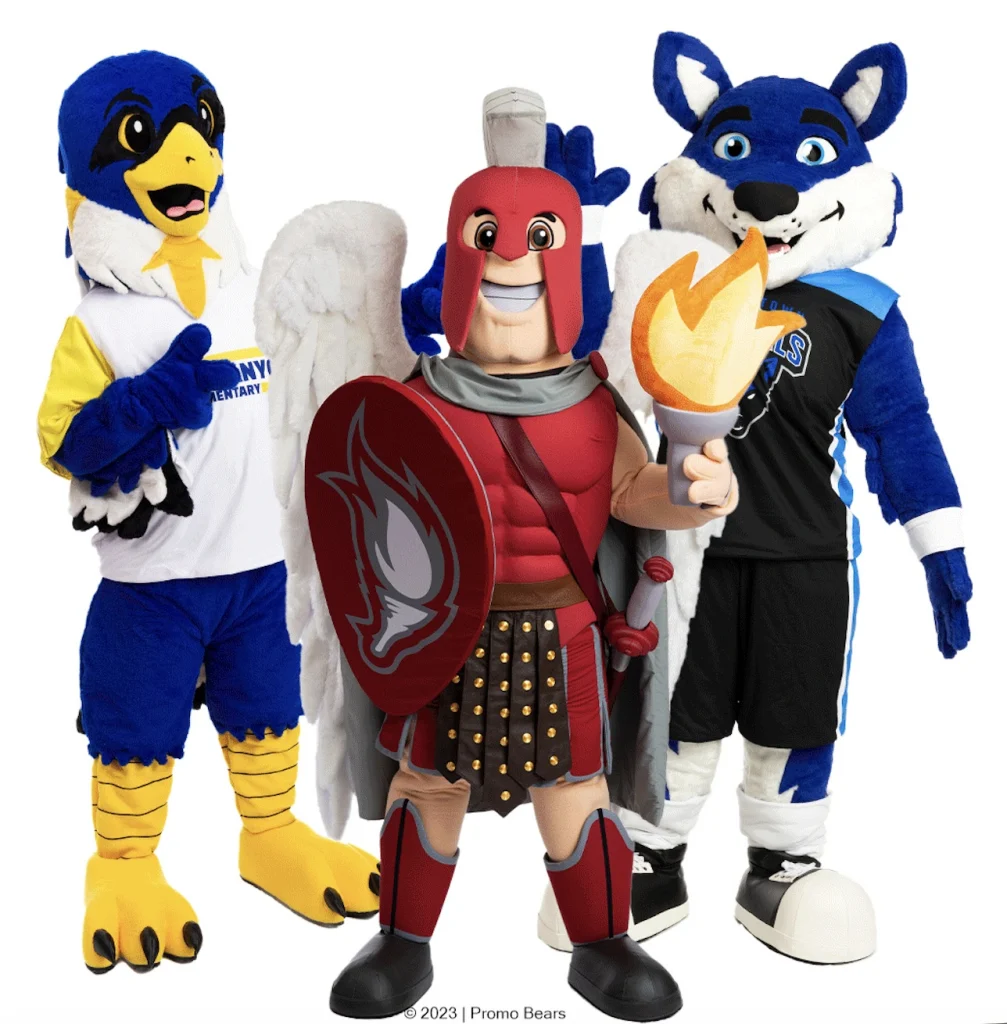
A 360-degree promotional tool for brand experience is a fully integrated approach where every branded touchpoint — from a mascot costume at a live event to a stress ball on someone’s desk — works together to reinforce the same identity, message, and feeling. Rather than relying on a single product or campaign, a 360-degree strategy surrounds your audience with consistent brand moments across multiple formats and settings. The sections below unpack what that actually looks like in practice and how to build one that delivers real results.
What makes a promotional tool truly ‘360-degree’?
A promotional tool earns the label “360-degree” when it contributes to a brand experience that reaches people at multiple touchpoints, across different contexts, and through more than one format. It is not about one impressive product. It is about a connected ecosystem where every item reinforces the same brand identity and drives the same emotional response.
Think of it this way: a branded stress ball handed out at a trade show is a useful giveaway. But when that stress ball matches the character of your mascot costume on stage, connects to the inflatable arch at the entrance, and ties back to the plush toy available in your online store, it becomes part of something bigger. Each product amplifies the others.
The core qualities of a truly 360-degree promotional tool include:
- Consistency across all branded items in terms of color, character, and tone
- Versatility to show up in different environments, from events and retail to digital campaigns
- Memorability that sticks with your audience long after the initial interaction
- Scalability so the same brand identity can live on a keychain or a giant inflatable without losing impact
When you compare promotional tools through this lens, the ones that perform best are rarely the flashiest in isolation. They are the ones that fit seamlessly into a broader brand strategy.
How does a 360-degree approach improve brand experience?
A 360-degree approach improves brand experience by creating repeated, consistent impressions that build familiarity and emotional connection over time. When someone encounters your brand through multiple formats, they recognize it faster, trust it more, and are more likely to engage with it. Repetition through variety is what turns awareness into loyalty.
From a marketing standpoint, branded merchandise alternatives like plush toys, inflatables, and custom mascot costumes do something that digital advertising alone cannot. They create physical, tangible moments that people remember. A child who takes home a plush version of your mascot after a brand event will see your character every day. A stress ball on a desk is a daily reminder of your brand without any additional spend on your part.
The improvement in brand experience comes from three directions at once:
- Emotional engagement: Physical products trigger feelings that screens rarely do. Holding something, wearing something, or playing with something creates a personal connection.
- Extended reach: When people carry, use, or display branded merchandise, they become walking ambassadors for your brand in environments you never paid to enter.
- Reinforced recognition: Seeing the same character or visual identity across multiple formats trains the brain to associate that look with your brand automatically.
This is why marketing managers who invest in a cohesive set of promotional products consistently see stronger returns than those who rely on a single campaign or product type.
What types of products make up a 360-degree promotional strategy?
A 360-degree promotional strategy typically includes a mix of large-scale brand anchors, mid-range engagement products, and everyday carry items. Together, they cover different audience touchpoints and price points, making your brand visible at events, in homes, and in daily life.
Here is how the product layers tend to work in practice:
Large-scale brand anchors
These are the products that create a strong visual impact at events, retail environments, and public spaces. Giant mascot inflatables, inflatable arches, and custom mascot costumes fall into this category. They attract attention from a distance and set the tone for the entire brand experience. A giant mascot inflatable, for example, can be ready in as little as 3 to 4 weeks and makes an immediate statement at any outdoor event or stadium.
Mid-range engagement products
Plush toys, stress balls, and drawstring bags sit in the middle of the strategy. They are substantial enough to feel like a real gift but practical enough to be used regularly. Custom stress balls, for instance, take 10 to 12 weeks to produce and are a popular choice for trade shows and corporate events because they stay on desks and in offices long after the event ends. These products keep your brand in front of people during their everyday routines.
Everyday carry items
Keychains, enamel pins, stickers, and mascot stickers round out the strategy. These smaller items are cost-effective to produce in volume and easy to distribute widely. Mascot stickers, for example, take around 4 weeks and are a simple way to extend your brand into spaces you cannot physically reach. When someone puts your mascot sticker on their laptop or water bottle, your brand travels with them everywhere they go.
Why do brands use mascots as the anchor of their promotional ecosystem?
Brands use mascots as the anchor of their promotional ecosystem because a mascot gives every other product a consistent visual identity to connect back to. When your mascot costume, plush toy, stress ball, and inflatable all share the same character, your entire product range tells one coherent story. The mascot becomes the face that ties everything together.
Mascots also do something that logos and taglines struggle to do on their own: they create an emotional connection. A well-designed mascot feels approachable, memorable, and fun. People respond to characters in a way they simply do not respond to abstract branding elements. That emotional pull is what makes mascots so effective as the centerpiece of a broader promotional strategy.
From a practical standpoint, a mascot gives you a scalable asset. The same character can appear on a giant inflatable at a stadium, a stress ball at a trade show, a plush toy in a retail store, and a sticker on a product package. Each format serves a different purpose, but they all reinforce the same brand identity. That consistency is what builds recognition over time.
Custom mascot costume production typically takes 12 to 16 weeks, which reflects the level of detail and craftsmanship involved. Features like 3D realistic eyes and a built-in ventilation system make the costume comfortable to wear and visually striking to watch, which matters when your mascot is the face of your brand at live events.
Which industries benefit most from 360-degree brand experience tools?
The industries that benefit most from 360-degree brand experience tools are those where emotional engagement, audience loyalty, and repeat interaction drive business results. Retail, sports, entertainment, FMCG, and hospitality consistently get the strongest returns from this type of strategy because their audiences are already primed to connect with brands on a personal level.
In sports, for example, mascots and branded merchandise are foundational to the fan experience. A team that invests in a high-quality mascot costume, matching plush toys, and branded giveaways creates a sense of belonging that keeps fans coming back. The merchandise becomes part of the identity fans carry with them outside the stadium.
In retail and FMCG, branded merchandise alternatives like custom inflatables and character-driven promotional products help brands stand out at the point of sale and at trade events. When you compare promotional tools in these sectors, the ones that generate the most word of mouth are almost always the ones with a strong visual character at their core.
Corporate services and hospitality brands also benefit significantly, particularly for client events, employee engagement, and conference presence. A branded mascot or set of custom merchandise creates a more memorable impression than a standard booth setup, and the products continue working for your brand long after the event is over.
How do you choose the right 360-degree promotional partner?
The right 360-degree promotional partner is one that can handle every layer of your brand experience strategy under one roof, from concept and design through to production and delivery. Working with a single partner who understands how mascot costumes, inflatables, plush toys, and smaller merchandise all connect ensures consistency across every product you put in front of your audience.
When evaluating potential partners, focus on these criteria:
- Creative capability: Can they start from your logo or design idea and build a complete character? Look for partners who offer a free concept illustration before any financial commitment.
- Product range: Do they produce everything you need, from large-scale inflatables to everyday carry items? A true 360-degree partner covers the full spectrum.
- Quality standards: Ask about materials, production processes, and quality control. Products that represent your brand need to look and feel premium.
- Transparency on timelines and pricing: A reliable partner gives you clear production timelines and fixed quotes based on your specific design, not vague estimates.
- Dedicated support: A project manager who oversees your order from start to finish is a strong signal that the partner takes your project seriously.
- Track record: Look for experience with clients at a similar scale to your organization and a portfolio that demonstrates range and quality.
One practical tip: always ask for a fixed quote based on your exclusive design before committing. A partner who can only offer ballpark figures is not yet ready to be a strategic vendor for your brand.
How Promo Bears helps with your 360-degree brand experience
We built Promo Bears specifically for brands that take their promotional strategy seriously. Whether you are starting with a custom mascot costume or building out a full product ecosystem, we handle every step from concept to delivery. Here is what working with us looks like in practice:
- A free concept illustration based on your logo or design idea, with unlimited revisions until it is exactly right
- Custom mascot costumes with 3D realistic eyes and a built-in ventilation system, ready in 12 to 16 weeks
- Giant mascot inflatables that create a powerful visual presence at events, ready in 3 to 4 weeks
- Stress balls, plush toys, keychains, stickers, and more to extend your brand into everyday life
- A dedicated project manager who oversees every order from design approval to delivery at your door
With over 4,000 mascots created for clients including NASA, Amazon, and Walmart, we know what it takes to deliver a brand experience that actually works. If you are ready to build a promotional strategy that covers every touchpoint, get your free quote and let us show you what is possible.
Frequently Asked Questions
How much budget should I allocate across the different layers of a 360-degree promotional strategy?
There is no single formula, but a practical starting point is to allocate the largest portion of your budget to your large-scale anchor products (like a mascot costume or inflatable) since these define your brand’s visual identity across everything else. Mid-range engagement products like plush toys and stress balls typically take the next share, as they offer the best balance of perceived value and daily visibility. Everyday carry items like stickers and keychains should be produced in the highest volume but cost the least per unit, making them ideal for wide distribution at events and in packaging.
What if we don't have a mascot yet — can we still build a 360-degree promotional strategy?
Absolutely, and in many ways starting without an existing mascot is an advantage because you can design one from scratch with a 360-degree strategy in mind. A well-designed mascot created specifically to scale across costumes, inflatables, plush toys, and small merchandise will always perform better than retrofitting an existing logo or character. Look for a promotional partner who offers a free concept illustration so you can develop and refine the character before committing to full production.
How do I maintain visual consistency across products made at different scales and by different processes?
The key is to establish a detailed brand character guide before any product goes into production — this should include exact color codes (Pantone references are ideal), defined proportions, approved expressions, and any design elements that must appear on every product. Share this guide with your promotional partner upfront and request pre-production samples or digital mockups for approval before manufacturing begins. Working with a single partner who produces all your products is the most reliable way to ensure consistency, since they control the same design file across every format.
What are the most common mistakes brands make when launching a 360-degree promotional campaign?
The most common mistake is treating each promotional product as a standalone item rather than as part of a connected system — this leads to inconsistent colors, characters, and messaging that confuse rather than reinforce your brand. Another frequent error is underestimating production lead times, particularly for mascot costumes (12–16 weeks) and stress balls (10–12 weeks), which can leave brands scrambling ahead of key events. Finally, many brands focus all their budget on the event itself and neglect the everyday carry items that keep the brand visible long after the event is over.
Can a 360-degree promotional strategy work for smaller brands or startups, or is it only practical for large organizations?
A scaled-down version of a 360-degree strategy is absolutely achievable for smaller brands and startups — the principle of consistency across touchpoints applies regardless of budget size. A startup might begin with a mascot sticker, a small run of plush toys, and a single inflatable for events, then expand the ecosystem as the brand grows. The important thing is that every product, however few, shares the same character and visual identity so that the foundation is already in place when you are ready to scale.
How do we measure the ROI of a 360-degree promotional strategy compared to a single-product campaign?
Measuring ROI on a 360-degree strategy requires tracking across multiple channels rather than attributing results to a single product — useful metrics include brand recall surveys, social media mentions featuring your mascot or merchandise, booth traffic at events, and repeat engagement rates from audiences who received products. For everyday items like stress balls and stickers, the ongoing impressions they generate (often called cost-per-impression) are typically far lower than digital advertising over the same period. Comparing pre- and post-campaign brand awareness scores among your target audience gives the clearest picture of whether the full ecosystem is delivering results.
How far in advance should we start planning a 360-degree promotional campaign for a major event?
For a major event like a trade show, stadium activation, or product launch, planning should begin at least 20 to 24 weeks in advance to accommodate the longest production timelines — custom mascot costumes alone require 12 to 16 weeks. Starting early also gives you time to go through concept revisions, approve samples, and arrange logistics without rushing any stage of production. A good rule of thumb is to work backwards from your event date, confirm your final designs at least 16 weeks out, and build in a two-week buffer for shipping and any last-minute adjustments.