
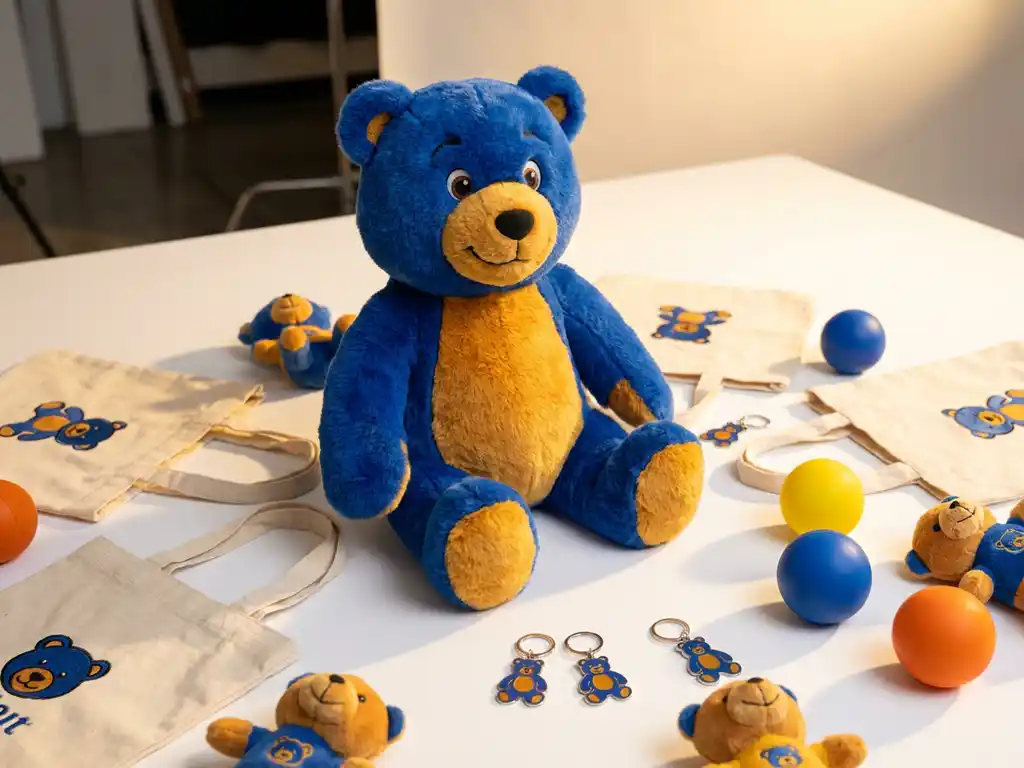
A classic example of swag is a branded tote bag, but the term covers a much wider range of promotional items. In a business context, swag refers to any branded merchandise given away to promote a company, event, or cause. From custom stress balls and logoed notebooks to branded apparel and novelty keychains, swag is a tangible extension of your brand identity. Below, we break down the most common questions marketers ask when planning their company swag strategy.
What counts as swag in a promotional context?
In a promotional context, swag is any branded physical item given to customers, prospects, employees, or event attendees at no cost to the recipient. The word itself is often used as an acronym for “Stuff We All Get,” though it has evolved into a broader marketing term. The defining feature is that the item carries a brand message and is distributed to build awareness, loyalty, or goodwill.
Swag can range from everyday utility items like pens and mugs to more creative, fully custom pieces that reflect a brand’s personality. What makes something count as swag is the combination of brand visibility and the act of giving it away. If it has your logo on it and you hand it to someone for free, it qualifies.
The best company swag serves a dual purpose: it delivers genuine value to the person receiving it while keeping your brand visible long after the initial interaction.
What are the most popular examples of swag for brands and events?
The most popular examples of company swag include branded apparel, drinkware, stationery, and novelty items. These categories have remained consistently popular because they are practical, visible, and easy to distribute at scale. However, the most memorable swag tends to be items that are either highly useful or genuinely fun to interact with.
Here are some of the most widely used swag items across industries:
- Branded apparel: T-shirts, hoodies, and caps turn recipients into walking billboards for your brand.
- Drinkware: Reusable bottles and branded mugs are kept and used daily, maximizing logo exposure.
- Stationery: Notebooks, pens, and sticky notes are practical and appreciated in office environments.
- Tech accessories: USB drives, phone stands, and charging cables feel premium and relevant.
- Novelty and tactile items: Custom stress balls, fidget toys, and squeezable branded shapes create a physical, memorable connection with your brand.
- Tote bags: Sustainable and reusable, they offer large print areas and broad appeal.
- Keychains and lanyards: Low-cost, high-frequency items that stay with recipients for months or years.
In 2026, brands are increasingly moving away from generic giveaways toward items that feel intentional and on-brand. The shift is clear: people keep swag that feels useful or special, and they discard what feels like filler.
What’s the difference between cheap swag and high-impact branded merchandise?
The difference between cheap swag and high-impact branded merchandise comes down to perceived value, customization quality, and how well the item represents the brand. Cheap swag is forgettable: it often features a standard shape with a small printed logo, poor material quality, and no real connection to the brand’s identity. High-impact merchandise feels intentional, useful, and distinctly on-brand.
Cheap swag tends to end up in a drawer or a bin within days. High-impact swag gets used, shared, and talked about. The distinction is not always about price per unit. It is about how much thought went into the design, the material, and its relevance to the audience.
A few practical markers that separate high-impact company swag from throwaway giveaways:
- The item reflects the brand’s visual identity, not just a logo slapped on a generic product.
- It is made from durable materials that hold up over time.
- The design is fully custom, not a standard shape with a one-color print.
- It solves a real need or creates a genuinely enjoyable experience for the recipient.
- Colors are accurate and consistent with brand guidelines, including PMS color matching where relevant.
The bottom line: high-impact swag is an investment in brand perception. Cheap swag can actually do more harm than good if it signals low quality to the very audience you are trying to impress.
What swag works best for corporate events and trade shows?
For corporate events and trade shows, the best swag is portable, practical, and visually distinctive. Attendees pick up dozens of items at these events, so your branded merchandise needs to earn its place in their bag. Items that are lightweight, immediately useful, or genuinely fun to interact with consistently outperform bulky or generic alternatives.
Trade show environments are competitive by nature. Your company swag needs to stop people in their tracks and create a reason to engage with your booth. Tactile items work especially well here because they invite physical interaction and create a moment of connection.
Stress balls and custom-shaped foam items are a strong choice for trade shows because they are lightweight, cost-effective at scale, and endlessly customizable. A stress ball shaped like your product, mascot, or logo becomes a conversation starter that people actually pick up and play with. That kind of engagement is hard to achieve with a flat printed item.
For higher-end corporate events, premium drinkware, branded tech accessories, or custom plush items tend to signal quality and leave a stronger lasting impression. The key is matching the swag to the event’s tone and your audience’s expectations.
How do you choose the right swag for your brand?
Choosing the right company swag starts with understanding your audience, your distribution context, and the brand impression you want to leave. The best swag feels like a natural extension of your brand rather than an afterthought. A few clear criteria will help you narrow down the right direction.
Follow these steps to make a confident swag decision:
- Define your audience: Who will receive this item? A healthcare audience has different expectations than a tech startup crowd or a university student base.
- Set your goal: Are you driving brand awareness, rewarding loyalty, generating booth traffic, or supporting an internal campaign? The goal shapes the product.
- Match the item to the occasion: Trade show giveaways should be portable and immediate. Employee gifts can be more substantial. Event merchandise should connect to the theme.
- Prioritize customization over convenience: A fully custom item that reflects your brand always outperforms a standard product with a printed logo. The extra effort shows.
- Think about longevity: Will recipients keep this item for a week or a year? The longer it stays in use, the more brand impressions it generates.
- Plan your timeline: Custom swag takes time to produce. Fully custom items like shaped stress balls require 10 to 12 weeks from design approval to delivery, so plan ahead.
- Request a concept before committing: Any reputable supplier should offer a free concept illustration before you place an order. This protects your investment and ensures the final product matches your vision.
The right swag does not need to be expensive. It needs to be thoughtful, well-made, and genuinely relevant to the people receiving it.
How Promo Bears helps you create company swag that actually works
We specialize in fully custom promotional merchandise that goes far beyond the standard logo-on-a-product approach. Whether you need standout items for a trade show, a corporate event, or an ongoing brand campaign, we bring over 19 years of experience in custom design and production to every project.
Here is what makes working with us different:
- Every item is built 100% to your design, not adapted from a generic template.
- We offer PMS color matching to ensure your brand colors are always accurate.
- Every project starts with a free concept illustration and includes unlimited revisions.
- A dedicated project manager guides your order from design to delivery.
- We ship worldwide, with clients across the USA, Canada, Europe, Australia, and beyond.
Our custom stress balls are a standout example of high-impact company swag done right. Crafted from durable PU foam and precision-molded to capture fine detail, they can be shaped like your logo, mascot, product, or any original concept. They are ideal for trade shows, corporate giveaways, and wellness campaigns, and they keep your brand top of mind with every squeeze. Production takes 10 to 12 weeks after design approval, with rush options available, so the earlier you start, the better.
Ready to turn your brand into something people can actually hold? Request a free quote and let us show you what fully custom company swag looks like.
Frequently Asked Questions
How much should I budget for company swag per person?
Budget depends heavily on your goal and audience. For large trade show giveaways, a per-unit cost of $2–$8 is common and sustainable at scale. For premium corporate gifts or VIP recipients, budgets of $20–$50+ per item are more appropriate and better reflect the relationship you’re investing in. The key is not to stretch a small budget across a generic high-volume item — it’s often more effective to spend more per unit on a smaller, well-targeted run that leaves a real impression.
What's the minimum order quantity for custom swag like shaped stress balls?
Minimum order quantities (MOQs) vary by product type and supplier, but for fully custom items like shaped stress balls or custom plush, MOQs typically start at 100–250 units. This threshold exists because custom molds and tooling require upfront production setup. If you need a smaller run, some suppliers offer semi-custom options at lower MOQs, though full customization and the best per-unit pricing usually kick in at higher quantities.
What are the most common mistakes brands make when ordering swag?
The most common mistake is leaving too little lead time — especially for fully custom items that require design, mold creation, and production, which can take 10–12 weeks. Another frequent error is choosing items based on price alone rather than relevance to the audience, resulting in swag that gets discarded immediately. Brands also often underestimate the importance of color accuracy; without PMS matching, logos can look off-brand on the final product, which undermines the investment.
Can I order swag for a small business or startup, or is it only practical for large companies?
Custom swag is absolutely viable for small businesses and startups — in fact, a single well-designed, memorable item can have an outsized impact when your brand is still building recognition. The key is to focus your budget on one or two high-quality items rather than spreading it thin across a variety of generic products. Many suppliers, including Promo Bears, work with businesses of all sizes and can help you find the right product and quantity for your specific goals and budget.
How do I make sure my logo and brand colors look accurate on the final product?
The best way to ensure color accuracy is to work with a supplier that offers PMS (Pantone Matching System) color matching, which guarantees your brand colors are reproduced consistently regardless of material or production method. Before committing to a full order, always request a physical pre-production sample or a detailed digital proof that shows exact color rendering. Providing your supplier with your official brand guidelines — including Pantone codes, hex values, and logo files in vector format — will significantly reduce the risk of color discrepancies.
Is eco-friendly or sustainable swag worth the extra cost?
For many audiences, yes — especially if your brand values align with sustainability or your recipients are environmentally conscious consumers. Eco-friendly swag, such as items made from recycled materials, organic cotton, or biodegradable components, signals that your brand puts thought into its choices, which reinforces a positive brand perception. The cost difference has also narrowed significantly in recent years, making sustainable options increasingly competitive with conventional alternatives. If sustainability is part of your brand story, the investment is well worth it.
What's the best way to distribute swag to remote employees or virtual event attendees?
For remote teams or virtual events, swag kits shipped directly to recipients’ homes have become a highly effective and appreciated alternative to in-person distribution. Work with a supplier that offers direct-to-recipient fulfillment or drop-shipping capabilities, so you don’t have to manage individual packages yourself. Keep the items compact and lightweight to manage shipping costs, and consider including a personalized note or branded packaging insert — the unboxing experience adds perceived value and makes the gesture feel intentional rather than transactional.