
Standing out during promotion at trade shows comes down to one thing: giving people a reason to stop. The most effective booths combine a strong visual hook with something interactive or tactile that pulls attendees in before you say a single word. Whether you are a seasoned exhibitor or planning your first show in 2026, the strategies below cover everything from booth design to measurable ROI.
What makes a trade show booth actually memorable?
A memorable trade show booth gives visitors an experience, not just information. The booths people remember long after the show ends are the ones that engage their senses, make them smile, or give them something worth keeping. Visual impact gets them to stop; interaction makes them stay.
Most booths look the same: a banner, a table, a stack of brochures. The ones that break through that noise do something different. They use height, movement, color, or a live element to create a moment. A giant inflatable above your booth, a costumed mascot greeting visitors, or a hands-on product demo all serve the same purpose: they create a scene worth walking toward.
Beyond the visual, the physical takeaway matters. People who leave your booth with something branded and useful are more likely to remember your company name the next day. The goal is to make your booth a destination, not just a stop along the aisle.
How do custom mascots help brands stand out at events?
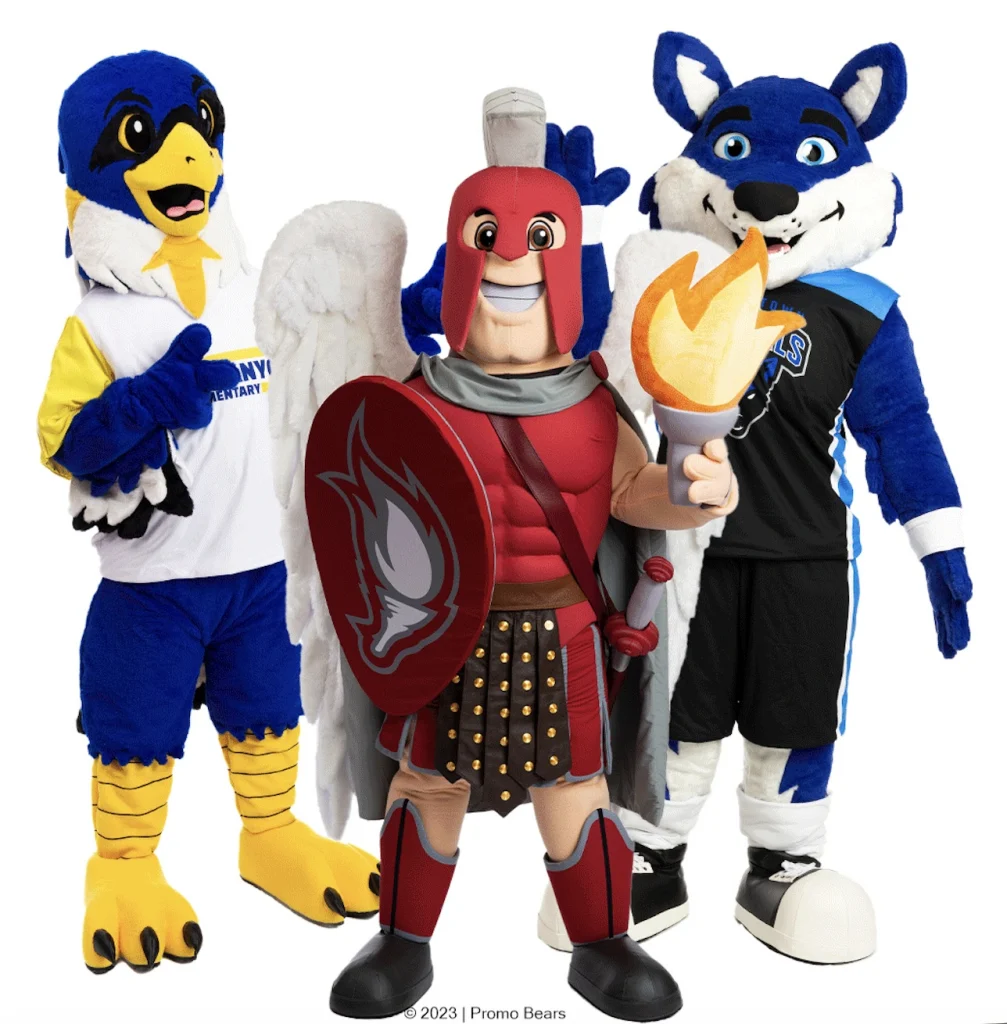
Custom mascots help brands stand out at trade shows by creating an immediate, human connection that no banner or screen can replicate. A mascot is approachable, photogenic, and impossible to ignore. It gives your brand a personality that visitors can interact with, photograph, and share on social media.
The impact goes beyond entertainment. A mascot acts as a crowd magnet, drawing foot traffic to your booth naturally. Once people stop to interact, your team has the opportunity to start a real conversation. That transition from curiosity to conversation is where trade show leads are actually born.
Mascots are also highly versatile. They can hand out promotional items, pose for photos, lead visitors into your booth, and create memorable moments that attendees associate with your brand for months afterward. For companies that appear at multiple events each year, a custom mascot costume becomes a long-term brand asset rather than a one-time expense.
What promotional products work best at trade shows?
The promotional products that work best at trade shows are useful, distinctive, and directly tied to your brand identity. Items that get used repeatedly after the event keep your brand visible long after the show ends. Generic giveaways tend to get left on hotel room tables; well-designed custom products travel home with attendees.
The most effective categories include:
- Custom stress balls: Tactile, fun to handle at the booth, and kept on desks for months. Fully custom shapes and PMS color matching make them far more impactful than standard giveaways.
- Enamel pins and keychains: Small, lightweight, and collectible. Attendees often wear or display them, turning your giveaway into a walking advertisement.
- Stickers: Inexpensive to produce, quick to turn around, and popular with younger audiences who personalize laptops and water bottles.
- Plush toys: Higher perceived value, great for family-friendly brands or companies with a mascot character.
- Frisbees and beach balls: Ideal for outdoor events or brands with an active, energetic identity.
The key is to choose products that fit your brand personality rather than defaulting to whatever is cheapest. A product that reflects your brand well will generate more conversation at the booth and more recall afterward.
How do you drive more foot traffic to your trade show booth?
Driving foot traffic to your trade show booth requires a combination of pre-show promotion, on-site visual impact, and an in-booth experience worth seeking out. Waiting for people to wander past is not a strategy. The exhibitors who consistently attract the most visitors plan their traffic generation before the show doors open.
Here is a practical approach that works:
- Announce your presence before the show. Use email, social media, and event apps to let your audience know where to find you. Share your booth number and give them a reason to visit, such as an exclusive giveaway or a live demonstration.
- Create a visual anchor. A giant inflatable, a costumed mascot, or bold overhead signage gives people a landmark to navigate toward even from across a crowded hall.
- Offer something interactive. Games, product demos, photo opportunities, or live experiences give people a reason to stop and stay.
- Train your team to engage from the aisle. Staff who stand inside the booth waiting are less effective than those who make eye contact and invite passersby in.
- Use social media during the event. Encourage visitors to tag your brand in photos. A mascot or inflatable gives people a natural reason to take and share a photo, extending your reach beyond the show floor.
What’s the difference between a custom mascot costume and a standard character suit?
A custom mascot costume is built from scratch around your specific brand character, logo, or design concept. A standard character suit is an off-the-shelf costume that represents a generic animal or figure with no connection to your brand identity. The difference in brand impact is significant.
Standard suits are cheaper upfront but offer no differentiation. Every company renting or buying the same bear or dinosaur costume looks identical at events. A custom mascot, by contrast, is exclusive to your brand. No one else at the trade show will have it, and every photo taken with it reinforces your specific identity rather than a generic image.
Custom mascot costumes also tend to be built to a higher standard of comfort and durability. Features like integrated ventilation systems, 3D realistic eyes, and ergonomic construction make them practical for long hours on a busy show floor. A performer who is comfortable inside the costume delivers a better experience for visitors, which directly affects how your brand is perceived.
Production timelines for custom mascot costumes are typically 12 to 16 weeks, so planning ahead is important. If your next trade show is already on the calendar, now is the right time to start the design process.
How do you measure ROI from trade show promotional activity?
Measuring ROI from trade show promotional activity means connecting your investment in booth presence, giveaways, and activations to tangible business outcomes such as leads generated, deals closed, and brand impressions created. The challenge is that some value is immediate and some accumulates over months after the event.
Start by setting clear goals before the show. Are you trying to generate a specific number of qualified leads? Increase brand awareness in a new market? Launch a product to a targeted audience? Your measurement approach should match your goal.
Useful metrics to track include:
- Number of leads captured at the booth
- Conversion rate from leads to sales conversations within 90 days
- Social media mentions, tags, and impressions generated during the event
- Website traffic spikes tied to the event period
- Giveaway items distributed versus leads collected (a ratio that helps evaluate engagement quality)
Promotional products contribute to ROI in a way that extends beyond the event itself. An item someone keeps on their desk for six months delivers repeated brand impressions at a fraction of the cost of paid advertising. When evaluating whether a giveaway was worth the investment, factor in that ongoing visibility rather than just the immediate trade show interaction.
How Promo Bears helps with promotion at trade shows
We have helped over 4,000 brands create trade show presences that people actually remember. From custom mascot costumes and giant inflatables to stress balls, enamel pins, stickers, and plush toys, we offer everything you need to make your booth a destination.
Here is what we bring to the table:
- A free concept illustration based on your logo or design idea, with unlimited revisions until it is exactly right
- Custom stress balls in fully bespoke shapes with PMS color matching and full-color print options, ready in 10 to 12 weeks
- Custom mascot costumes with 3D realistic eyes, built-in ventilation, and a comfortable fit, produced in 12 to 16 weeks
- Giant mascot inflatables ready in just 3 to 4 weeks for a fast and high-impact visual anchor
- A dedicated project manager who oversees every step from design approval to delivery
Whether you are planning your first trade show appearance or looking to level up an existing booth, we are ready to help you build something worth stopping for. Get a free quote and let us show you what is possible.
Frequently Asked Questions
How far in advance should we start planning our trade show booth and ordering promotional products?
For a fully custom setup, plan at least 16 to 20 weeks ahead of your show date. Custom mascot costumes require 12 to 16 weeks in production, custom stress balls and specialty items typically need 10 to 12 weeks, and you will want buffer time for design revisions and shipping. Giant inflatables are the fastest option at 3 to 4 weeks if you need a high-impact visual anchor on a tighter timeline. The earlier you start, the more options you have — last-minute orders almost always mean settling for less.
How many promotional giveaway items should we order for a trade show?
A common rule of thumb is to estimate 20 to 30 percent of total show attendance as your baseline order quantity, then adjust based on how selective you want to be with distribution. Handing items only to visitors who engage with a demo or provide contact information tends to produce better lead quality than giving something to every passerby. It is also worth ordering a small overage of 10 to 15 percent to account for damage, staff use, and unexpected foot traffic spikes. Running out of giveaways mid-show is a missed opportunity you can easily avoid with a little planning.
Can a small business with a limited budget still make a strong impact at a trade show?
Absolutely — budget constraints push you toward creativity, which often produces more memorable results than a generic big-budget booth. A single high-impact element, like a custom inflatable or a well-designed stress ball in a unique shape, can do more for foot traffic than a booth full of forgettable standard giveaways. Focus your spend on one or two items that are highly distinctive and aligned with your brand rather than spreading budget thin across a large quantity of generic products. A consistent visual identity and an enthusiastic, well-briefed booth team can close a lot of the gap between small and large exhibitors.
What are the most common mistakes exhibitors make when choosing trade show giveaways?
The biggest mistake is choosing items based on unit cost alone rather than brand fit and perceived value. A cheap pen with a small logo does almost nothing for brand recall, while a thoughtfully designed custom stress ball or enamel pin in your brand’s exact colors creates a lasting impression. Another common error is ordering items that have no logical connection to the company or its audience, making the giveaway feel random and forgettable. Finally, many exhibitors underestimate lead time and end up with generic items because their first-choice custom product could not be produced in time — which is exactly why early planning matters.
How do we keep trade show leads warm after the event ends?
Speed is the most important factor — follow up within 24 to 48 hours while the interaction is still fresh in the lead’s memory. Personalize your outreach by referencing something specific from your booth conversation, the giveaway they received, or the demo they saw, since this signals that your team was genuinely paying attention. A short email sequence over the two to three weeks following the show, combined with a LinkedIn connection request, keeps your brand top of mind without being pushy. If your giveaway item is something the lead keeps on their desk, your brand is already doing passive follow-up work for you every day.
Can a custom mascot costume be used at events other than trade shows?
Yes, and that versatility is a big part of what makes a custom mascot costume a smart long-term investment rather than a one-event expense. The same costume can appear at corporate events, product launches, community sponsorships, retail activations, school or charity events, and social media content shoots. Each appearance builds cumulative brand recognition and reinforces the character’s identity with your audience. When you calculate cost per impression across all of those uses over several years, a custom mascot costume is one of the most cost-efficient brand assets a company can own.
What should we look for when evaluating a vendor for custom mascot costumes or promotional products?
Look for a vendor who offers a free design concept or proof before you commit to production, has a clear and transparent production timeline, and assigns a dedicated point of contact who manages your project from start to finish. Ask specifically about revision policies, material quality, ventilation and comfort features for wearable costumes, and whether PMS color matching is included or an add-on. Customer reviews, photos of completed work, and a portfolio of past projects are all strong indicators of quality. A vendor who is vague about timelines or pushes you toward a quick decision without showing you a proof is a red flag worth taking seriously.