
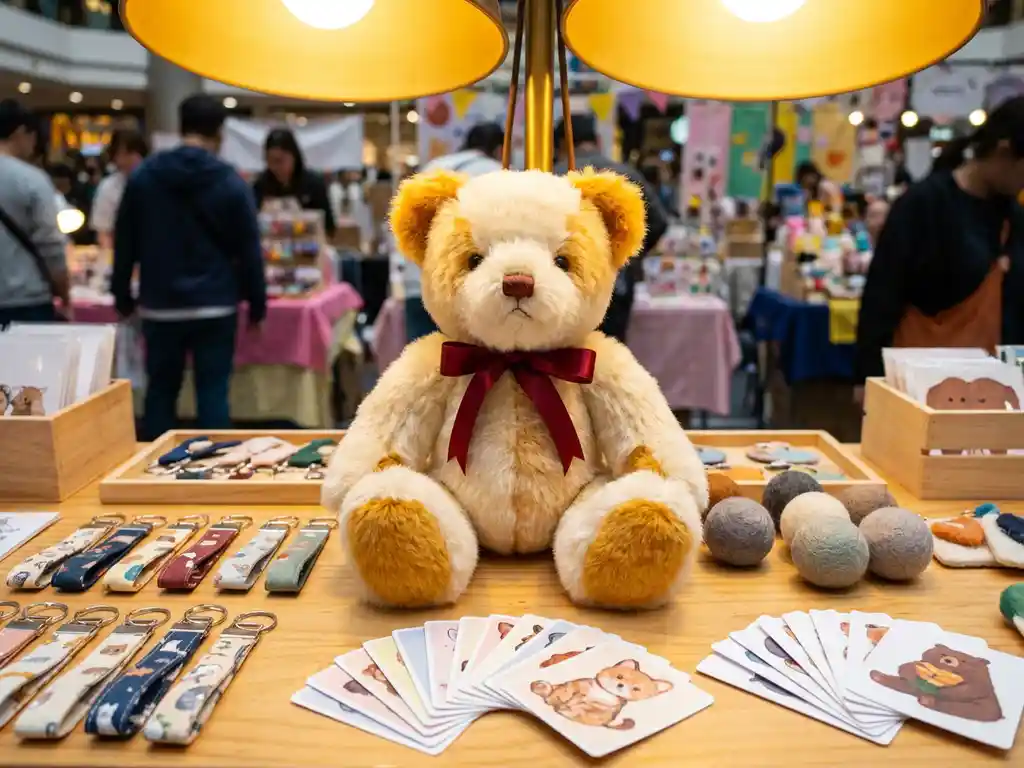
The products that sell best at craft shows are handmade, personal, and practical items with a clear visual identity and a price point that encourages impulse buying. Think jewelry, candles, art prints, ceramics, and small accessories that shoppers can touch, smell, or try on. The real winners combine strong presentation with an emotional hook — something that feels unique and worth taking home. Below, we answer the most common questions sellers ask before setting up their booth.
What types of products make the most money at craft shows?
The highest-earning craft show products tend to be small, giftable, and easy to carry. Jewelry, candles, bath and body products, art prints, and handmade food items consistently perform well because they appeal to a wide audience, have strong perceived value, and are priced for quick decisions. Products that engage multiple senses — scent, texture, color — naturally attract more attention.
That said, the most profitable products are not always the most complex ones to make. Simplicity and repeatability matter. Sellers who create a tight, cohesive product range with a consistent visual style tend to outsell those with a scattered mix of items. Shoppers at craft fairs are looking for something they cannot find in a big-box store, so originality and craftsmanship are your strongest selling points.
Popular high-earning categories include:
- Handmade jewelry and accessories
- Scented candles and wax melts
- Art prints and illustrated cards
- Ceramics and pottery
- Personalized or custom items (name signs, portrait prints)
- Artisan food and preserves
- Knitted or crocheted goods
What’s the difference between best-selling and best-margin craft show items?
Best-selling items are the ones that move the most units. Best-margin items are the ones that leave the most money in your pocket after costs. These two categories do not always overlap. A candle might sell 50 units in a day, but if your wax, wicks, fragrance, jars, and table fee add up, your actual profit per candle could be slim. A single hand-painted ceramic piece might sell only five times but generate far more net income.
The smartest craft show sellers build a product mix that balances both. Use high-volume, lower-priced items to attract foot traffic and create a sense of activity at your booth. Then use anchor products — your premium, high-margin pieces — to capture serious buyers who are ready to spend more. This layered approach means you are never relying on a single price point to carry the whole day.
Always calculate your true cost per item before pricing. Factor in materials, your time, packaging, travel, and a share of your booth fee. Pricing too low is one of the most common mistakes at craft fairs, and it undervalues the skill behind your work.
How do custom branded items perform compared to generic craft products?
Custom branded items consistently outperform generic products when it comes to perceived value and repeat recognition. A product that carries a clear brand identity — a distinctive logo, a consistent color palette, or a memorable name — signals professionalism and quality. Shoppers are more likely to remember you, recommend you, and find you again online after the event.
Generic craft products, even beautifully made ones, struggle to build lasting customer relationships because there is nothing to anchor the memory. Branding turns a one-time sale into a long-term connection. It also makes your booth feel more intentional and polished, which builds trust before a single word is exchanged.
For organizations attending events with a promotional goal rather than a retail one — think company fairs, school fundraisers, or brand activations — custom merchandise takes this a step further. Branded giveaways and custom promotional products extend your reach well beyond the event itself, putting your brand into people’s hands and homes long after the day is done.
What small promotional products sell best at events and fairs?
Small promotional products that are tactile, useful, or fun tend to perform best at events and fairs. Items that people can interact with immediately — squeeze, wear, or use on the spot — generate the strongest engagement. Trade show giveaways in this category include branded stress balls, keychains, tote bags, pens, stickers, and small plush items. The key is that the product must feel worth keeping, not like something that ends up in a bin.
Among trade show giveaways, custom stress balls are a standout performer. They are compact, memorable, and interactive — visitors pick them up, play with them, and carry them away without a second thought. When shaped to match a brand mascot, product, or logo, they become miniature brand ambassadors that keep working long after the event ends.
The most effective event giveaways share a few common traits:
- They are immediately usable — no assembly or instruction needed
- They are visually distinctive — shoppers notice them on a table or in someone’s hand
- They carry clear branding — your name, logo, or character is front and center
- They are easy to carry — lightweight and packable, so no one leaves them behind
- They have emotional appeal — fun, nostalgic, or satisfying to hold
How should a booth display products to increase sales?
A well-designed booth display increases sales by making products easy to see, understand, and reach. Height variation is one of the most effective tools — use risers, shelving, or hanging displays to create visual layers that draw the eye upward and pull people into your space. A flat table covered in products at the same level is easy to walk past; a display with depth and dimension invites exploration.
Keep your most eye-catching or best-selling items at the front and center, where they can do the work of attracting passersby. Price everything clearly — shoppers who have to ask for a price often do not bother. Group products by theme, use, or price range so customers can navigate intuitively without feeling overwhelmed.
Lighting, signage, and a consistent color palette all contribute to a professional impression. Even at an outdoor market, a branded banner or a well-placed logo makes your booth look established and trustworthy. And always leave enough open space so that multiple people can browse at the same time without feeling crowded.
When is the right time to invest in custom merchandise for events?
The right time to invest in custom merchandise is earlier than most people expect. Custom products require design approval, production, and shipping — all of which take time. For fully custom items like shaped stress balls or branded plush toys, production alone can take 10 to 12 weeks after the design is finalized. Ordering too late means arriving at your event with generic alternatives or nothing at all.
As a general rule, start the process at least three to four months before your event. This gives you time to go through the design phase, request revisions, approve a prototype if needed, and allow for shipping without panic. Rush production options exist, but they come at a premium and reduce your flexibility for changes.
Investing in custom merchandise makes the most sense when you have a recurring event calendar, a clear brand identity to represent, and a goal beyond one-off sales — such as building brand recognition, rewarding loyal customers, or generating word of mouth. The earlier you plan, the more options you have and the better the result.
How Promo Bears helps you stand out at events with custom merchandise
If you are looking for branded products that genuinely make an impression at fairs, trade shows, and corporate events, we at Promo Bears have been helping organizations do exactly that for over 19 years. Our specialty is fully custom merchandise — shaped to your brand, built to be noticed, and designed to stay in people’s hands long after the event.
Our custom stress balls are a particular favorite for event giveaways. Here is what makes them different:
- 100% custom shapes — molded to your logo, mascot, product, or original concept, never a standard off-the-shelf shape
- Precise PMS color matching — your brand colors, exactly as they should be
- Free concept artwork and unlimited revisions — you see the design before anything is produced
- Physical prototype option — approve a sample before committing to a full order
- Dedicated project manager — one point of contact from first sketch to final delivery
- Worldwide shipping — to the USA, Canada, Europe, Australia, and beyond
Production takes 10 to 12 weeks after design approval, so the sooner you start, the smoother the process. Whether you are preparing for a trade show, a school fair, or a major brand activation, we would love to help you create something memorable. Request a free quote today and let us show you what a truly custom giveaway can do for your brand.
Frequently Asked Questions
How do I figure out the right price point for my craft show products?
Start by calculating your true cost per item — materials, time at a fair hourly rate, packaging, a share of your booth fee, and travel expenses. From there, apply a multiplier (commonly 3x to 4x your material cost for handmade goods) and check that the result aligns with what similar items sell for at comparable shows. Avoid the temptation to undercut competitors; shoppers at craft fairs expect to pay for quality and craftsmanship, and pricing too low can actually signal lower value rather than attract more buyers.
How many products should I bring to a craft show?
A good rule of thumb is to bring enough inventory to fill your booth display generously without overcrowding it — typically 3 to 5 times what you realistically expect to sell, so your table never looks sparse as the day progresses. Variety matters too: aim for a range of price points, from affordable impulse buys under $20 to premium anchor pieces, so every type of shopper has an entry point. If it is your first show, track what sells fastest and use that data to refine your inventory for the next event.
What are the most common mistakes first-time craft show sellers make?
The biggest mistakes include pricing too low, bringing too wide a variety of unrelated products, and underinvesting in booth presentation. A scattered product mix confuses shoppers and dilutes your brand identity — it is far better to show 20 cohesive items beautifully than 80 mismatched ones crammed onto a table. First-timers also frequently forget practical logistics like bringing enough change, a card reader, bags for purchases, and a float of small bills to start the day.
Is it worth selling at craft shows if I already have an online shop?
Absolutely — in-person events complement online selling in ways that digital channels cannot replicate. Craft shows let customers touch, smell, and experience your products firsthand, which builds trust and often converts browsers into loyal repeat buyers who then follow you online. Many sellers report that their email list, social media following, and online sales all grow noticeably in the weeks following a well-attended event, making the booth fee an investment in your broader business rather than just a single day’s revenue.
How can I make my booth stand out if I'm in a crowded market with similar vendors?
Focus on the three elements that shoppers notice first: height, signage, and a cohesive color story. A display with vertical dimension — shelving, hanging elements, or tiered risers — is visible from further away and draws people in before they even read your products. A clear, branded sign with your name and a one-line description of what you make removes any guesswork. Beyond visuals, a distinctive brand personality — a memorable name, a consistent aesthetic, or a compelling maker story — gives shoppers a reason to choose your booth over a neighbor selling something similar.
What should I do after a craft show to turn one-time buyers into repeat customers?
Collect contact information at the event — a simple sign-up sheet or a QR code linking to an email list works well — and follow up within a few days while the memory is fresh. Include a business card or a small branded insert in every purchase so customers know where to find you online. If you have custom branded merchandise or packaging, this is where it pays off: a product that carries your logo or website keeps your name in front of the customer every time they use it, making it far more likely they will return or refer a friend.
When does it make sense to order custom promotional products instead of making everything myself?
Custom promotional products make the most sense when your goal shifts from pure retail sales to brand building — for example, if you are attending events as a business, nonprofit, or organization rather than as an individual maker. They are also worth considering when you want a high-impact giveaway that sparks conversation and extends your reach beyond the event itself. Since fully custom items like shaped stress balls or branded merchandise can take 10 to 12 weeks to produce, the decision should be made at least three to four months in advance to avoid rushing and losing design flexibility.