
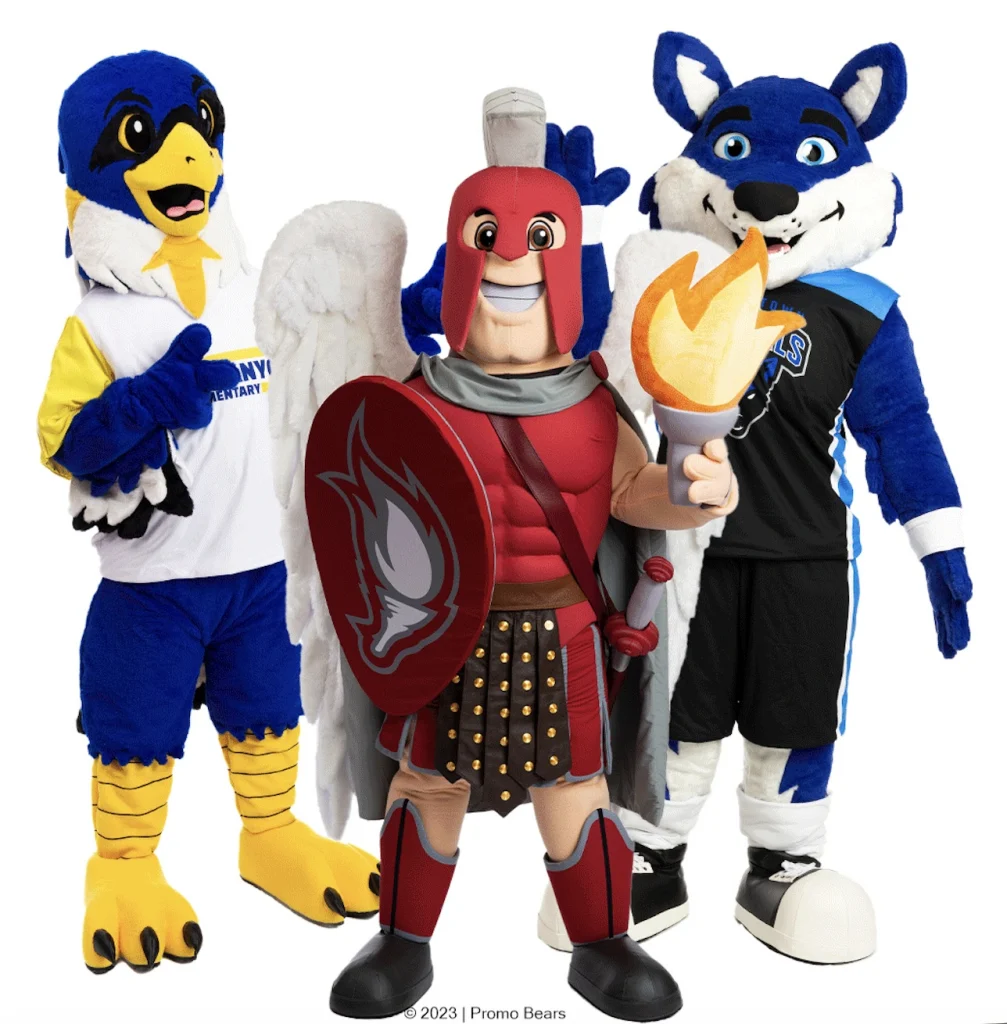
Investing in custom mascot design delivers real, measurable benefits for your brand. A well-designed mascot gives your organization a recognizable face that builds emotional connections with your audience, drives engagement at events, and keeps your brand top of mind long after the first impression. Whether you represent a school, a sports team, or a major corporation, a custom mascot is one of the most versatile brand tools available.
The sections below answer the most common questions organizations ask before committing to a mascot project, from what makes custom design worth it to how to choose the right production partner.
How does a custom mascot design strengthen brand recognition?
A custom mascot design strengthens brand recognition by giving your brand a consistent, visual identity that people remember. Unlike a logo alone, a mascot is a three-dimensional character that shows up at events, on merchandise, in social media content, and in marketing campaigns, creating repeated, familiar touchpoints that reinforce who you are.
Brand recognition is built through repetition and emotional connection. A mascot delivers both. When your audience sees your character at a game, on a stress ball, or in a promotional video, they are not just seeing a costume. They are seeing your brand personality in action. Over time, that character becomes shorthand for everything your organization stands for.
Custom mascot design takes this a step further by ensuring the character is uniquely yours. A generic costume can be worn by anyone. A custom design, built around your logo, colors, and brand values, cannot be mistaken for anyone else. That exclusivity is what turns a mascot into a genuine brand asset rather than a prop.
What types of organizations benefit most from a custom mascot?
Schools, universities, sports teams, retail brands, entertainment companies, and non-profits benefit most from a custom mascot. Any organization that wants to build a loyal community, create memorable experiences, or give its brand a human personality will find real value in mascot design.
Here is a closer look at which sectors see the strongest return:
- Schools and universities: Mascots build school spirit and create a shared identity for students, staff, and alumni.
- Sports teams: A mascot energizes crowds, appears on merchandise, and becomes a symbol fans rally around.
- Retail and FMCG brands: Mascots humanize products and make marketing campaigns more engaging and shareable.
- Entertainment and hospitality: Characters create immersive experiences that visitors remember and talk about.
- Non-profits: A friendly mascot makes outreach more approachable and helps communicate the mission in a relatable way.
- Corporate brands: Companies in competitive markets use mascots to stand out at trade shows, conferences, and brand activations.
The common thread across all of these is community. If your organization depends on people feeling connected to what you do, a mascot gives that connection a face.
How can a mascot increase customer engagement and sales?
A mascot increases customer engagement by creating an interactive brand presence that people actively want to engage with. Characters attract attention, invite photos, spark conversations, and generate organic social media content, all of which translate into greater brand visibility and, over time, stronger sales performance.
When a mascot shows up at a retail event or a brand activation, it naturally draws a crowd. People stop, interact, and share the moment online. That kind of earned attention is difficult to buy through advertising alone. A mascot creates it organically.
On the merchandise side, branded products featuring your mascot, such as plush toys, stress balls, keychains, and stickers, turn fans and customers into walking ambassadors. Every time someone uses or wears your branded merchandise, they extend your brand’s reach into their personal networks. That word-of-mouth effect is one of the most powerful and cost-efficient forms of marketing available.
For sales specifically, mascots create positive emotional associations with your brand. Customers who feel good about a brand are more likely to buy from it, recommend it, and return to it. The mascot is not closing deals directly, but it is building the trust and affinity that make those deals easier to close.
What’s the difference between a custom mascot and a generic character costume?
The key difference between a custom mascot and a generic character costume is exclusivity and brand alignment. A generic costume is a standard, off-the-shelf design that any organization can buy and wear. A custom mascot is designed specifically for your brand, built around your identity, and owned entirely by you.
Generic costumes are faster and cheaper to acquire, but they come with significant limitations. They are not tied to your brand colors, your logo, or your character. They look the same as costumes worn by other organizations. And because they are not exclusive, they do not build brand recognition in the way a custom design does.
A custom mascot, by contrast, is engineered from the ground up to represent your organization. The design process starts with your brief, your visual identity, and your goals. Features like lifelike 3D eyes, integrated ventilation systems, and custom sizing make the final product both visually distinctive and practical for the person wearing it.
If you are investing in a mascot as a long-term brand asset, custom design is the only approach that delivers lasting value. A generic costume is a costume. A custom mascot is a brand character.
What should you look for in a custom mascot design partner?
When choosing a custom mascot design partner, look for a combination of creative capability, production experience, a transparent process, and strong communication. The right partner does not just build a costume. They guide you from concept to delivery and make sure the final product genuinely represents your brand.
Specifically, here are the qualities that matter most:
- A free concept illustration before any commitment: You should be able to see what your mascot will look like before you spend a dollar. A reputable partner offers this upfront.
- Unlimited design revisions: The design process should continue until you are fully satisfied, not just until a revision limit is hit.
- A dedicated project manager: Someone who owns your project from start to finish, keeps you informed, and ensures quality at every stage.
- Quality control before shipping: Final photos of the completed mascot should be shared for your approval before it leaves the production facility.
- Proven experience and a strong client portfolio: Look for a partner who has produced mascots for organizations comparable to yours in size and complexity.
- Transparent timelines: You should know exactly how long production will take. For full mascot costumes, expect a production window of 12 to 16 weeks.
Avoid partners who offer vague estimates, push you to commit before showing a design, or lack a clear quality assurance process. The mascot will represent your brand publicly for years, so the production process needs to match that level of importance.
How much does a custom mascot design typically cost?
The cost of a custom mascot design varies depending on the complexity of the character, the materials used, the level of detail, and the production timeline. While pricing differs from project to project, custom mascots are a significant investment, and the cost reflects the craftsmanship, design expertise, and materials required to produce a professional-grade character.
Factors that influence the final price include the size of the costume, the intricacy of the design, whether rush production is needed, and any additional merchandise ordered alongside the costume. A straightforward character design will cost less than a highly detailed character with complex features and multiple components.
The important thing to understand is that a custom mascot is not a one-time expense. It is a brand asset that will be used at events, in campaigns, and across merchandise for years. When you think about the cost in terms of the ongoing brand value it generates, the return on investment becomes much easier to justify internally.
Most reputable partners will provide a fixed quote based on your specific design, so you know exactly what you are committing to before production begins. Always ask for a detailed quote tied to your actual concept rather than a vague ballpark estimate.
How Promo Bears helps with custom mascot design
We at Promo Bears have spent over 19 years helping organizations across North America bring their brand characters to life. From the first concept illustration to the moment your mascot arrives at your door, we handle every step of the process with a dedicated project manager assigned to your project.
Here is what working with us looks like in practice:
- A free concept illustration based on your logo or design idea, with unlimited revisions until you love it
- Lifelike 3D eyes and a built-in ventilation system for a mascot that looks great and is comfortable to wear
- Thorough quality control before shipping, with result photos shared for your final approval
- A full range of mascot merchandise including plush toys, stress balls (ready in 10 to 12 weeks), giant inflatables (ready in 3 to 4 weeks), and more
- Mascot costumes ready in 12 to 16 weeks, with rush options available
- Delivery to your doorstep via UPS, with a care manual included
We have created more than 4,000 custom mascots for schools, sports teams, and globally recognized brands. If you are ready to give your brand a character that people will remember, get your free quote and let us show you what we can create for you.
Frequently Asked Questions
How do I prepare my organization before starting a custom mascot project?
Before reaching out to a design partner, gather your brand assets including your logo files, brand color codes, and any existing style guidelines. It also helps to define your mascot’s intended purpose upfront — will it appear primarily at live events, in digital content, on merchandise, or all three? The clearer your brief, the faster and more accurately a design partner can translate your vision into a concept illustration.
How long does a custom mascot costume typically last, and how should it be maintained?
A professionally built custom mascot costume can last anywhere from five to ten years or more with proper care, making it a genuinely long-term brand investment. Most reputable production partners include a care manual with delivery that covers cleaning, storage, and handling best practices. Routine maintenance — such as spot cleaning after events, storing the costume in a cool dry place, and avoiding prolonged compression — will significantly extend its lifespan and keep it looking sharp for public appearances.
Can a custom mascot be used for digital and social media content, not just live events?
Absolutely — in fact, many organizations get as much value from their mascot in digital content as they do at live events. Your mascot can star in social media videos, appear in email campaigns, be animated for digital ads, or serve as a recurring character across your online brand presence. Having a custom mascot also means your digital team has a consistent, ownable character to build content around, which strengthens brand personality across every channel.
What if I want mascot merchandise but I'm not ready to commission a full costume yet?
Many organizations start with mascot merchandise — such as plush toys, stress balls, or keychains — before investing in a full costume, and this is a completely valid approach. Items like stress balls can be ready in as little as 10 to 12 weeks, making them a faster and lower-cost entry point for testing how your audience responds to the character. Starting with merchandise also gives you a chance to refine your mascot’s design and gauge demand before committing to a full production costume.
What are the most common mistakes organizations make when commissioning a custom mascot?
The most common mistake is rushing the design phase in order to meet an event deadline, which often results in a character that doesn’t fully align with the brand or requires costly revisions later. Another frequent misstep is choosing a partner based on price alone without verifying their production quality, revision policy, or quality control process. Finally, some organizations underestimate how broadly the mascot will be used and fail to plan for merchandise, digital assets, or costume duplicates — all of which are easier and more cost-effective to plan for at the start of the project.
Do I need a second mascot costume if the character will appear at multiple events simultaneously?
If your mascot is expected to appear at overlapping events — for example, a university mascot needed at a game and a recruitment fair on the same day — then having a duplicate costume is worth serious consideration. A backup costume also provides continuity if the primary costume is being cleaned, repaired, or shipped. Many organizations order a second costume as part of the initial project to take advantage of economies of scale in production costs.
How do I get internal buy-in for a custom mascot investment?
The most effective way to build internal support is to frame the mascot as a multi-year brand asset rather than a one-time event expense, and to tie its value to measurable outcomes like event attendance, merchandise revenue, social media engagement, and brand recall. Presenting case studies from comparable organizations — schools, sports teams, or brands in your sector — that have seen tangible results from mascot programs can also help stakeholders visualize the return. Requesting a free concept illustration from your design partner before any financial commitment is made gives decision-makers something concrete to evaluate, which often accelerates approval.
Related Articles
- How do you compare promotional tools for brand recognition?
- What role do promotional products play in making culture visible?
- Should your children's marketing strategy include a branded mascot costume?
- What causes lack of brand awareness?
- How do promotional products support corporate social responsibility?