
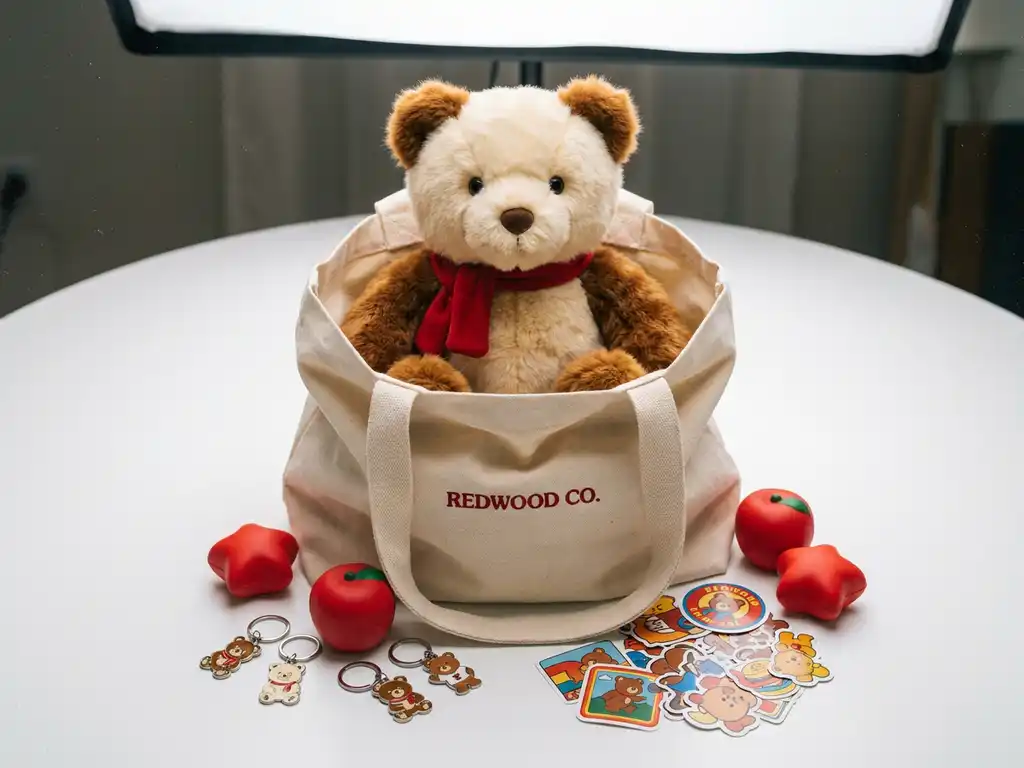
The best items to put in a corporate goodie bag are practical, branded products that people will actually use after the event. Think quality over quantity: a well-chosen selection of useful, visually appealing items leaves a far stronger impression than a bag stuffed with forgettable filler. Below, we unpack everything you need to know to build a goodie bag that works as hard as your brand does.
What makes a corporate goodie bag worth keeping?
A corporate goodie bag is worth keeping when it contains items that are genuinely useful, well-made, and connected to a brand people remember positively. Usefulness is the single biggest driver of retention. If recipients can picture themselves using something the next day, it stays. If they cannot, it ends up in a drawer or a bin.
Beyond practicality, the bag itself signals something about your organization. A thoughtfully curated selection of quality items communicates that you take your brand seriously. It tells clients, partners, and employees that you invest in the details. That perception has real commercial value, particularly in B2B contexts where trust and professionalism are central to the relationship.
Presentation matters too. Items that are neatly arranged, consistently branded, and packaged with care create an unboxing moment that people share on social media and talk about with colleagues. That organic word of mouth is one of the most underestimated returns on a goodie bag investment.
What are the best items to include in a corporate goodie bag?
The best items for a corporate goodie bag combine everyday utility with strong brand visibility. Products that people reach for repeatedly keep your brand front of mind long after the event. The strongest performers tend to be items that solve a small but real daily problem.
Here are the most effective categories to consider:
- Branded stationery: Notebooks, pens, and sticky notes are used daily in office environments and carry your logo into meetings, desks, and home offices.
- Tech accessories: Cable organizers, USB drives, or screen-cleaning cloths are compact, appreciated, and kept long-term.
- Drinkware: A quality branded bottle or travel mug travels everywhere and generates repeated impressions.
- Stress relief items: Custom stress balls are tactile, fun, and surprisingly effective at keeping a brand top of mind on a busy desk.
- Snacks or confectionery: A small premium treat adds a personal, human touch that purely functional items cannot replicate.
- Tote bags: When the bag itself is well-designed, it becomes a walking advertisement far beyond the event.
Aim for three to five items rather than overloading the bag. A curated selection feels intentional. An overstuffed bag feels chaotic, and recipients will quickly discard the items they find least useful.
How do you choose goodie bag items that match your brand?
To choose goodie bag items that match your brand, start with your brand values and visual identity, then select products that reflect them in both form and function. Every item in the bag should feel like it belongs to the same family. Inconsistency in quality, color, or style undermines the overall impression.
A useful exercise is to ask: if someone picked up this item without seeing the logo, would it still feel like us? A brand that positions itself as innovative and forward-thinking should lean toward sleek, modern products. A brand built around sustainability should choose eco-friendly materials. A playful, consumer-facing brand has more room for novelty items and bold colors.
Color consistency is particularly powerful. When all items in the bag align with your brand palette, the collection feels cohesive and deliberate. Many promotional product suppliers, including us, offer PMS color matching to ensure every item hits the exact shade your brand guidelines specify.
Finally, consider your audience. A bag distributed at a trade show for marketing directors should feel polished and premium. A bag handed out at a community event or sports day can afford to be more playful. The best goodie bags are tailored, not templated.
What’s the difference between cheap swag and premium promotional products?
The difference between cheap swag and premium promotional products comes down to material quality, customization depth, and how long the item stays in use. Cheap swag is typically mass-produced in standard shapes with minimal branding options. Premium promotional products are made to specification, built to last, and designed to represent the brand accurately.
Cheap items signal low investment. When a pen runs dry after a week or a tote bag tears at the seam, the association with your brand is negative. Recipients do not think about the cost savings you made. They think about the experience the product delivered.
Premium products, on the other hand, generate a halo effect. When someone uses a well-made item repeatedly, positive associations build over time. The brand becomes linked with quality and reliability, which is exactly what most B2B organizations want their clients and partners to feel.
There is also a significant difference in customization. Standard promotional suppliers typically offer a simple one-color logo print on a fixed shape. Premium suppliers work from your specific design, match your exact colors, and produce items that look like a natural extension of your brand identity rather than an afterthought.
How much should you budget for a corporate goodie bag?
The right budget for a corporate goodie bag depends on the audience, the occasion, and the commercial value of the relationship you are investing in. As a general framework, per-bag budgets typically range from modest allocations for large-volume events to more substantial investments for VIP or client-facing occasions.
Here is a practical way to think about tiered budgeting:
- Define the relationship value: A bag for a prospective enterprise client warrants a higher per-unit investment than a bag for a general conference attendee. Match the spend to the potential return.
- Set a per-item quality floor: Decide the minimum quality standard you are willing to put your brand on. This prevents cost-cutting that damages brand perception.
- Factor in customization costs: Custom-shaped or fully branded items carry higher upfront production costs, but the per-unit cost drops significantly at volume. Plan your quantities early.
- Include packaging in the budget: The bag, tissue paper, and any printed inserts are part of the brand experience. Do not treat them as an afterthought.
- Account for lead times: Rush production costs more. Building in adequate lead time, particularly for fully custom items that can take 10 to 12 weeks, keeps costs predictable.
The most common budgeting mistake is calculating cost per item in isolation. The real metric is cost per impression, meaning how many times will this item be seen or used, and what is that visibility worth to the business.
What custom items can you add to make a goodie bag stand out?
Custom-shaped items, mascot merchandise, and products that reflect your brand’s specific identity are the most effective ways to make a corporate goodie bag stand out. The key is to include at least one item that recipients have never seen before, something that stops them mid-unpack and prompts a reaction.
Custom stress balls shaped like your product, logo, or mascot are a particularly strong choice. They are tactile, fun to interact with, and sit visibly on desks for months. Unlike a flat printed item, a three-dimensional branded object creates a physical memory of your brand every time someone picks it up.
Other standout additions include custom plush toys, miniature inflatables, or character-based merchandise that ties directly to your brand identity. These items work especially well for brands with a mascot or a strong visual character, because they transform that character into something people want to keep and display.
Personalization at the individual level also makes a bag memorable. Adding a recipient’s name, a handwritten note, or a product configured to their preferences elevates the experience from a generic giveaway to a considered gift.
How Promo Bears helps you build a goodie bag that gets remembered
We specialize in exactly the kind of custom items that transform a standard corporate goodie bag into a brand experience people talk about. Our custom stress balls are built entirely to your specifications, from shape and color to fine surface detail, using durable PU foam that holds its form and keeps your brand visible for the long haul.
Here is what sets our process apart:
- Every design starts with a free concept illustration based on your logo, mascot, or product, with unlimited revisions until it is exactly right
- We offer PMS color matching to ensure your brand colors are reproduced precisely, not approximately
- A physical prototype can be approved before bulk production begins, so there are no surprises
- A dedicated project manager guides your order from first sketch to delivery, wherever you are in the world
- Production runs 10 to 12 weeks after design approval, with rush options available for tighter timelines
Whether you are building a goodie bag for a major trade show, a client appreciation event, or an internal brand campaign, we bring over 19 years of promotional product expertise to every order. Request a free quote today and let us help you create something your recipients will genuinely want to keep.
Frequently Asked Questions
How far in advance should I start planning a corporate goodie bag for an event?
Ideally, you should begin planning your corporate goodie bag at least 12 to 16 weeks before your event. This timeline accounts for the 10 to 12 weeks typically required for fully custom items, plus buffer time for design revisions, prototype approvals, and shipping. Starting early also gives you the flexibility to explore more creative options without being forced into expensive rush production.
How many items should go in a corporate goodie bag?
Three to five well-chosen items is the sweet spot for most corporate goodie bags. This range feels curated and intentional rather than overwhelming, and it gives each item room to make an impression. If your budget allows for only one or two standout pieces, that is far more effective than padding the bag with low-quality filler items that dilute the overall experience.
What are the most common mistakes companies make with corporate goodie bags?
The most common mistakes are prioritizing quantity over quality, choosing items that have no connection to the brand, and neglecting the packaging. Another frequent misstep is selecting products based purely on low unit cost without considering how long the item will actually be used — a cheap item discarded after one day delivers far fewer brand impressions than a quality item used for months. Always evaluate items through the lens of cost per impression, not just cost per unit.
Can corporate goodie bags work for virtual or hybrid events?
Absolutely — mailed goodie bags for virtual and hybrid events have become increasingly popular and can actually generate a stronger reaction than in-person giveaways because recipients open them at home in a personal, distraction-free setting. The key is to design the unboxing experience with the same care you would for a live event, using quality packaging, a printed insert, and a clear brand narrative. Shipping logistics and lead times become even more critical in this format, so plan quantities and delivery windows carefully.
Should all items in the bag be branded with a logo?
Not necessarily — while brand visibility is important, over-branding every single item can feel heavy-handed and reduce the perceived value of the bag. A good rule of thumb is to ensure your logo appears prominently on at least two or three items, while allowing one or two supporting items to carry subtle branding or simply align with your brand’s color palette. This balance makes the bag feel like a thoughtful gift rather than a purely promotional exercise.
What is the best way to measure the ROI of a corporate goodie bag?
The most practical way to measure goodie bag ROI is to track downstream engagement — for example, how many event attendees followed up with a meeting request, placed an order, or mentioned the bag in conversation. For branded items like custom stress balls or drinkware, you can also estimate impressions by multiplying the average daily use frequency by the product’s typical lifespan. While goodie bag ROI is rarely captured in a single metric, the combination of brand recall, relationship reinforcement, and social sharing makes it one of the higher-value touchpoints in an event marketing strategy.
Are eco-friendly goodie bag options available without sacrificing quality?
Yes — the range of high-quality sustainable promotional products has expanded significantly in recent years. Options include notebooks made from recycled materials, bamboo pens, organic cotton tote bags, and stress relief items produced with natural or recycled foam. Choosing eco-friendly items also sends a clear signal about your brand values, which resonates strongly with environmentally conscious clients, employees, and partners. When briefing your promotional product supplier, simply specify your sustainability requirements upfront so they can guide you toward options that meet both your quality and environmental standards.