
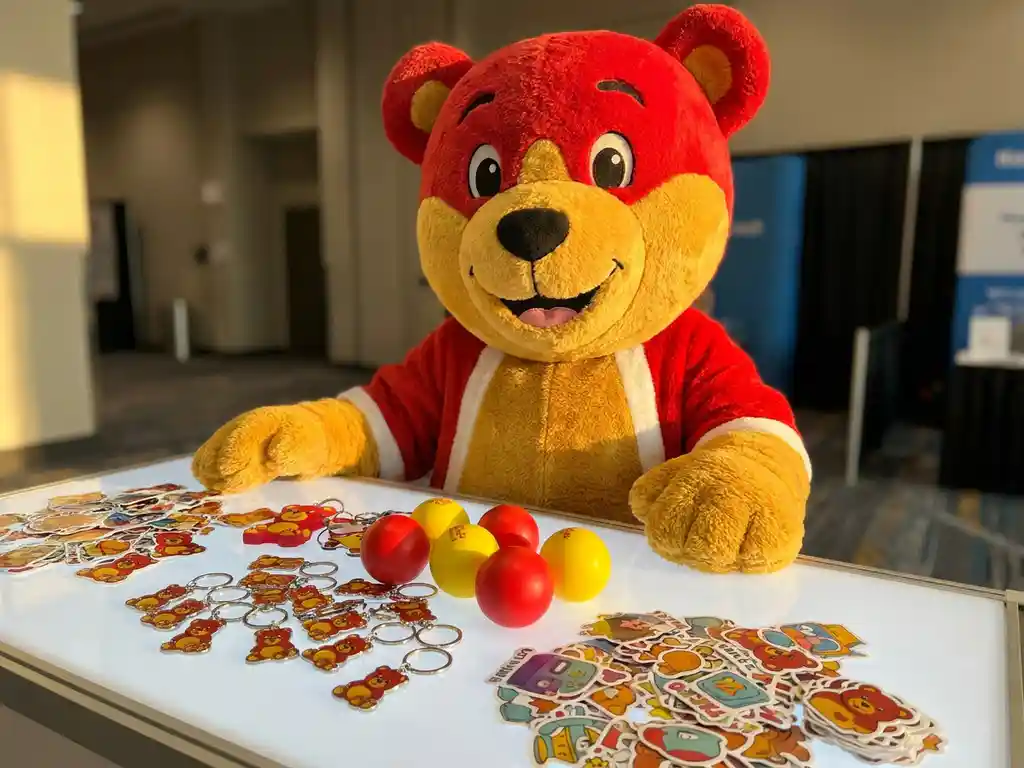
Free giveaways in a promotional context are most commonly called promotional products, though you will also hear them referred to as swag, freebies, branded merchandise, or corporate gifts, depending on the setting and the intent behind them. The term used often reflects the relationship between the giver and the recipient, as well as the level of customization involved. This article unpacks the key questions marketers and brand managers ask when planning a giveaway strategy.
What are the different types of promotional giveaways?
Promotional giveaways fall into several broad categories based on their purpose and format. The main types include branded merchandise (items printed with a logo), custom-shaped products (fully bespoke items built around a brand concept), experiential giveaways (free samples or trial experiences), and digital giveaways (discount codes, free downloads, or exclusive content). Each type serves a different marketing goal.
For physical products, the most common categories are:
- Branded everyday items such as pens, tote bags, mugs, and notebooks
- Custom-shaped novelty items such as stress balls, plush toys, and figurines molded to a specific brand shape
- Apparel including t-shirts, caps, and lanyards
- Tech accessories such as USB drives, phone stands, and portable chargers
- Event-specific items designed for trade shows, conferences, or sporting events
The right category depends heavily on your audience, your budget, and how long you want the item to stay in someone’s hands. A well-chosen giveaway continues to work for your brand long after the event is over.
What is the difference between swag, freebies, and branded merchandise?
The key distinction is intent and quality. Swag (short for “stuff we all get”) refers to free items distributed at events, often in bulk, with a focus on volume over craftsmanship. Freebies is a casual term for any no-cost item given to a consumer, regardless of branding. Branded merchandise is the most strategic category: items deliberately designed to reinforce a brand identity and create lasting impressions.
Swag tends to be associated with trade show giveaways where the goal is wide distribution, while branded merchandise implies a higher level of design investment. A custom-shaped stress ball molded to match a company mascot, for example, is branded merchandise. A generic pen with a logo stamped on it is swag. Both have their place, but they deliver very different results in terms of brand recall and perceived value.
Corporate gifts sit in a slightly different category. These are typically higher-value items given to specific clients or partners as a gesture of appreciation, rather than distributed to the general public at events.
Why do companies give away free promotional products?
Companies give away free promotional products because they are one of the most cost-effective ways to build brand awareness and create a lasting physical connection with an audience. Unlike digital advertising, a tangible item stays in someone’s environment, continuing to generate impressions every time it is seen or used. The return on investment comes from repeated brand exposure over time, not a single moment of contact.
There are several core reasons businesses invest in promotional giveaways:
- Brand visibility: A well-placed item keeps a logo in front of the recipient and everyone around them.
- Event engagement: Giveaways at trade shows and conferences attract foot traffic and create conversation starters.
- Customer loyalty: A thoughtful gift reinforces a positive relationship with existing clients.
- Word of mouth: Unique or high-quality items get shared, photographed, and talked about.
- Lead generation: In trade show environments, a desirable giveaway encourages people to stop, engage, and share their contact details.
The most effective giveaways do more than carry a logo. They reflect the brand’s personality and give the recipient a reason to keep the item rather than discard it.
What are the most effective promotional giveaway items?
The most effective promotional giveaway items are those that are useful, memorable, and aligned with the brand. Research consistently shows that usefulness is the primary factor in whether someone keeps a promotional product. Items people interact with regularly, such as drinkware, desk accessories, and stress relievers, generate far more impressions over time than items that end up in a drawer.
At trade shows specifically, trade show giveaways that stand out visually or have a tactile quality tend to perform best. A custom-shaped item that reflects the brand, such as a stress ball molded into a product shape or mascot, creates a much stronger connection than a flat-printed generic item. The novelty factor drives social sharing and word-of-mouth in a way that standard branded pens simply cannot.
Durability also matters. An item that lasts for months or years continues to deliver brand impressions long after the event. This is why higher-quality custom products often deliver better ROI than cheap bulk items, even when the upfront cost per unit is higher.
How do you choose the right giveaway for your brand?
Choosing the right giveaway starts with understanding your audience and your goal. Ask yourself who will receive the item, where they will use it, and what impression you want to leave. A giveaway that resonates with a healthcare audience at a wellness conference will look very different from one designed for a sports sponsorship activation or a retail brand at a consumer expo.
Consider these factors when making your decision:
- Relevance: Does the item connect to your brand, product, or campaign theme?
- Practicality: Will the recipient actually use it in their daily life?
- Memorability: Does it stand out from the dozens of other giveaways at the same event?
- Quality: Does the item reflect the standard your brand wants to be associated with?
- Budget and lead time: Custom items require more planning. For example, fully custom-shaped products typically require 10 to 12 weeks from design approval to delivery, so timeline planning is essential.
The brands that get the most out of their promotional budgets treat giveaways as a brand experience, not just a cost line. Every detail, from shape and color to packaging, contributes to the impression you leave.
When should a business use custom giveaways instead of standard ones?
A business should choose custom giveaways over standard ones when brand differentiation is the priority. If your goal is simply to have something to hand out, a standard item with a logo print may be sufficient. But when you want people to remember your brand specifically, associate it with quality, or share the item on social media, a fully custom product is the stronger investment.
Custom giveaways make the most sense in situations such as major trade shows where you need to stand out from dozens of competitors, product launches where the giveaway can mirror the product itself, mascot-driven brand activations, and long-term campaigns where the item needs to carry brand identity rather than just a logo. They are also the right choice for B2B gifting, where the recipient’s perception of your brand’s quality directly influences purchasing decisions.
Standard giveaways work well for high-volume, low-touch distribution where cost per unit is the main constraint. Custom giveaways work best when the impression per unit matters more than the volume.
How Promo Bears helps with promotional giveaways
We at Promo Bears specialize in fully custom promotional products that go far beyond a logo on a standard shape. With over 19 years of experience, we help marketing managers and brand directors turn their brand concepts into tangible, memorable items that audiences actually want to keep.
Our custom stress balls are a standout example of what sets us apart:
- Fully custom shapes based on your logo, mascot, product, or original concept
- Specific PMS color matching for brand-accurate results
- Built from durable, high-quality PU foam with precision-molded detail
- Free concept artwork and unlimited revisions before production begins
- Option to approve a physical prototype before committing to a bulk order
- A dedicated project manager guiding your order from concept to delivery
- Production time of 10 to 12 weeks after design approval, with rush options available
Whether you are planning trade show giveaways, a product launch, or a branded campaign, we deliver custom promotional products that make your brand impossible to forget. Request a free quote today and find out how we can bring your brand to life in three dimensions.
Frequently Asked Questions
How much should I budget for a custom promotional giveaway campaign?
Budget depends heavily on volume, complexity, and your goals. Standard branded items can cost as little as $1–$3 per unit in bulk, while fully custom-shaped products typically range from $5–$15+ per unit depending on size, detail, and quantity. Rather than focusing solely on cost per unit, consider cost per impression — a higher-quality item kept on someone’s desk for a year delivers far more brand exposure than a cheap item that gets thrown away the same day.
What are the most common mistakes brands make with promotional giveaways?
The biggest mistake is choosing an item based on price alone rather than relevance and quality, which often results in giveaways that recipients discard immediately. Another frequent error is leaving the planning too late — custom products, especially fully bespoke shapes, require 10–12 weeks of lead time, and rushed orders compromise quality or result in missed event deadlines. Finally, many brands forget to align the giveaway with a specific campaign goal, distributing items without any strategy to capture leads or measure ROI.
Can I order a small quantity of custom promotional products to test before committing to a large run?
Yes, many suppliers — including those specializing in fully custom-shaped items — offer prototype or sample approval stages before full production begins. This allows you to assess quality, color accuracy, and overall feel before committing to a bulk order. It’s worth asking your supplier upfront about minimum order quantities and whether a physical prototype option is available, as this can save significant cost and disappointment down the line.
How do I measure the ROI of a promotional giveaway?
ROI on promotional products is best measured by combining quantitative and qualitative metrics. On the quantitative side, track lead capture rates at events where giveaways were used, redemption rates on any discount codes bundled with the item, or direct sales uplift during a campaign period. Qualitatively, monitor social media mentions, photo tags, and unsolicited feedback — a giveaway that gets photographed and shared online is delivering earned media value on top of its physical impressions.
Are there industries or event types where promotional giveaways work especially well?
Promotional giveaways tend to deliver the strongest results in industries where relationship-building and repeated brand exposure are critical — including healthcare, finance, real estate, tech, and consumer goods. Trade shows, product launches, sporting event sponsorships, and corporate conferences are among the highest-performing contexts because attendees are already engaged and receptive. That said, the item must still be relevant and useful to the specific audience; even the best venue won’t save a poorly chosen product.
What should I look for when choosing a promotional products supplier?
Look for a supplier that offers end-to-end support — from concept artwork and PMS color matching through to prototype approval and dedicated project management. Experience with fully custom shapes (not just logo printing on stock items) is a strong differentiator if brand uniqueness is your goal. Also verify their production timelines, quality guarantees, and whether they have verifiable experience in your industry or event type, as this often translates into more relevant creative input and fewer production surprises.
Can promotional giveaways be used effectively for digital or virtual campaigns, not just in-person events?
Absolutely. Branded merchandise can be mailed directly to prospects, clients, or influencers as part of a direct mail or unboxing campaign — a strategy that has grown significantly alongside influencer marketing and remote work culture. Pairing a physical custom product with a digital call-to-action (such as a QR code linking to a landing page or exclusive offer) bridges the physical and digital experience, giving you a trackable touchpoint while still delivering the tangible brand impact that digital-only campaigns cannot replicate.