
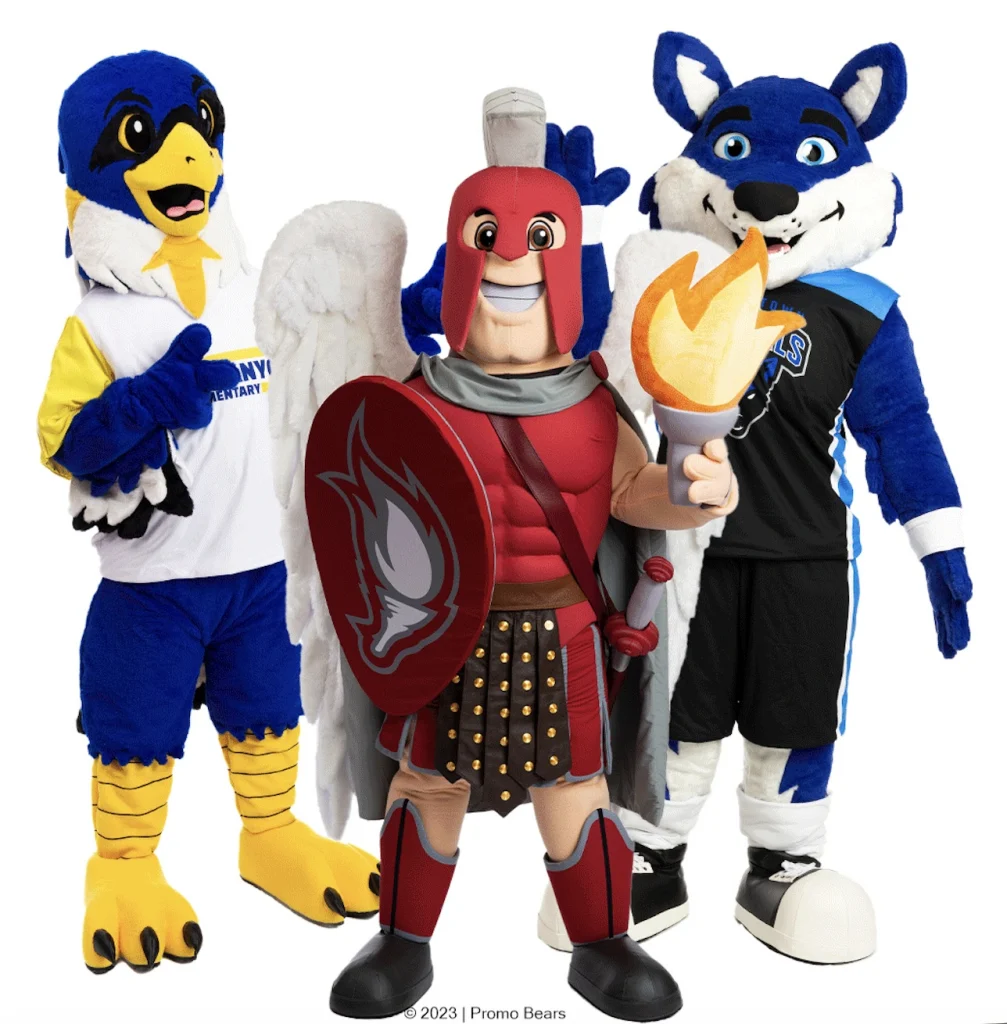
Creating a brand mascot starts with defining your brand’s personality, then working with a designer to develop a character that visually represents it. The mascot is brought to life through concept illustrations, revisions, and finally production in whatever format suits your needs, whether that’s a costume, plush toy, inflatable, or merchandise. The sections below walk through every key question you’ll face along the way.
What makes a brand mascot effective?
An effective brand mascot is instantly recognizable, emotionally engaging, and directly tied to your brand’s core identity. It should feel like a natural extension of your organization rather than a decoration added as an afterthought. The most memorable mascots share a handful of qualities that make audiences connect with them on a human level.
A strong mascot has a clear personality. Is your brand energetic and bold, or warm and approachable? That personality should come through in every detail, from the mascot’s expression and posture to its color palette. When the character’s personality mirrors the brand’s values, audiences instinctively feel the connection.
Versatility also matters. An effective mascot works across multiple formats and contexts. It should look equally at home on a giant inflatable at a trade show, on a plush toy sold in your retail store, and on a sticker handed out at a community event. If the design only works in one format, it limits how far your brand experience can reach.
Finally, consistency is what turns a mascot into a brand asset. Using the same character across every touchpoint, over time, builds recognition that compounds. The brands with the most iconic mascots have committed to them for years, allowing the character to become genuinely familiar to their audience.
What information do you need before designing a mascot?
Before any design work begins, you need a clear picture of your brand identity, your target audience, and how you plan to use the mascot. These three inputs shape every creative decision that follows, from the character’s species and color to its expression and proportions.
Start with your brand guidelines. Your primary colors, typography, and existing logo are the foundation the mascot will be built on. A designer needs this information to ensure the character feels like part of your brand family rather than a standalone creation.
Next, think about your audience. A mascot designed for children at a school event looks very different from one built for a corporate trade show or a professional sports team. The character’s style, level of detail, and personality should feel natural to the people you want to engage.
You should also clarify how the mascot will be used. Will it primarily appear as a wearable costume at live events? Will it be reproduced as merchandise like plush toys, keychains, or stress balls? Or do you need a large-format inflatable for outdoor activations? The intended use directly affects the design approach and the production formats you’ll need to plan for.
How does the mascot design process work?
The mascot design process typically moves through four stages: briefing, concept illustration, revisions, and production. Each stage builds on the last, and the goal at every step is to make sure the final character is exactly what you envisioned before any physical production begins.
- Briefing: You share your brand assets, audience details, and intended use. The design team uses this to understand the direction before putting anything on paper.
- Concept illustration: A designer creates an initial visual concept based on your brief. This gives you a concrete starting point to react to rather than working from abstract descriptions.
- Revisions: You review the concept and provide feedback. This back-and-forth continues until the design is exactly right. There is no limit on revisions during this stage.
- Production approval: Once the design is finalized and approved, production begins. No physical items are made until you have signed off on the design.
Production timelines vary depending on the format. A custom mascot costume typically takes 12 to 16 weeks. Plush toys run 12 to 18 weeks depending on the shipping method. Smaller merchandise items like enamel pins or keychains can be ready in 3 to 6 weeks, while stickers often ship in as little as 7 to 10 days.
What types of mascots can a brand create?
Brands can create mascots in several formats depending on their goals and budget. The most common types fall into wearable costumes, physical merchandise, and large-format inflatables, and many organizations use a combination of all three to maximize their brand presence.
- Custom mascot costumes: Wearable full-body suits designed for live events, sports games, school appearances, and brand activations. These create direct, personal interactions with your audience.
- Plush toys: Soft, collectible versions of your mascot that work well as merchandise, giveaways, or retail products.
- Giant inflatables: Large-scale versions of your mascot that command attention at outdoor events, storefronts, and trade shows.
- Stress balls: Custom-shaped promotional items that keep your mascot in someone’s hands, literally, long after an event ends.
- Keychains, pins, and stickers: Smaller merchandise items that are cost-effective to produce in volume and easy to distribute at scale.
The right format depends on where and how you want your mascot to show up. Live events call for costumes and inflatables. Retail and fan engagement call for plush toys and merchandise. Promotional campaigns benefit from smaller items that are easy to hand out in large quantities.
How much does it cost to create a custom mascot?
The cost of creating a brand mascot varies significantly based on the format, complexity of the design, and quantity ordered. A custom mascot costume is a larger investment than a batch of keychains, but the return in brand visibility and audience engagement is also proportionally higher.
Rather than publishing fixed price lists, most professional mascot suppliers provide quotes based on your specific design and requirements. This is because the complexity of a character, the materials required, and the number of units all affect the final cost. A fixed quote based on your approved design is far more useful than a vague estimate.
It is worth thinking about cost in terms of the formats you need and the occasions you are planning for. A costume is a long-term asset used repeatedly across many events. Merchandise items like plush toys or stress balls are produced in volume and distributed over time. Inflatables are high-impact pieces used at key activations. Each format has a different cost structure and a different role in your overall brand experience.
The most important thing to establish upfront is a clear scope. Know which formats you need, your intended quantities, and your timeline. With that information, a reliable supplier can give you a transparent, fixed quote before any commitment is made.
Who should you work with to create a brand mascot?
You should work with a specialist mascot production company that offers end-to-end service, from initial concept illustration through to physical production and delivery. A generalist graphic designer or print shop may be able to create a logo-based character, but they typically cannot produce the physical formats, manage quality control across product types, or handle the logistics of a full mascot rollout.
Look for a partner with a proven track record across multiple product formats. Your mascot will likely need to exist in more than one form, and working with a single supplier who can produce costumes, merchandise, and inflatables from the same approved design saves time, ensures consistency, and simplifies your vendor management.
A dedicated project manager is also a sign of a serious operation. Mascot projects involve multiple stages, approvals, and production runs. Having one person responsible for your project from start to finish reduces miscommunication and keeps timelines on track.
Finally, look for transparency. A trustworthy partner will provide a free concept illustration before any financial commitment and give you a fixed quote based on your specific design, not a ballpark figure. That transparency signals that they have done this many times before and stand behind their process.
How Promo Bears helps you create the perfect brand mascot
We specialize in bringing brand mascots to life across every format your organization needs. Whether you are starting with a costume for live events or building out a full merchandise line, we handle the entire process from concept to delivery.
Here is what you get when you work with us:
- A free concept illustration based on your logo or design idea, with unlimited revisions until it is exactly right
- Custom mascot costumes ready in 12 to 16 weeks, featuring 3D realistic eyes, a built-in ventilation system, and a comfortable fit
- Custom stress balls shaped to your mascot design, produced in 10 to 12 weeks with precise PMS color matching and full-color print options
- Giant mascot inflatables ready in 3 to 4 weeks for high-impact outdoor activations
- A dedicated project manager overseeing your project from first sketch to final delivery
- Quality control and result photos shared for your approval before anything ships
With over 19 years of experience and more than 4,000 mascots created for brands including NASA, Red Bull, Amazon, and Walmart, we know what it takes to build a mascot that genuinely moves the needle for your brand. Ready to get started? request your free quote and receive your first concept illustration at no cost or commitment.
Frequently Asked Questions
Can I use an existing logo or character as the starting point for my mascot design?
Yes, an existing logo or character is actually an ideal starting point — it gives the designer a clear foundation to build from and helps ensure the mascot feels like a natural extension of your brand. Share your current brand assets, including your logo, color palette, and any visual references you like, during the briefing stage. The designer will use these to develop a character that feels cohesive with everything your audience already recognizes.
What if I don't have a design idea yet — can I still get started?
Absolutely. Many brands come to the process with nothing more than a general sense of their personality and audience, and that is enough to begin. A good mascot production partner will ask the right questions during the briefing stage to draw out the direction — things like your brand values, the emotions you want to evoke, and the contexts where the mascot will appear. From there, the designer translates those inputs into a visual concept for you to react to.
How many versions of my mascot do I need, and do they all have to be designed separately?
You do not need to design each format separately. Once a single character design is approved, that same artwork serves as the master reference for every physical format — whether it becomes a costume, a plush toy, an inflatable, or a keychain. Working with a single supplier who produces all formats from the same approved design is the most efficient approach, as it guarantees visual consistency across every version of your mascot.
What are the most common mistakes brands make when creating a mascot?
The most common mistake is designing a mascot in isolation from the brand’s core identity — creating a character that looks fun but has no real connection to what the organization stands for. Another frequent misstep is choosing a design that only works in one format, such as a highly detailed illustration that cannot be faithfully reproduced as a wearable costume or a small merchandise item. Finally, many brands underestimate the value of consistency; a mascot only becomes a recognizable asset when it is used repeatedly and uniformly across all touchpoints over time.
How do I know if a mascot is the right investment for my brand right now?
A mascot makes the most sense when you have recurring opportunities to deploy it — live events, retail environments, community outreach, or an active merchandise program. If your brand regularly shows up in physical spaces where audience engagement matters, a mascot gives you a tangible, memorable presence that generic signage or printed materials cannot replicate. Start by identifying two or three specific upcoming events or campaigns where a mascot would have an immediate impact, and use that as your business case for the investment.
What should I look for in a mascot costume to make sure it holds up over time?
Durability comes down to materials, construction, and practical features like ventilation and visibility. Look for costumes with 3D realistic eyes for better sightlines, a built-in ventilation system to keep the performer comfortable during extended wear, and high-quality foam and fabric that can withstand repeated use and cleaning. Ask your supplier about care instructions and expected lifespan before committing, as a well-constructed costume should serve your brand across hundreds of events.
Can I order small quantities of merchandise, or is there a minimum order requirement?
Minimum order quantities vary by product type and supplier. Smaller items like stickers, pins, and keychains are typically produced in higher volumes because the unit cost drops significantly at scale, making them well-suited for large-scale giveaways. Plush toys and stress balls may have lower minimums but are still most cost-effective when ordered in meaningful quantities. The best approach is to share your intended use and distribution plan with your supplier so they can recommend the quantity that balances cost efficiency with your actual needs.