
Marketing managers justify ROI on brand recognition campaigns by connecting brand-building activity to measurable business outcomes: increased purchase intent, higher customer lifetime value, reduced acquisition costs, and stronger price tolerance. The key is building a measurement framework before the campaign launches, not after. This article walks through the metrics, models, and internal arguments that make brand investment defensible at the budget table.
What metrics actually measure brand recognition campaign success?
Brand recognition campaign success is measured through a combination of awareness metrics, behavioral indicators, and downstream revenue signals. No single metric tells the full story, but together they create a picture of whether your brand is growing in the minds of your target audience and whether that growth is translating into business results.
The most reliable metrics fall into two categories: perception metrics and performance metrics. Perception metrics tell you how people think and feel about your brand. Performance metrics show you whether that thinking and feeling is changing their behavior.
- Unaided brand recall: Ask respondents to name brands in your category without prompting. A rising recall rate signals genuine recognition growth.
- Share of voice: Your brand’s presence in conversations, searches, and media relative to competitors. Growing share of voice typically precedes market share growth.
- Brand search volume: People searching for your brand name directly is one of the clearest signals of organic recognition. Track this in Google Search Console over time.
- Net Promoter Score (NPS): Measures how likely customers are to recommend you, which reflects the strength of brand affinity.
- Direct traffic: Visitors who type your URL directly or find you without paid media are often the most loyal segment, and their growth indicates real brand recognition.
- Customer acquisition cost (CAC): As brand recognition improves, CAC typically falls because more people already know and trust you before they encounter a sales message.
Track these metrics consistently over time, not just at campaign end. Brand recognition builds gradually, and month-over-month trends matter more than single snapshots.
How do marketing managers translate brand awareness into revenue figures?
Marketing managers translate brand awareness into revenue figures by mapping awareness gains to observable changes in customer behavior, then assigning financial value to those behavioral shifts. The most practical approach uses a combination of attribution modeling, cohort analysis, and incremental revenue calculations tied to specific brand touchpoints.
Start by segmenting your customer base into those who encountered brand recognition activity and those who did not. Compare conversion rates, average order values, and retention rates across those groups. The revenue difference between the two cohorts gives you a defensible estimate of what brand investment is contributing.
Another approach is to calculate the value of reduced customer acquisition cost. If your CAC drops from $120 to $95 over a campaign period, and you acquired 2,000 new customers, that’s $50,000 in savings directly attributable to stronger brand pull. This framing resonates with finance teams because it converts brand activity into a cost efficiency story rather than an abstract awareness argument.
You can also model brand recognition’s contribution to price premium. Brands with strong recognition consistently command higher prices for comparable products. If customers are willing to pay more because they trust your brand, that margin difference is a direct revenue contribution from brand investment.
What’s the difference between short-term and long-term brand ROI?
Short-term brand ROI measures the immediate revenue impact of a campaign, typically within 30 to 90 days. Long-term brand ROI measures the compounding effect of sustained brand investment on customer loyalty, market share, and pricing power over months and years. Both matter, but they require different measurement approaches and different conversations with stakeholders.
Short-term brand ROI
Short-term returns are easier to measure and easier to sell internally. They include direct response from brand campaigns, immediate spikes in branded search volume, and short-term sales lifts tied to a specific activation. Event marketing, product launches, and seasonal campaigns often generate short-term brand ROI that is relatively straightforward to track.
Long-term brand ROI
Long-term brand ROI is harder to isolate but more valuable. Research consistently shows that brands with strong recognition grow faster, retain customers longer, and require less paid media to drive sales. The compounding nature of brand equity means that investment made today reduces the cost of customer acquisition next year and the year after. Marketing managers who can model this compounding effect, even roughly, make a far more compelling internal case for sustained brand investment.
The practical challenge is that finance teams often discount long-term brand returns because they are harder to verify. The solution is to set clear milestones at 6, 12, and 18 months that connect brand metrics to leading indicators of revenue, such as repeat purchase rate or NPS, rather than waiting for final revenue results to appear.
Which promotional formats deliver the strongest brand recognition ROI?
The promotional formats that deliver the strongest brand recognition ROI are those that create repeated, physical exposure in high-attention environments. Physical branded assets, experiential activations, and mascot-driven campaigns consistently outperform purely digital formats when the goal is building lasting brand recognition rather than driving immediate clicks.
Here is how common formats compare on recognition impact:
- Physical branded merchandise: Items people keep and use, such as plush toys, stress balls, and keychains, generate repeated impressions over months or years at a one-time production cost. Unlike digital ads, they are not skipped or blocked.
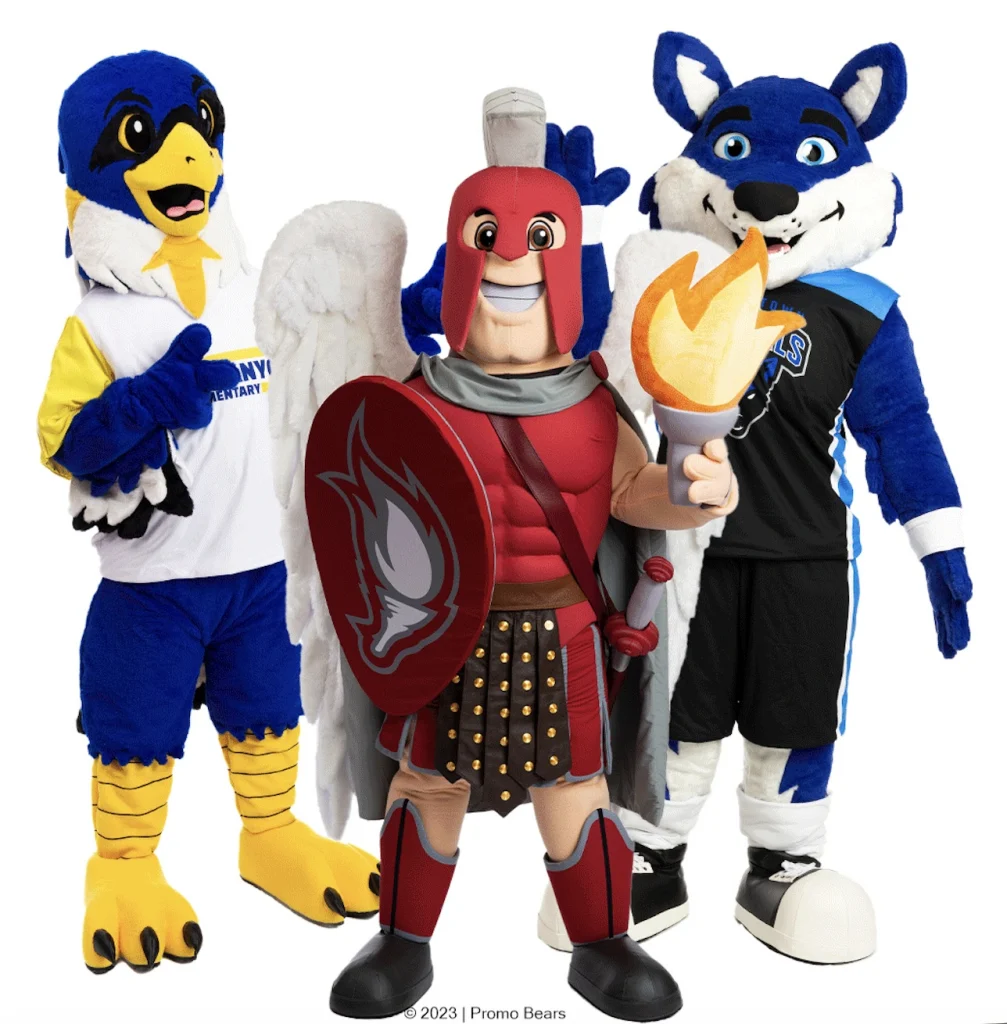
- Mascot and character-based campaigns: A recognizable mascot creates instant visual association with your brand. Mascots appear across every channel, from events and social media to packaging and signage, making them one of the most versatile brand recognition tools available.
- Event and experiential activations: Live interactions create emotional memory, which drives stronger recall than passive exposure. Giant inflatables, branded environments, and character appearances at events generate social sharing that extends reach far beyond attendees.
- Branded digital content: Video and social content can build awareness at scale, but recognition fades faster without physical reinforcement. Digital formats work best when paired with tangible brand touchpoints.
- Out-of-home advertising: Billboards and transit ads generate consistent exposure in specific geographies, making them effective for local and regional brand building.
The strongest results come from combining physical and digital formats. A mascot that appears at events and on social media, supported by branded merchandise distributed to customers, creates the kind of multi-touchpoint exposure that builds genuine, durable brand recognition.
How do you build an internal business case for a brand recognition investment?
You build an internal business case for a brand recognition investment by framing the proposal around business outcomes your stakeholders already care about, not marketing metrics they find abstract. The goal is to show how brand recognition investment connects directly to revenue growth, customer retention, and competitive positioning.
A strong internal business case typically includes four components:
1. The problem statement. Describe the current gap: low brand recall in your target segment, rising customer acquisition costs, or competitive pressure from better-recognized brands. Use data your organization already tracks to make the problem concrete.
2. The proposed investment. Be specific about what you are buying and why. Vague brand spend is hard to approve. A proposal for a custom mascot costume for event activation, supported by branded merchandise for distribution, is far easier to evaluate than a general “brand awareness campaign.”
3. The measurement plan. Define exactly what you will track, at what intervals, and what success looks like. Commit to specific metrics before the investment begins. This signals accountability and makes post-campaign reporting straightforward.
4. The expected return. Model the revenue impact conservatively. Use your existing CAC, conversion rate, and customer lifetime value data to show what a modest improvement in brand recognition would mean in dollars. Even a 5% improvement in conversion rate from stronger brand awareness can represent significant revenue at scale.
When should a brand invest in physical branded assets over digital campaigns?
A brand should invest in physical branded assets over digital campaigns when the goal is building durable, long-term recognition rather than driving immediate conversions, when the target audience experiences significant digital ad fatigue, or when the brand needs to create a tangible, memorable presence at events and in physical environments.
Physical branded assets make particular sense in several situations. If your brand competes in a crowded digital advertising space where cost-per-impression is rising and attention is falling, physical assets offer a way to reach people without competing in an auction. A plush toy or custom stress ball placed in a customer’s hands creates a brand impression that can last for years at a fraction of the ongoing cost of digital media.
Physical assets are also the right choice when brand recognition needs to work in offline environments: trade shows, sporting events, retail locations, school campuses, and community events. In these settings, a well-designed mascot costume or a set of branded merchandise does work that no digital ad can replicate. People can touch, wear, and share physical items in ways that create social proof and word-of-mouth amplification.
That said, physical and digital investment are not mutually exclusive. The most effective brand recognition strategies use physical assets to anchor the brand in real-world contexts and digital campaigns to extend reach and retarget people who have already encountered the brand in person. The two formats reinforce each other when planned together.
How Promo Bears helps you improve brand recognition
We work with marketing managers and brand directors across North America who need more than a vendor. They need a partner who can deliver consistent quality across multiple product types, on time and on brand. That is exactly what we do.
At Promo Bears, we specialize in the physical branded assets that build lasting recognition:
- Custom mascot costumes ready in 12 to 16 weeks, with a free concept illustration and unlimited revisions before production begins
- Custom stress balls produced in 10 to 12 weeks, fully custom shapes with PMS color matching and full-color print options
- Giant mascot inflatables ready in just 3 to 4 weeks, ideal for events and high-visibility activations
- Plush toys, keychains, stickers, and branded merchandise across a full range of formats and timelines
Every project starts with a free concept illustration, zero upfront commitment, and a dedicated project manager who guides you from design to delivery. We have created over 4,000 custom mascots for brands including NASA, Walmart, Red Bull, and Amazon, and we are ready to help your brand stand out in 2026.
Ready to build brand recognition that lasts? Get your free quote and see what we can create for you.
Frequently Asked Questions
How long does it typically take to see measurable results from a brand recognition campaign?
Brand recognition campaigns generally begin showing measurable perception shifts within 60 to 90 days, but meaningful business impact — such as lower CAC or higher conversion rates — typically takes 6 to 12 months of consistent investment to appear. This is why setting milestone check-ins at 6, 12, and 18 months is so important: it gives stakeholders visible progress markers without waiting for full revenue results. Physical branded assets like mascot costumes and merchandise often show faster recognition lifts because repeated physical exposure accelerates recall more efficiently than digital impressions alone.
What's the most common mistake marketing managers make when trying to justify brand recognition spend?
The most common mistake is building the measurement framework after the campaign has already launched, which makes it nearly impossible to establish a credible baseline or isolate the campaign’s impact. Without pre-campaign benchmarks for metrics like unaided recall, branded search volume, and CAC, any post-campaign improvement becomes difficult to attribute. The second most common mistake is presenting brand metrics — impressions, reach, share of voice — to finance stakeholders without translating them into dollar figures, which makes the investment feel unaccountable rather than strategic.
How do I choose the right brand recognition metrics for my specific industry?
Start by identifying which metrics your sales and finance teams already trust, then work backward to connect brand activity to those numbers. For B2B companies, metrics like branded search volume, direct traffic growth, and CAC reduction tend to be most persuasive because they map closely to pipeline and sales efficiency. For B2C and consumer brands, unaided recall, NPS, and repeat purchase rate are typically more relevant. The key is selecting three to five metrics you can track consistently over time rather than measuring everything and losing the narrative.
Can small or mid-sized brands realistically invest in physical branded assets like mascot costumes, or are those only practical for large enterprises?
Physical branded assets are well within reach for small and mid-sized brands, and they often deliver a stronger relative ROI for those companies because the per-impression cost drops dramatically over time. A custom mascot costume, for example, is a one-time production investment that can be activated at dozens of events over several years, generating thousands of brand impressions without recurring media spend. For smaller brands with limited budgets, starting with a single high-impact asset — such as a mascot inflatable for events or a run of custom stress balls for customer distribution — and measuring its recognition impact before scaling is a practical, low-risk approach.
How do I measure the ROI of branded merchandise specifically, since it's harder to track than digital campaigns?
The most reliable approach is to treat branded merchandise as a trackable cohort experiment: distribute items to a defined group of customers or prospects, then compare their conversion rate, repeat purchase rate, and lifetime value against a control group that did not receive merchandise. You can also track indirect signals like spikes in branded search volume or direct website traffic following a merchandise distribution event. For trade show or event contexts, capturing leads at the point of merchandise distribution and tracking their progression through your funnel gives you a clear line between the physical asset and downstream revenue.
What's the best way to present brand recognition ROI to a skeptical CFO or finance team?
Lead with cost efficiency, not awareness metrics. Finance teams respond most readily to arguments framed around reduced customer acquisition cost, improved conversion rates, and increased customer lifetime value — all of which are direct financial outcomes of stronger brand recognition. Build a conservative model using your existing data: show what a 5% to 10% improvement in CAC or conversion rate would mean in annual revenue, then frame the brand investment as the mechanism to achieve that improvement. Committing to specific, measurable milestones before the campaign begins also signals accountability, which significantly increases internal credibility.
Should brand recognition campaigns run continuously, or is it better to run concentrated bursts of activity?
Research on brand memory consistently supports continuous, always-on investment over concentrated bursts, because brand recognition decays quickly when exposure stops. That said, a practical hybrid approach works well for most marketing budgets: maintain a baseline of consistent brand presence through owned channels and physical assets, then layer concentrated activations — events, product launches, seasonal campaigns — on top of that foundation. Physical branded assets are particularly valuable for the always-on layer because they continue generating impressions long after the initial distribution, effectively extending your brand presence without ongoing media spend.