
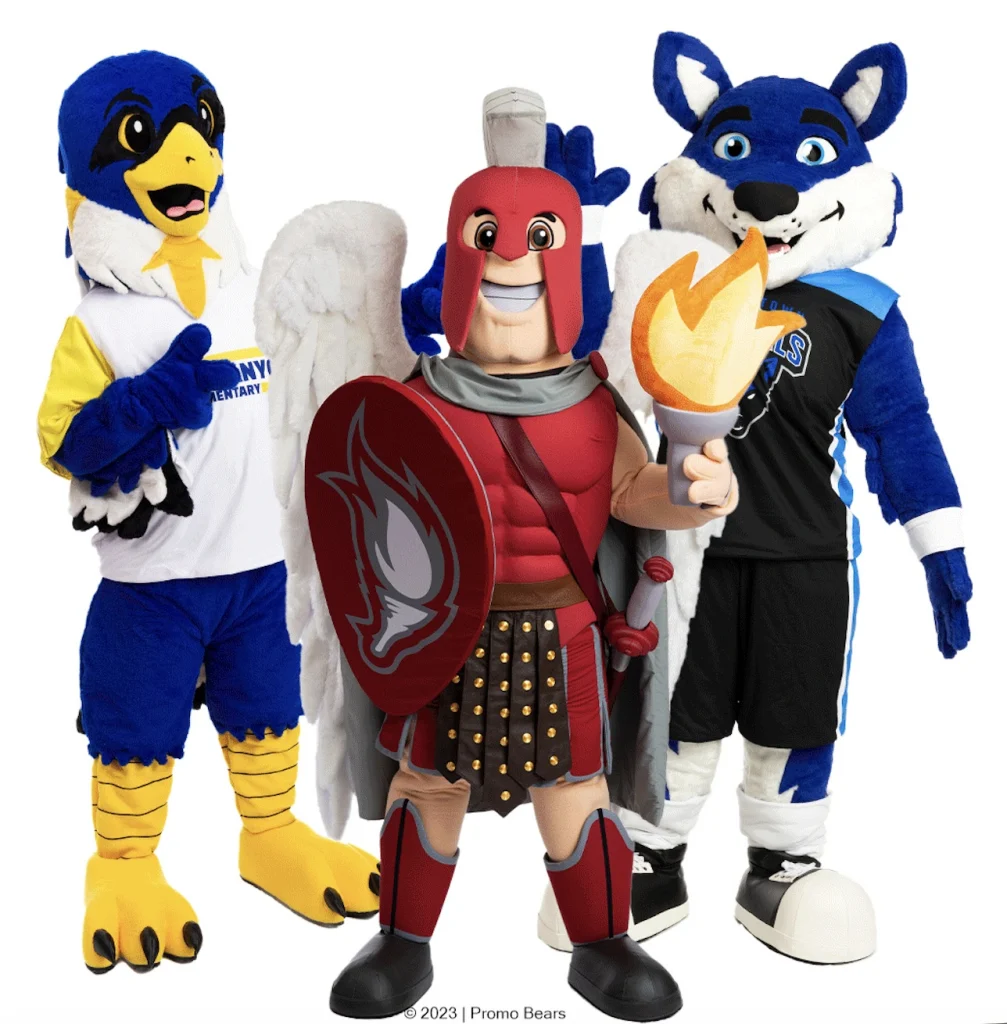
To design a mascot that truly represents your club values, start by defining what your club stands for – whether that is teamwork, resilience, community, or competitive spirit – and then translate those qualities into specific visual choices like character type, colors, expressions, and posture. The result should be a character that members instantly connect with and outsiders immediately recognize as yours. The questions below walk you through every stage of that process, from concept to final design.
What values should a club mascot represent?
A mascot for a sports club should represent the core values that define how your club operates and what it stands for. Think about the qualities your members embody on and off the field: determination, unity, pride, community spirit, or competitive drive. Your mascot is a visual shorthand for all of that, so it needs to reflect the real identity of your club, not just look exciting.
Start by asking your leadership team and members a simple question: if someone had never heard of your club, what three words would you want them to associate with it? Those three words become the foundation of your mascot brief. A club that values grit and intensity will want a very different mascot than one built around community and inclusivity.
It also helps to think about your audience. Who are you trying to connect with? Youth players need a mascot that feels fun and approachable. Adult competitive leagues might want something with more edge and energy. The values you choose to emphasize should speak directly to the people you want to engage.
How do you translate club values into a mascot’s visual identity?
You translate club values into visual identity by mapping each value to a specific design element. Posture communicates attitude, color communicates emotion, and facial expression communicates personality. Together, these choices turn an abstract idea like “strength” or “community” into something a fan can look at and immediately feel.
Here is how different values typically translate into design decisions:
- Strength and confidence: Upright posture, broad shoulders, bold colors like deep red or navy, and a determined expression
- Energy and speed: Dynamic stance, sharp angles in the design, bright accent colors, and an action-ready pose
- Community and warmth: Friendly, open expression, softer color palette, and an approachable body shape
- Tradition and pride: Incorporation of club colors and crests, classic character types like eagles or lions, and a dignified stance
- Fun and inclusivity: Rounded shapes, exaggerated features, vibrant colors, and a playful expression
Your club colors are a natural starting point. They already carry brand recognition, so build the mascot’s palette around them. From there, every design decision should reinforce rather than contradict the values you identified in the first step.
What makes a mascot design memorable and recognizable?
A mascot design becomes memorable when it has a single, distinctive visual hook that sets it apart. That might be an unusual character choice, a signature pose, an expressive face, or a bold color combination. The key is simplicity: the most recognizable mascots can be described in one sentence and sketched from memory after a single viewing.
Complexity is the enemy of recognition. A mascot loaded with details, accessories, and competing visual elements is hard to reproduce across merchandise, digital content, and costumes. The strongest designs work equally well on a giant inflatable, a stress ball, and a social media avatar.
Consistency also plays a major role. A mascot that appears in the same pose, colors, and style across every touchpoint builds familiarity over time. That familiarity is what turns a character into a symbol people genuinely identify with. Think about how much of your mascot’s appeal depends on repeated exposure, not just the initial design.
Should a club mascot be an animal, a human, or a fantasy character?
The right character type depends on your club’s personality and the audience you want to reach. Animals are the most common choice for sports clubs because they carry instant associations: a bear signals strength, a fox signals cleverness, an eagle signals ambition. Human characters work well when a club wants to represent a specific archetype or community figure. Fantasy characters offer the most creative freedom but require more design work to establish meaning.
Animals tend to travel well across age groups and cultures, which makes them a reliable choice for clubs that want broad appeal. They also adapt naturally to mascot costumes, which is important if you plan to bring your character to life at events and games.
Human characters can feel more personal and relatable, especially for clubs with a strong local identity. A character that looks like a member of your community can strengthen that sense of belonging. Fantasy characters, meanwhile, give you the chance to build something entirely original that no other club can claim.
There is no universally correct answer. The best approach is to choose the character type that aligns most naturally with the values you identified and the story you want to tell.
How do you involve club members in the mascot design process?
Involving club members in the mascot design process builds ownership and ensures the final character genuinely reflects the community it represents. The most effective approach combines structured input from members with professional design expertise, so you get both authenticity and quality.
Here is a practical process that works well for clubs of any size:
- Run a values survey: Ask members to submit the words, images, or ideas they associate with the club. This gives you raw material before any design work begins.
- Hold a character vote: Present two or three broad character concepts and let members vote on their preferred direction. This narrows the brief without overwhelming the design process.
- Share concept illustrations: Once a designer produces initial concepts, share them with a representative group for feedback. Focus feedback on whether the character feels true to the club, not on personal aesthetic preferences.
- Invite name suggestions: Naming a mascot is a fun, low-stakes way to get the wider membership involved and invested in the outcome.
- Reveal with intention: A proper launch event or announcement builds excitement and gives the mascot a story from day one.
Member involvement does not mean design by committee. Too many opinions at the wrong stage slow everything down and dilute the concept. Set clear boundaries around when and how feedback is collected, and trust your design partner to translate that input into a coherent character.
What should you look for in a mascot design partner?
A strong mascot design partner combines creative capability with a clear, structured process and transparent communication from start to finish. Look for a partner who starts with a free concept illustration so you can evaluate their interpretation of your brief before committing to production. Unlimited revisions during the design phase are a sign that the partner is focused on getting the result right, not rushing to production.
Beyond the design phase, ask how the partner handles production quality, timelines, and final approval. A dedicated project manager who oversees every stage from concept to delivery removes a significant amount of coordination work from your team. Result photos before shipping and a quality control process are both indicators of a partner who takes the finished product seriously.
Also consider the range of products they can produce. A mascot design that only lives as a costume has limited reach. A partner who can extend that character across custom mascot merchandise like plush toys, stress balls, keychains, and inflatables gives your club far more ways to strengthen club identity and generate engagement throughout the season.
How Promo Bears helps you design a mascot that strengthens club identity
We work with sports clubs, schools, and organizations across the US and Canada to bring mascot characters to life from first concept through to finished product. Our process is built around making it easy for you to get exactly what your club needs, without guesswork or vague estimates.
Here is what we offer from the start:
- A free concept illustration based on your logo, design idea, or brief
- Unlimited revisions until the design matches your vision exactly
- Lifelike 3D eyes, an integrated ventilation system, and a comfortable fit as standard in every mascot costume
- A dedicated project manager who handles every step from design approval to delivery
- Custom mascot merchandise including plush toys, stress balls (ready in 10 to 12 weeks), giant inflatables (ready in 3 to 4 weeks), and more to extend your mascot across every club touchpoint
- Custom mascot costumes ready in 12 to 16 weeks, delivered to your door
We have created over 4,000 mascots for organizations ranging from local sports clubs to globally recognized brands. Whether you are starting from scratch or refreshing an existing character, we are ready to help you build something your members will be proud to wear, cheer for, and carry with them. Get your free concept illustration and see what your mascot could look like.
Frequently Asked Questions
How much does it typically cost to have a custom mascot designed and produced for a sports club?
Costs vary depending on the complexity of the design, the type of products you need, and the production partner you choose. A full mascot costume typically represents the largest investment, while merchandise items like plush toys, stress balls, and keychains are considerably more affordable and can be ordered in bulk to reduce per-unit costs. The best approach is to request a free concept illustration and quote upfront — this gives you a clear picture of what you are getting before committing to any spend.
What if our club already has an existing mascot — can it be refreshed rather than replaced entirely?
Absolutely, and in many cases a refresh is the smarter move. If your existing mascot already has recognition among members and fans, a full replacement risks losing that familiarity. A refresh typically involves modernizing the color palette, refining the proportions, sharpening the expression, or updating the style to work better across digital platforms and merchandise — while keeping the core character intact. Share your existing artwork with your design partner and ask specifically for an evolution rather than a reinvention.
How do we make sure our mascot works across both digital use and physical products like costumes and merchandise?
The key is designing for versatility from the very beginning. Ask your design partner to deliver the final artwork in scalable vector formats and to test the character at multiple sizes — from a small social media profile icon to a large-format banner. Physical products like costumes and inflatables introduce additional constraints around shape, material, and wearability, so choose a partner who handles both the 2D design and the physical production, ensuring the character translates faithfully from screen to real life.
How long does the full mascot design and production process typically take from start to finish?
Timelines depend on the products you are ordering. A mascot costume generally takes 12 to 16 weeks from design approval to delivery, while giant inflatables typically take 3 to 4 weeks and merchandise items like stress balls run 10 to 12 weeks. The design phase itself — concept illustration, revisions, and final approval — happens before production begins, so starting early is important, especially if you have a season opener, tournament, or launch event as a target date.
What common mistakes should clubs avoid when briefing a mascot designer?
The most common mistake is providing a vague or overly broad brief — descriptions like ‘make it look cool’ or ‘something energetic’ give a designer very little to work with and often lead to multiple rounds of misaligned concepts. Come to the brief with your three core values, your target audience, your club colors, and any character preferences already defined. Equally, avoid the opposite extreme of over-prescribing every detail, which can prevent the designer from applying their expertise. A strong brief sets the direction clearly while leaving room for creative interpretation.
Can a small or local club justify the investment in a custom mascot, or is it mainly for larger organizations?
A custom mascot is arguably more impactful for smaller clubs precisely because it creates a level of identity and professionalism that sets them apart in their local community. It signals that the club takes its brand seriously, which helps with recruitment, sponsorship conversations, and community engagement. Starting with a cost-effective merchandise item — like a plush toy or stress ball — rather than a full costume is a practical way for smaller clubs to introduce a mascot character without a large upfront commitment, then build out from there as the club grows.
How do we introduce a new mascot to our members and build genuine enthusiasm around it?
A deliberate launch strategy makes a significant difference in how well a new mascot is adopted. Build anticipation with a teaser campaign before the reveal — share silhouettes, ask members to guess the character type, or run a naming competition to generate early investment. Unveil the mascot at a high-attendance event like a season opener or community day, and make sure it appears consistently across your social channels, kit, and venue from day one. The faster members see the mascot as a familiar, recurring presence, the faster it becomes a genuine symbol of the club.