
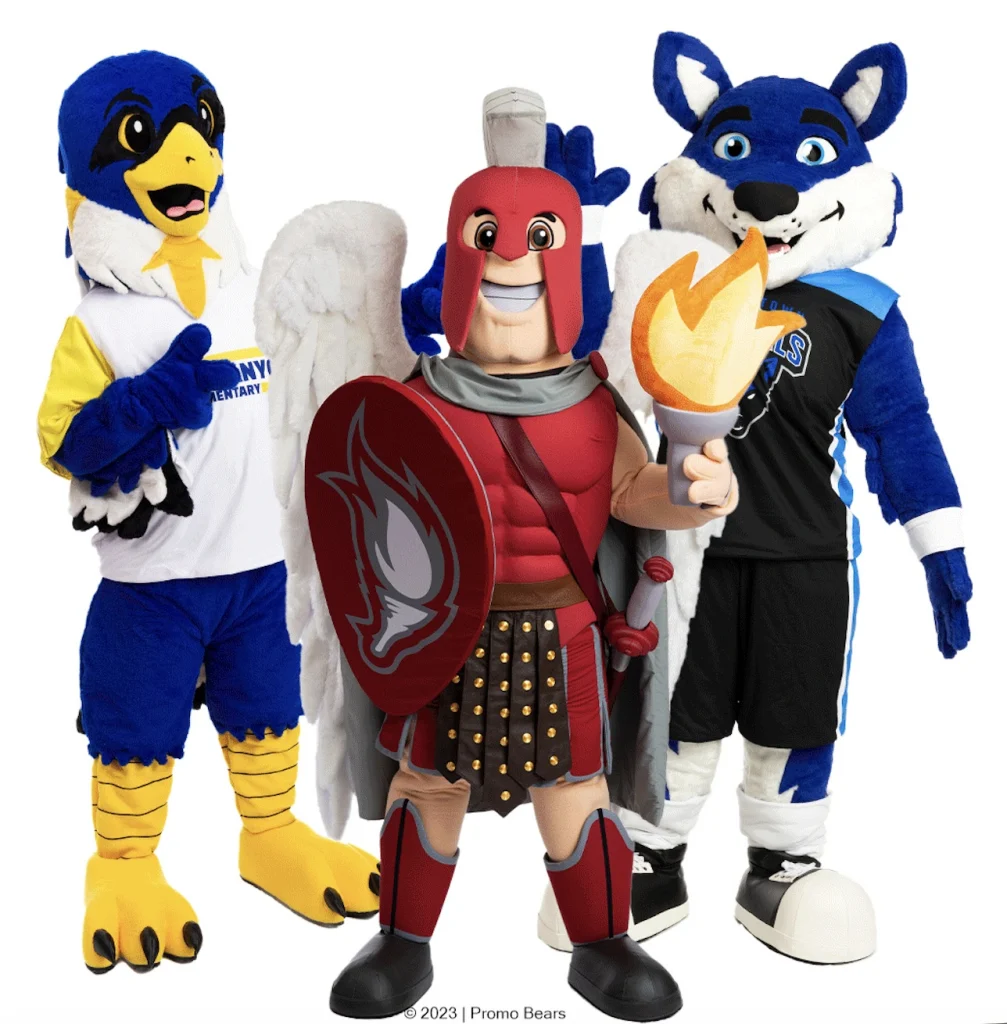
Yes, a mascot for sports club merchandise programs can meaningfully increase revenue. When a mascot has strong visual appeal and a genuine fan connection, it becomes a character people want to own a piece of. Sports clubs that build a recognizable mascot identity consistently see higher merchandise sales, stronger fan loyalty, and more repeat purchases across product categories.
The key is treating your mascot as a brand asset, not just a costume. The questions below break down exactly how that works and what it takes to get results in 2026.
How does a mascot actually drive merchandise sales?
A mascot drives merchandise sales by giving fans something to emotionally connect with beyond the game itself. When people feel attached to a character, they want to represent it. That emotional pull translates directly into purchasing behavior. Fans buy plush toys, keychains, and apparel not just as souvenirs but as expressions of identity and belonging.
Think about why kids beg their parents for a plush version of the team mascot at the stadium. It is not about the product itself. It is about the character. A well-designed mascot creates that pull at every age level, turning casual spectators into active supporters who spend money to show their allegiance.
For sports clubs, this means every mascot appearance at a game, on social media, or in a promotional campaign is also a sales opportunity. The mascot becomes the face of your merchandise line, and the stronger that face is, the more it sells.
What types of mascot merchandise sell best for sports clubs?
The best-selling mascot merchandise for sports clubs tends to be items fans can use daily or display proudly. Plush toys, enamel pins, keychains, stickers, and custom stress balls consistently perform well because they are affordable, giftable, and highly visible. Larger items like sports bags and drawstring bags also sell well because they offer everyday utility with built-in brand exposure.
Here is a breakdown of the top-performing product categories for sports club mascots:
- Plush toys: A fan favorite at all ages, especially effective for family-oriented clubs and youth sports programs
- Enamel pins and keychains: A low price point means high impulse purchase rates, especially at live events
- Stickers and temporary tattoos: Extremely popular with younger fans and easy to produce quickly
- Custom stress balls: A fun, tactile item that works well for game days and promotional giveaways
- Drawstring and sports bags: Higher ticket items that fans use regularly, keeping your mascot visible in the wild
- Frisbees and beach balls: Seasonal items that drive engagement at outdoor events and summer games
The smartest clubs build a tiered merchandise range that covers multiple price points. That way, every fan, regardless of budget, can take something home.
How much revenue can a sports club mascot realistically generate?
The revenue a mascot generates depends on your fan base size, product range, and how actively you promote the character. There is no universal figure, but clubs that treat their mascot as a genuine brand asset rather than an afterthought consistently report that mascot-branded merchandise outperforms generic team merchandise in both volume and margin.
A few factors that influence mascot merchandise revenue include:
- Mascot visibility: The more your mascot appears at games, on social media, and in community events, the stronger the emotional connection and the higher the demand for merchandise
- Product variety: Clubs with a broader range of price points capture more buyers across different spending levels
- Seasonal timing: Launching new mascot products at the start of a season or ahead of a major game creates natural buying moments
- Fan demographics: Clubs with strong family audiences and youth programs tend to see higher plush toy and novelty item sales
- Exclusivity: Limited edition or event-specific mascot items drive urgency and can command premium pricing
The revenue potential scales with your investment in the mascot as a character. Clubs that activate their mascot consistently across multiple touchpoints see the strongest returns.
What makes a mascot design strong enough to sell merchandise?
A mascot design sells merchandise when it is distinctive, emotionally appealing, and versatile enough to translate across multiple product formats. The design needs to work on a two-inch keychain just as well as it does on a giant inflatable. If the character loses its identity when scaled down, it will not sell well in smaller merchandise categories.
Strong mascot designs share a few consistent traits. They have a clear, readable silhouette that is instantly recognizable from a distance. They use a limited, bold color palette that reproduces cleanly on different materials. They have expressive features, especially the eyes, that give the character personality and warmth. And they have a name and backstory that fans can connect with.
Versatility also matters. A mascot that can be posed in different ways, shown in different contexts, and adapted for seasonal campaigns gives your merchandise team far more to work with. A static, single-pose character limits what you can put on products and how often you can refresh the range.
Should a sports club invest in a mascot costume or merchandise first?
Start with the costume. A mascot costume is the foundation that makes everything else credible. When fans see a mascot come to life at games and events, the emotional connection forms in person. That real-world presence is what makes the merchandise feel meaningful rather than generic. Without the costume, you are selling a logo. With it, you are selling a character people have actually met.
That said, the two work best together. A mascot costume takes 12 to 16 weeks to produce, which gives you enough lead time to develop your first merchandise range in parallel. Plush toys take 12 to 18 weeks depending on the shipping method, while smaller items like enamel pins, keychains, and stickers can be ready in as little as 3 to 6 weeks. Temporary tattoos and mascot stickers can be turned around in roughly 4 weeks.
A practical approach is to launch the costume at the start of a season and have a core merchandise range ready at the same time. That way, the first time fans meet the mascot in person, they can immediately take something home.
Custom Mascot Costume
Ready to bring your mascot to life?
Get a free quote and concept illustration — no commitment, response within 24 hours.
Request a Free Quote →How do top sports brands use mascots to boost fan engagement?
Top sports brands use mascots as active, ongoing characters rather than occasional appearances. The mascot shows up consistently, has its own social media presence, interacts with fans before and after games, and becomes part of the club’s storytelling. That consistency is what builds the kind of fan attachment that drives merchandise sales over the long term.
Major leagues and franchises have demonstrated that a mascot with its own identity, separate from but complementary to the team brand, creates a second layer of fan loyalty. Younger fans in particular often connect more strongly with the mascot than with individual players, because the mascot never gets traded, never has an off season, and never has a bad press day.
Beyond game day, top brands use mascots in community outreach, school visits, and charity events. These appearances deepen the emotional connection and expand the mascot’s reach beyond the existing fan base. Every new person who meets the mascot is a potential merchandise customer.
How Promo Bears helps sports clubs strengthen club identity through mascots
We work with sports clubs at every stage of the mascot journey, from the first concept sketch to a full merchandise range that fans actually want to buy. Whether you are starting from scratch or looking to build out your existing mascot into a stronger brand asset, we can help you get there.
Here is what working with us looks like:
- A free concept illustration based on your logo or design idea, with unlimited revisions until it is exactly right
- A custom mascot costume with 3D realistic eyes, a built-in ventilation system, and a comfortable fit, ready in 12 to 16 weeks
- A full merchandise range including plush toys, enamel pins, keychains, stickers, stress balls, drawstring bags, and more
- A dedicated project manager who handles everything from design approval through to delivery
- Over 4,000 mascots created for clients including NASA, Red Bull, Amazon, and Walmart
If you are ready to turn your mascot into a genuine revenue driver for your sports club, we would love to help you build something fans will be proud to represent. Get a free quote and tell us about your club. We will come back to you with a concept and a clear plan, no commitment required.
Frequently Asked Questions
How do we know if our current mascot design is strong enough to support a merchandise program?
Test it at scale: shrink your mascot design down to the size of a 2-inch keychain and see if it still reads clearly. If the character loses its identity, expression, or color impact at small sizes, the design needs refinement before you invest in a full merchandise range. A professional mascot design studio can audit your existing character and recommend specific adjustments, such as simplifying the silhouette, bolding the color palette, or adding more expressive facial features, that will make it far more versatile and sellable across product categories.
What is the minimum budget a sports club should plan for when launching a mascot merchandise program?
A practical entry-level merchandise launch typically starts with a focused range of 3 to 4 high-impact, low-cost items such as stickers, enamel pins, keychains, and a small plush toy run, which keeps upfront production costs manageable while still giving fans meaningful options at different price points. As those items sell and generate revenue, clubs can reinvest into higher-ticket products like bags or larger plush runs. Starting lean and scaling based on real demand is a much safer strategy than overcommitting to a large inventory before you know what your fan base responds to.
How often should we refresh or update our mascot merchandise range?
A good rule of thumb is to refresh at least one or two products per season, either by introducing a new item category or by releasing a limited-edition variant tied to a specific event, milestone, or seasonal campaign. This keeps the merchandise program feeling current and gives returning fans a reason to keep buying rather than feeling like they already own everything available. Limited-edition drops in particular create urgency and can generate a spike in sales that a permanent range alone rarely achieves.
Can a smaller community sports club or youth league realistically benefit from a mascot merchandise program, or is this only viable for larger franchises?
Smaller clubs and youth leagues can absolutely run a successful mascot merchandise program, and in some ways they have an advantage because their fan base, made up largely of families and local community members, tends to have a strong emotional investment in the club’s identity. The key is keeping the product range tight and focused on affordable, high-demand items like plush toys, stickers, and keychains that work well for families with children. Even a modest merchandise table at home games can generate meaningful supplementary revenue and strengthen the sense of community around the club.
What are the most common mistakes sports clubs make when launching a mascot merchandise program?
The most common mistake is treating merchandise as an afterthought, ordering a small batch of generic products without a clear plan for how to promote or display them, which almost always results in unsold stock and the false conclusion that merchandise does not work. Other frequent pitfalls include choosing too narrow a price range, which excludes budget-conscious fans, and failing to connect the merchandise launch to a visible mascot moment such as a season opener or a mascot costume debut. A successful launch needs a character fans have already emotionally connected with, a range that covers multiple price points, and a clear promotional push around a specific event or moment.
How can we use digital and social media channels to drive mascot merchandise sales between games?
Give your mascot its own social media presence and use it consistently to build an ongoing narrative between game days, whether that is behind-the-scenes content, fan shoutouts, or seasonal announcements tied to new merchandise drops. Featuring fans in photos with mascot merchandise, running giveaway contests, and creating short video content of the mascot in action are all proven tactics for keeping engagement high and driving online and in-stadium sales. The goal is to make the mascot feel like an active, living character year-round rather than something that only appears on match day.
How long does it typically take to go from an initial mascot concept to having merchandise ready to sell at games?
The timeline depends on which products you prioritize, but a realistic end-to-end schedule from initial concept to first merchandise in hand is roughly 16 to 20 weeks when a costume and core merchandise range are developed in parallel. Smaller items like stickers, temporary tattoos, and enamel pins can be produced in as little as 3 to 6 weeks once the design is finalized, making them ideal for a quick-launch starter range while longer-lead products like plush toys and custom bags are still in production. Starting the design process as early as possible, ideally 4 to 5 months before your target launch date, gives you the most flexibility and the best chance of having a full range ready for your season opener.