
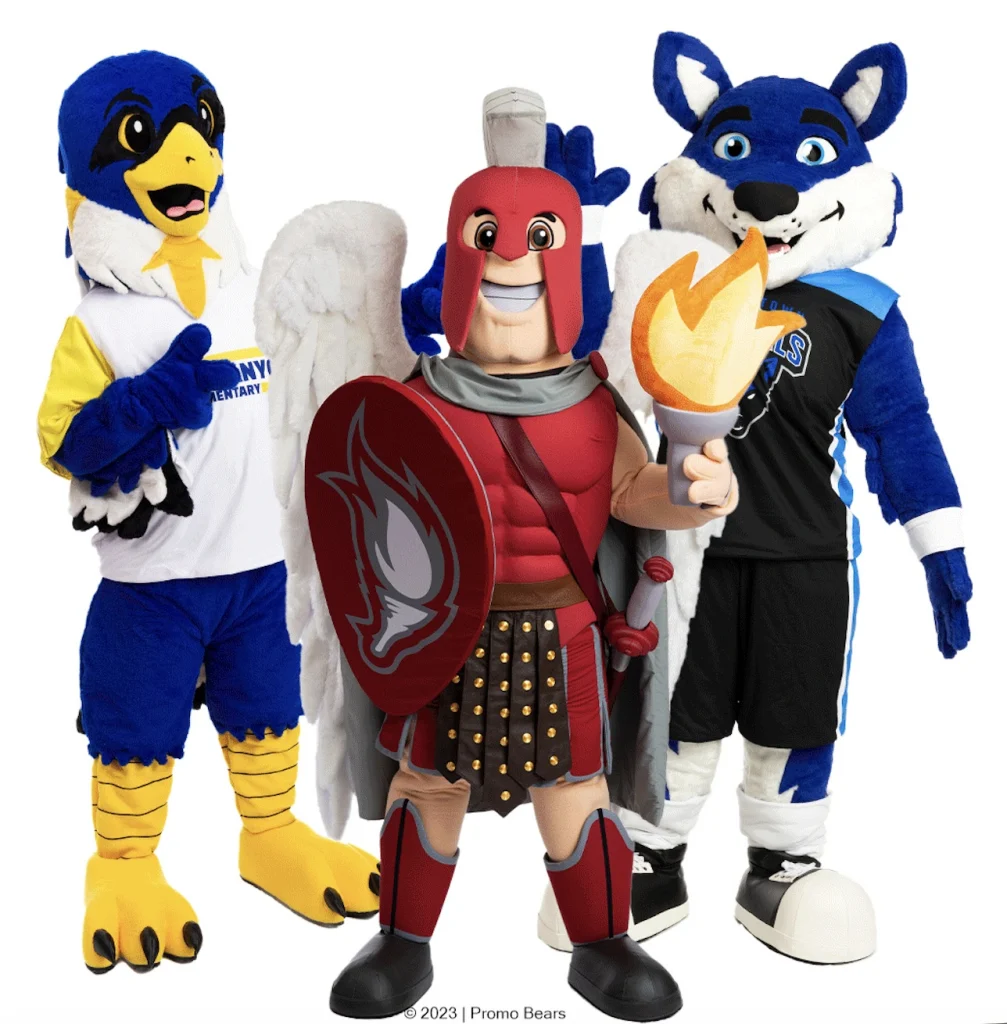
Investing in a mascot for a sports club delivers real, measurable ROI across multiple revenue streams. Clubs that introduce a well-designed mascot typically see gains in merchandise sales, sponsorship value, ticket demand, and long-term fan loyalty. The return is strongest when the mascot becomes a consistent part of the club’s identity rather than a one-time promotional effort. Below, we break down exactly how that return is generated and what it looks like in practice.
How does a mascot generate revenue for a sports club?
A mascot for a sports club generates revenue by creating new merchandise opportunities, increasing the emotional appeal of attending games, and strengthening sponsorship packages. When fans connect with a mascot, they spend more on branded products, attend more events, and bring friends and family along. The mascot becomes a commercial asset that earns its keep throughout the season.
The most direct revenue driver is merchandise. A recognizable mascot character opens up an entirely new product category: plush toys, keychains, stickers, stress balls, enamel pins, and apparel featuring the mascot’s likeness. These items sell at games, in club shops, and online. Fans who might skip a generic club hoodie will happily buy a mascot plush for their child or a mascot keychain for themselves.
Mascots also add commercial value to sponsorship deals. Sponsors pay more for visibility that feels warm and engaging rather than purely transactional. A mascot that interacts with fans on the concourse, appears in social media content, and represents the club at community events gives sponsors a human-scale presence that a logo on a jersey simply cannot match.
Finally, the mascot drives ticket sales indirectly. Families with young children are one of the most valuable audience segments for sports clubs. A mascot makes matchday more appealing to that group, turning a game into an experience worth attending as a family outing.
What impact does a mascot have on fan engagement and loyalty?
A mascot has a significant impact on fan engagement and loyalty by giving supporters an emotional focal point that goes beyond the results on the field. Fans form personal connections with mascots, especially younger supporters, and those connections create long-term loyalty that outlasts winning and losing streaks. A beloved mascot keeps fans engaged even during difficult seasons.
At live events, a mascot creates moments. Whether it is high-fiving kids in the stands, leading crowd chants, or performing at halftime, the mascot gives fans something to react to and share. Those shareable moments extend the club’s reach on social media without any additional ad spend.
Loyalty is built through repetition and familiarity. When fans see the same mascot character at every game, at community events, and in club communications, it reinforces a sense of belonging. The mascot becomes part of the shared identity of being a supporter, which makes fans feel more invested in the club’s success.
For younger fans in particular, the mascot is often the first touchpoint with the club. Children who grow up loving a mascot tend to become lifelong supporters. That kind of early emotional investment is difficult to quantify in a single season but pays off enormously over the course of a fanbase’s lifetime.
How does a mascot improve a sports club’s brand recognition?
A mascot improves a sports club’s brand recognition by giving the club a visual identity that is instantly recognizable, easy to remember, and emotionally engaging. Strong mascots are distinctive enough to be identified at a glance, even without a club name attached. That level of recognition is what separates clubs that feel like brands from those that feel like local teams.
Brand recognition works through consistent repetition. A mascot that appears at every game, on every piece of merchandise, and across all digital channels trains the audience to associate that character with the club. Over time, the mascot becomes shorthand for the club’s values and personality.
Mascots also make clubs more visible in the wider community. When the mascot visits schools, appears at charity events, or shows up at local festivals, the club’s brand reaches people who may never have attended a game. That community presence builds goodwill and keeps the club top of mind for potential new supporters.
For clubs looking to strengthen club identity, a mascot offers something that a logo redesign or a new kit cannot: a living, interactive representation of what the club stands for. That kind of brand presence is memorable in a way that purely visual branding rarely achieves.
What types of mascot products deliver the best ROI for sports clubs?
The mascot products that deliver the best ROI for sports clubs are those that combine low production cost with high perceived value and broad appeal. Plush toys, keychains, stickers, and enamel pins consistently perform well because they are affordable for fans to buy, easy to produce in volume, and effective at keeping the mascot visible in everyday life.
Here are the product types that tend to generate the strongest returns for sports clubs:
- Plush toys: High perceived value, especially for families with young children. They sit on shelves and in bedrooms, keeping the mascot visible long after the game.
- Keychains and enamel pins: A low price point means high sales volume. Fans buy them as collectibles or gifts, and they are easy to produce in custom mascot shapes.
- Stickers: Extremely low cost to produce and highly shareable. Fans put them on laptops, water bottles, and cars, turning everyday items into club advertising.
- Stress balls: A popular giveaway item at events and a strong seller in club shops. Custom mascot stress balls take around 10 to 12 weeks to produce but have a long shelf life as a fan favorite.
- Giant inflatables: Higher upfront investment, but they create dramatic visual impact at stadiums and events. Production typically takes 3 to 4 weeks, making them practical for seasonal campaigns.
The key is to match the product to the occasion. Giveaway items like stickers and temporary tattoos work well for matchday promotions. Higher-value items like plush toys and keychains are better suited to retail sale in the club shop or online store.
How much does a custom mascot costume cost for a sports club?
A custom mascot costume for a sports club is a professional investment that varies depending on complexity, size, and the level of detail involved. Costs typically reflect the craftsmanship required to produce a high-quality, wearable costume that looks great on camera, holds up through a full season of use, and is comfortable enough for performers to wear for extended periods.
Rather than offering a one-size-fits-all price, reputable mascot producers work from a free concept illustration based on the club’s logo or character idea. That illustration forms the basis of a fixed quote, so clubs know exactly what they are committing to before production begins. This approach eliminates the vague estimates that make budget planning difficult.
Production timelines are worth factoring into the cost conversation. A custom mascot costume typically takes 12 to 16 weeks from design approval to delivery. Planning ahead means clubs can avoid rush fees and ensure the mascot is ready for the start of the season or a major event.
When evaluating cost, it helps to think in terms of cost per use rather than upfront price. A well-made mascot costume that performs reliably across hundreds of appearances, generates merchandise revenue, and boosts sponsorship value pays for itself many times over. The upfront investment looks very different when measured against the commercial return it enables.
When is the right time for a sports club to invest in a mascot?
The right time for a sports club to invest in a mascot is when the club is ready to treat fan engagement as a long-term strategy rather than a short-term tactic. Clubs that get the most out of their mascot investment tend to introduce the character at a meaningful moment, such as a season launch, a stadium opening, a rebrand, or a significant anniversary.
Timing also matters from a production standpoint. Because custom mascot costumes take 12 to 16 weeks to produce, clubs need to plan well in advance of their intended launch date. A mascot ordered in the middle of the season will not be ready until the following season. Starting the process early gives the club time to build anticipation and plan a proper introduction.
There are a few clear signals that a club is ready to make this investment:
- The club has a stable enough fanbase to support merchandise sales and matchday activations.
- Leadership is committed to using the mascot consistently across events, digital channels, and community appearances.
- There is a budget in place not just for the costume but for the broader mascot program, including merchandise and promotional materials.
- The club has a clear sense of the character’s personality and how it reflects the club’s values and identity.
Clubs that tick those boxes are in a strong position to see real ROI from their mascot investment. Those that introduce a mascot without a plan for how to use it consistently tend to see much weaker returns.
How Promo Bears helps sports clubs build a winning mascot program
We work with sports clubs of all sizes to bring mascot characters to life, from the first sketch to the finished costume and everything in between. Our process starts with a free concept illustration based on your club’s logo or character idea, with unlimited revisions until the design is exactly right. Production only begins once you are fully satisfied with the result.
Here is what we bring to every sports club project:
- Over 19 years of experience in mascot design and custom mascot costume production
- Lifelike 3D eyes, an integrated ventilation system, and exceptional wearing comfort
- A dedicated project manager who oversees every step from design to delivery
- A full range of mascot merchandise including plush toys, keychains, stickers, stress balls, and giant inflatables
- Transparent, fixed pricing based on your exclusive design before any commitment is made
Whether you are launching a new mascot or expanding an existing one into a full merchandise program, we are ready to help. Get your free quote and find out what your club’s mascot could look like.
Frequently Asked Questions
How do we introduce a new mascot to fans without it feeling forced or gimmicky?
The most effective mascot launches are tied to a meaningful club moment — a season opener, a milestone anniversary, or a community event — so the introduction feels like news rather than a marketing push. Build anticipation beforehand with teaser content on social media, let fans vote on the mascot’s name, or reveal the character at a high-attendance match to maximize the debut impact. The goal is to give fans a reason to feel ownership over the mascot from day one, which accelerates the emotional connection that drives long-term engagement.
What personality traits should a sports club mascot have?
The mascot’s personality should reflect the club’s values and resonate with its core audience — typically a mix of energy, humor, and approachability that works equally well for young children and adult supporters. Avoid personalities that are too aggressive or niche, as the mascot needs to function in a wide range of settings, from rowdy matchday crowds to quiet school visits. Defining two or three core personality traits before the design process begins ensures that the character’s look, behavior, and content presence all tell a consistent story.
Can a smaller or semi-professional club realistically afford a mascot program?
Yes — a mascot program can be scaled to fit almost any budget by prioritizing the elements that deliver the fastest return. A custom costume paired with a small range of low-cost merchandise like stickers, keychains, and enamel pins is a practical entry point that generates revenue without a large upfront commitment. As merchandise sales grow and sponsorship value increases, the program can expand into higher-investment items like plush toys and giant inflatables, effectively funding its own growth over time.
What are the most common mistakes clubs make when launching a mascot?
The most common mistake is treating the mascot as a one-off activation rather than a long-term brand asset — appearing at a few games and then disappearing from the club’s communications entirely. A close second is failing to define the mascot’s role clearly, so the character ends up underused at events and absent from digital content. Clubs that avoid these pitfalls by building a simple appearance schedule and a basic content plan from the outset see dramatically stronger fan engagement and commercial returns.
How do we measure whether our mascot investment is actually paying off?
The clearest metrics to track are mascot-specific merchandise revenue, changes in matchday attendance among family groups, and any uplift in sponsorship deal values after the mascot is introduced. On the engagement side, monitor social media shares and reach from mascot-related content compared to standard club posts, as this reveals the character’s organic amplification value. Reviewing these numbers at the end of each season gives a concrete picture of ROI and highlights which activations — matchday appearances, community visits, or digital content — are generating the strongest returns.
How should we handle mascot appearances to get the most out of each one?
Structure each appearance with a clear purpose — whether that is driving merchandise sales near the club shop, creating shareable moments in the stands, or building goodwill at a community event — so every outing contributes to a measurable goal. Assign a handler to accompany the mascot at all times to manage crowd interactions, protect the costume, and capture photo and video content for social media. Even a single well-documented appearance can generate a week’s worth of engaging content across the club’s digital channels, multiplying the value of the time invested.
Can the same mascot character work across both digital content and live appearances?
Absolutely, and clubs that use the mascot consistently across both channels see the strongest brand recognition results. For digital content, the mascot can feature in short-form videos, matchday previews, fan polls, and behind-the-scenes clips that keep supporters engaged between games. The key is maintaining character consistency — the same name, personality, and visual identity — whether the mascot is performing live in front of thousands of fans or appearing in a 15-second social media clip, so every touchpoint reinforces the same emotional connection.