
Trade show promotion and event sponsorship are two distinct marketing strategies. Trade show promotion means actively exhibiting at an industry event, where your brand sets up a booth, engages visitors directly, and generates leads on the show floor. Event sponsorship means funding or supporting someone else’s event in exchange for brand visibility, without necessarily having a physical presence. Both can deliver strong results, but they serve different goals and budgets.
The right choice depends on where your audience is, what kind of engagement you want to create, and how much control you need over the brand experience. This article breaks down both approaches so you can decide which one fits your next campaign.
Which one gives your brand more visibility?
Event sponsorship typically delivers broader visibility because your brand appears across all event marketing materials, signage, digital promotions, and announcements. Trade show promotion gives you deeper, more direct visibility with a specific audience that walks past your booth. If reach is the goal, sponsorship wins. If quality engagement with a targeted crowd matters more, trade show promotion has the edge.
Think of it this way: sponsorship puts your logo in front of thousands of people who may not seek you out, while a trade show booth puts your team face to face with the people most likely to buy from you. Both are valuable, but they create very different kinds of impressions.
For brands that want both reach and direct engagement, combining sponsorship with a booth presence at the same event is a proven approach. You get the broad awareness from your sponsorship package and the personal connection from your exhibit space.
What does trade show promotion actually include?
Trade show promotion includes everything your brand does to attract, engage, and convert visitors at an industry exhibition or expo. At its core, it means renting exhibit space, designing a booth, and staffing it with knowledgeable team members who can have real conversations with prospects.
A solid trade show strategy typically involves:
- A well-designed booth that communicates your brand clearly and quickly
- Live product demonstrations or interactive experiences
- Promotional giveaways that give visitors something memorable to take home
- Lead capture tools, such as badge scanners or sign-up forms
- Pre-show outreach to book meetings and drive traffic to your booth
- Post-show follow-up to convert conversations into real opportunities
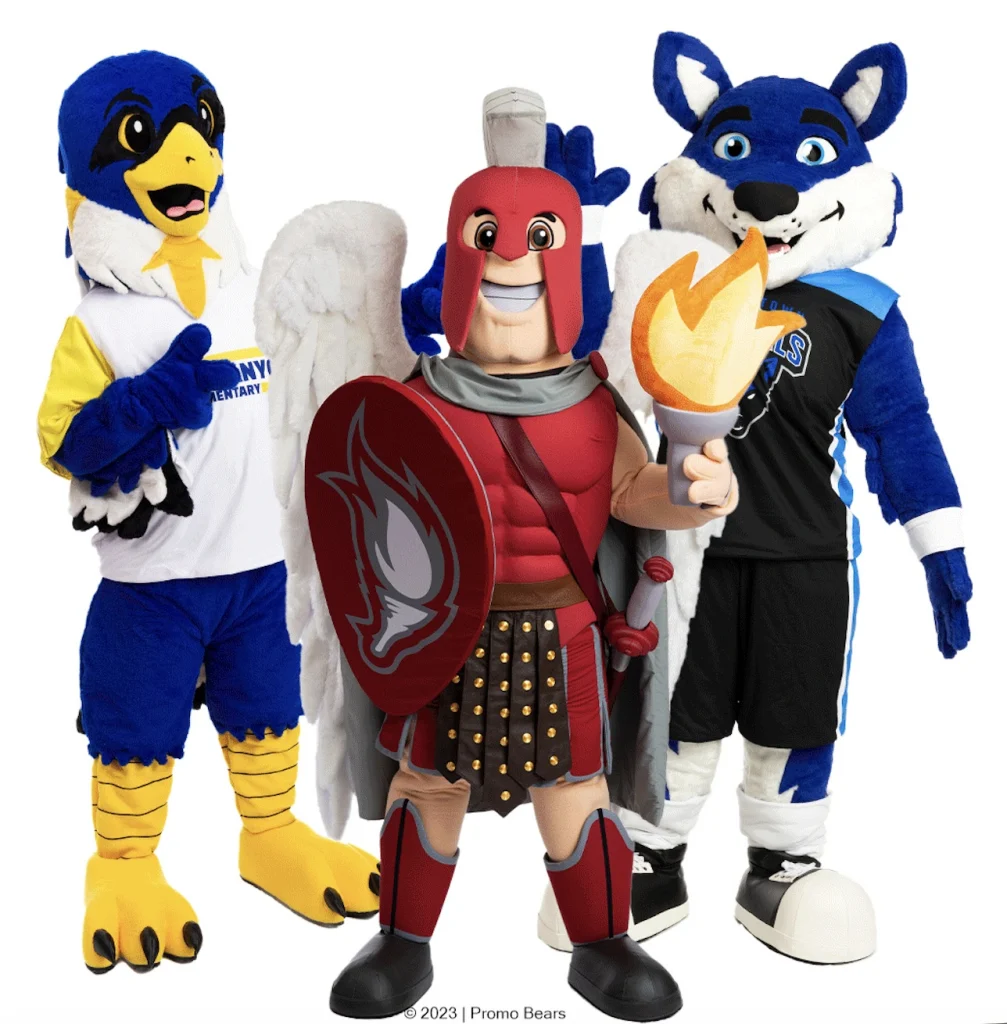
The physical environment of a trade show gives brands a rare opportunity to create a multi-sensory experience. A mascot costume, a giant inflatable, or a striking branded display can stop foot traffic and pull people into your space in ways that a banner ad simply cannot.
Promotion at trade shows rewards brands that invest in standing out. The more memorable your presence, the longer the impression lasts after the event ends.
What does event sponsorship actually include?
Event sponsorship is a financial or in-kind arrangement where a brand provides support to an event organizer in exchange for agreed promotional benefits. Those benefits typically include logo placement, mentions in event communications, speaking opportunities, and sometimes dedicated activation zones or branded areas within the venue.
Sponsorship packages vary widely depending on the event and the investment level. Common tiers include:
- Title or presenting sponsor: The highest level, often including naming rights, prominent logo placement everywhere, and the most speaking or activation opportunities
- Gold or platinum sponsor: Significant visibility across event materials with some dedicated benefits like a branded lounge or sponsored session
- Silver or supporting sponsor: Logo inclusion on event collateral and website, with fewer activation rights
- In-kind sponsor: Providing products or services rather than cash, often in exchange for mentions and brand credit
Unlike trade show promotion, sponsorship does not always require your team to be physically present. Your brand benefits from association with the event and the audience it attracts, even if you are not on the floor engaging visitors directly.
How do costs compare between the two approaches?
Trade show promotion tends to involve more upfront costs because you are paying for booth space, design, staffing, travel, shipping, and promotional materials all at once. Event sponsorship fees vary enormously, but the cost is usually more predictable since you agree on a package price in advance with the event organizer.
For trade shows, costs can add up quickly. Booth rental alone at a major industry expo can run from a few thousand dollars to tens of thousands, and that is before you factor in display design, printed materials, giveaways, and the time your team spends away from the office.
Sponsorship can sometimes offer better cost efficiency for brand awareness, especially if you are targeting a large audience. However, the return depends heavily on how well the event’s audience matches your target market. A poorly matched sponsorship delivers low value no matter how affordable the package looks.
The smartest brands evaluate both options not just by sticker price but by cost per meaningful interaction. A well-executed trade show booth that generates 50 qualified leads may deliver far more value than a sponsorship that puts your logo in front of 5,000 people who are not your buyers.
When should a brand choose sponsorship over trade show promotion?
Choose sponsorship when your primary goal is broad brand awareness rather than direct lead generation. Sponsorship makes the most sense when the event’s audience aligns closely with your target market, when you want to build credibility through association with a respected event, or when you do not have the resources to staff and manage a full exhibit.
Sponsorship also works well when your brand is new or entering a market and needs recognition before it can have productive sales conversations. Being seen alongside established players at a major event signals legitimacy, even without a booth presence.
On the other hand, if your team is ready to have real conversations, demonstrate products, and capture leads in real time, trade show promotion will almost always deliver stronger direct returns. The personal interaction that happens at a booth is hard to replicate through any other channel.
Can promotional products work for both strategies?
Promotional products are one of the most flexible tools in event marketing, and they work effectively for both trade show promotion and event sponsorship. The key is matching the product to the context and the audience.
At a trade show booth, branded giveaways serve a clear purpose: they reward visitors for stopping by, give them something tangible to remember you by, and keep your brand visible long after the event ends. Items like custom stress balls, plush toys, keychains, and stickers are popular because they are easy to carry, genuinely useful, and highly brandable.
For event sponsorship, promotional products can be distributed in event swag bags, placed at branded activation zones, or used as prizes and giveaways during sponsored sessions. A mascot character or giant inflatable placed at a sponsored area creates a visual anchor that draws attention and reinforces your brand association with the event.
The most effective promotional products are ones that feel relevant to the audience and reflect the quality of your brand. A cheap, forgettable item can actually do more harm than good. A well-designed, creative product that people want to keep does the opposite: it turns attendees into walking brand ambassadors long after they leave the venue.
How Promo Bears helps with trade show and event promotion
Whether you are planning promotion at trade shows or building a sponsorship activation, we have the products and expertise to make your brand impossible to ignore. At Promo Bears, we specialize in custom mascot costumes, giant inflatables, plush toys, and a full range of branded merchandise designed to create real impact at live events.
Here is what we bring to your event strategy:
- Custom mascot costumes ready in 12 to 16 weeks, built around your brand’s character or logo
- Giant mascot inflatables that create a visual centerpiece for your booth or sponsored area, produced in 3 to 4 weeks
- Custom stress balls in fully custom shapes with PMS color matching, ready in 10 to 12 weeks
- Plush toys, keychains, stickers, and more for swag bags, giveaways, and branded activations
- A free concept illustration to start every project, with unlimited revisions and a dedicated project manager from start to delivery
We have created over 4,000 mascots and promotional products for brands like NASA, Walmart, Red Bull, and Amazon. If you want your next trade show booth or sponsored event to be the one people remember, we would love to help you make it happen.
Get your free quote today and let us build something great together.
Frequently Asked Questions
How do I measure the ROI of trade show promotion versus event sponsorship?
For trade show promotion, track metrics like number of leads captured, meetings booked, and post-show conversions against your total event spend to calculate cost per lead and cost per acquisition. For event sponsorship, ROI is harder to measure directly, so focus on brand lift indicators such as website traffic spikes during the event period, social media mentions, and any promo codes or landing pages tied exclusively to the sponsorship. Setting clear goals before the event — whether that’s 50 qualified leads or 10,000 brand impressions — gives you a benchmark to evaluate success honestly.
What's the biggest mistake brands make when exhibiting at a trade show for the first time?
The most common mistake is underestimating how much pre-show preparation drives results — many first-time exhibitors show up without a lead capture system, no pre-scheduled meetings, and staff who aren’t trained on consistent messaging. Another frequent misstep is investing heavily in booth space but cutting corners on the booth design and giveaways, which makes it hard to stand out in a crowded exhibit hall. Before your first show, build a simple playbook that covers how your team will greet visitors, what the pitch looks like, how leads get recorded, and exactly how follow-up will happen within 48 hours of the event closing.
How far in advance should I start planning for a trade show or event sponsorship?
For trade show promotion, aim to start planning at least 3 to 6 months before the event, especially if you need custom booth displays, mascot costumes, or large inflatables — many of these items have production lead times of 10 to 16 weeks. For event sponsorship, reach out to organizers 4 to 6 months in advance, as the best sponsorship tiers and most visible placements tend to sell out early. Starting early also gives you time to align your sponsorship benefits with a broader campaign, so the event doesn’t exist in isolation from the rest of your marketing.
Can a small business with a limited budget realistically compete at a major trade show?
Yes — smaller brands can absolutely make a strong impression by being strategic rather than trying to out-spend larger competitors. Focus your budget on one or two high-impact elements: a bold, eye-catching display or a unique branded giveaway that people actually want to keep, rather than spreading spend thin across everything. Booking a smaller booth in a high-traffic area, training your team to be proactive in starting conversations, and doing aggressive pre-show outreach to schedule meetings in advance can level the playing field significantly. Memorable beats massive more often than people expect.
What types of events are best suited for sponsorship versus trade show exhibiting?
Trade show exhibiting works best at industry-specific expos, B2B conferences, and buyer-focused events where attendees are actively evaluating vendors and solutions — these are environments built for direct selling conversations. Event sponsorship tends to perform better at consumer-facing events, community gatherings, sports events, festivals, or conferences where your audience is present but not necessarily in a buying mindset. The key question to ask is: are attendees there to discover and evaluate products, or are they there for an experience? If it’s the latter, sponsorship is usually the smarter fit.
How do I choose the right promotional product for a trade show versus a sponsorship activation?
For trade show booths, choose items that are easy to carry throughout the event, practical enough that people won’t discard them, and branded clearly enough that your company name stays visible — think custom stress balls, plush toys, or keychains that fit in a bag without adding bulk. For sponsorship activations, think bigger and more experiential: branded items placed in swag bags should feel premium and on-brand, while items used in activation zones or as prizes should create a moment worth photographing and sharing. In both cases, the product should feel like a natural extension of your brand rather than a generic filler, since a well-chosen item can spark conversations and extend your brand’s reach well beyond the event itself.
Is it worth combining trade show exhibiting and event sponsorship at the same event?
Combining both strategies at the same event is one of the most effective approaches available to brands with the budget to do it, because you capture both broad awareness and direct engagement in a single campaign. Your sponsorship gets your brand in front of every attendee through signage, digital mentions, and event communications, while your booth gives interested prospects a physical place to learn more, see demonstrations, and connect with your team. To make the most of the combination, ensure your sponsorship assets actively drive traffic to your booth — for example, by including your booth number in sponsored announcements or placing a branded inflatable near your exhibit space to create a visual connection between the two.