
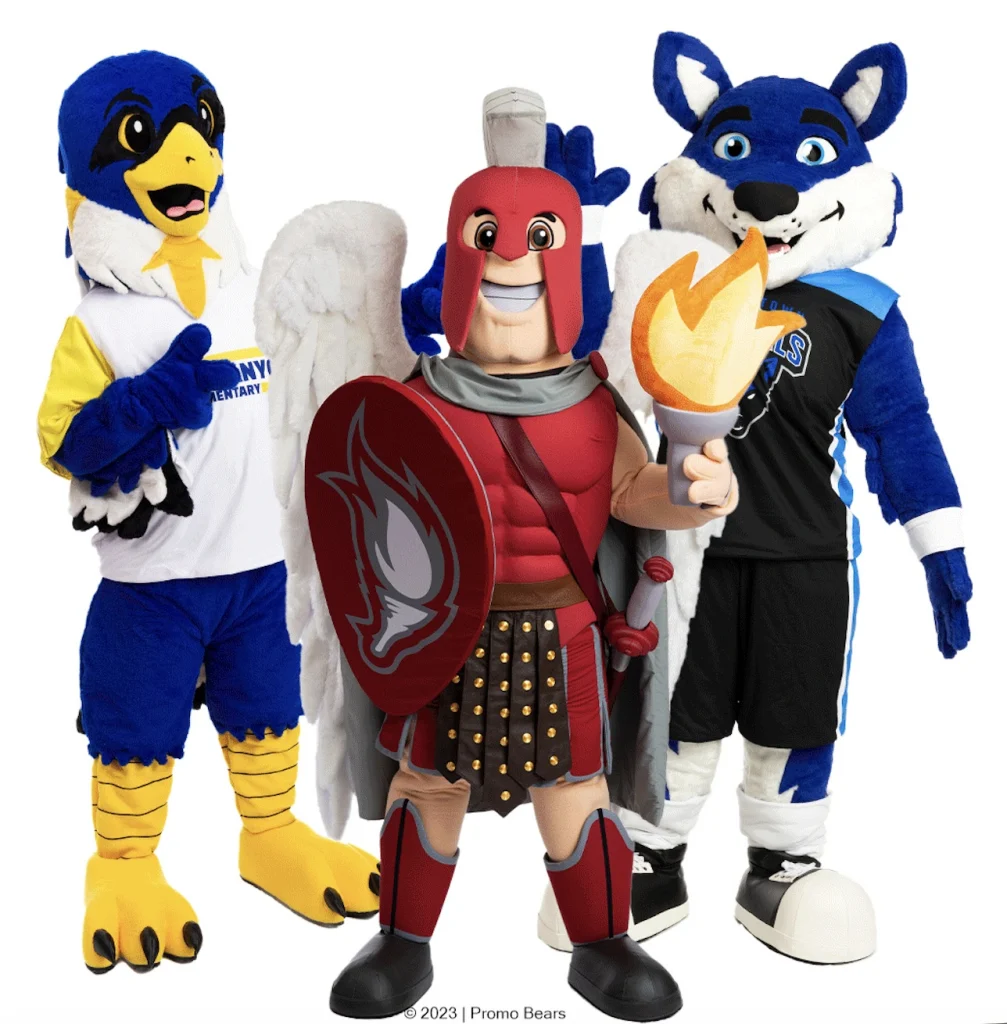
You turn customers into brand ambassadors through mascots by giving them something they genuinely want to engage with, share, and show off. A well-designed mascot creates an emotional connection that goes beyond a logo or tagline. It becomes a personality people can rally around. The sections below break down exactly how that process works, from design to deployment to measuring real results.
What makes a mascot effective at building brand loyalty?
A mascot builds brand loyalty by giving your brand a face, a personality, and a presence that people can emotionally connect with. Unlike a static logo, a mascot interacts with your audience. It shows up at events, appears on merchandise, and becomes a consistent character people recognize and trust over time.
The most effective mascots share a few key traits. They reflect the brand’s actual values rather than being designed purely for cuteness. They have a consistent personality across every touchpoint, whether that’s a live costume appearance, a plush toy, or a giant inflatable at a stadium entrance. And they are designed with the audience in mind, not just the marketing team.
Loyalty grows when people feel a sense of belonging. A mascot gives fans, customers, and community members something to identify with. Think of how deeply people connect with sports team mascots. That same emotional pull works just as well for retail brands, universities, and corporate campaigns when the mascot is developed with intention and consistency.
How do mascots encourage customers to share and promote a brand?
Mascots encourage sharing because they are inherently visual, fun, and social. People naturally want to take photos with a mascot, post that content online, and tag the brand. That organic behavior is one of the most powerful forms of word-of-mouth marketing available to any organization.
When a mascot appears at an event, it becomes a focal point. Attendees gather around it, interact with it, and document the moment. That content then reaches their personal networks, putting your brand in front of people who were never at the event. The mascot essentially does the promotion for you.
Mascot merchandise amplifies this effect. When someone wears a branded hoodie featuring your mascot or carries a plush version of it, they become a walking advertisement. The difference between generic branded merchandise and mascot merchandise is personality. People connect with characters, and that connection drives them to display and share the brand voluntarily.
What types of mascot products turn fans into ambassadors?
The mascot products most effective at turning fans into ambassadors are the ones people use, wear, or display publicly. These products extend the mascot’s reach far beyond events and campaigns, keeping your brand visible in everyday life.
- Plush toys: Highly shareable and collectible, especially for family-oriented brands, sports teams, and universities. They sit on desks, appear in photos, and travel with people.
- Custom stress balls: A practical desk item that keeps your mascot visible in offices and homes. We produce these in fully custom shapes with PMS color matching, and they are ready in 10 to 12 weeks.
- Mascot stickers: Low cost, high visibility. People put them on laptops, water bottles, and notebooks. Ready in approximately 4 weeks, they are one of the fastest ways to get your mascot into the hands of a large audience.
- Giant mascot inflatables: Perfect for events, retail locations, and stadium appearances. These are ready in 3 to 4 weeks and create an immediate, high-impact brand moment that drives photos and social sharing.
- Keychains, enamel pins, and shoe charms: Small, wearable, and giftable. These items travel everywhere their owner goes, giving your mascot consistent daily exposure.
The most successful ambassador programs combine a live mascot costume with a range of smaller merchandise items. The costume creates the experience, and the merchandise lets people take a piece of that experience home.
Which industries benefit most from mascot ambassador programs?
Mascot ambassador programs deliver the strongest results in industries where emotional connection, community, and repeat engagement drive business outcomes. That covers a wide range of sectors, but some stand out consistently.
Sports, entertainment, and education
Sports teams at every level, from youth leagues to professional franchises, use mascots to build fan loyalty and drive merchandise revenue. Schools and universities rely on mascots to create school spirit and a sense of shared identity among students, alumni, and donors. Entertainment brands use mascots to give their IP a tangible, interactive presence at events and in retail.
Retail, FMCG, and hospitality
Consumer-facing brands in retail and fast-moving consumer goods use mascots to improve brand recognition on shelves and in campaigns. A mascot makes a product line immediately identifiable and gives marketing teams a versatile character to deploy across packaging, advertising, and events. In hospitality, mascots create memorable guest experiences that people talk about and share long after the visit.
Corporate brands and non-profits also see strong results, particularly when they use mascots to humanize their mission and create a more approachable public identity. Any organization that needs to build trust, drive engagement, and stand out in a crowded market can benefit from a well-executed mascot strategy.
How do you design a mascot that resonates with your target audience?
You design a mascot that resonates by starting with your audience, not your brand. Before any sketches happen, you need a clear picture of who you are trying to connect with, what they value, and what kind of character they would genuinely engage with. The mascot’s personality, visual style, and attitude should all reflect that understanding.
A few practical steps make a real difference here:
- Define the character’s personality first. Is it energetic and playful? Trustworthy and calm? Bold and competitive? The personality should mirror your brand values and appeal to your audience’s sensibilities.
- Choose a form that makes sense. The mascot’s visual design should feel natural for your brand category and audience. A children’s education brand needs something approachable and friendly. A sports brand can go bolder and more dynamic.
- Test the concept with real people. Before committing to production, share early designs with members of your target audience and gather honest feedback. Adjust based on what resonates, not just what the internal team prefers.
- Plan for versatility. A great mascot works across multiple formats, from a full costume to a 2-inch sticker. Design with that range in mind so the character holds up at every scale.
- Commit to consistency. Once the design is approved, use it consistently across every channel and product. Inconsistency erodes the recognition you are working to build.
The design process works best when it involves iteration. Starting with a concept illustration and refining it through multiple rounds of feedback produces a stronger result than trying to get everything perfect in the first draft.
How do you measure the ROI of a mascot ambassador strategy?
You measure the ROI of a mascot ambassador strategy by tracking the specific outcomes your mascot is designed to drive, whether that is brand recognition, event engagement, merchandise revenue, or social media reach. The key is setting clear benchmarks before the mascot launches so you have something meaningful to compare against.
The most useful metrics to track include social media mentions and user-generated content featuring the mascot, merchandise sales volume over time, event attendance and engagement data, and changes in brand recall scores if you run awareness surveys. For retail and FMCG brands, you can also track whether product lines featuring the mascot outperform those without it.
Mascot merchandise provides some of the clearest ROI signals because it generates direct revenue while simultaneously building brand visibility. Tracking which products sell best also tells you which audience segments are most engaged, which helps you refine future campaigns.
Over a longer time horizon, the most telling indicator is customer retention. Brands with strong mascot identities tend to see higher repeat purchase rates and stronger community engagement because the mascot keeps the brand top of mind between transactions. That ongoing visibility is difficult to assign a single dollar value to, but its contribution to revenue is real and cumulative.
How Promo Bears helps you build a mascot ambassador program
We work with marketing managers, brand directors, and event teams across the US and Canada to bring mascot strategies to life from the ground up. Whether you are starting with a custom mascot costume or building out a full range of mascot merchandise, we handle every step in-house so you get consistent quality across every product.
Here is what we bring to the table:
- A free concept illustration based on your logo or design idea, with unlimited revisions before production begins
- Custom mascot costumes ready in 12 to 16 weeks, with 3D realistic eyes, a built-in ventilation system, and a dedicated project manager overseeing your order
- Custom stress balls in fully custom shapes with PMS color matching, ready in 10 to 12 weeks
- Giant mascot inflatables ready in 3 to 4 weeks for events and retail activations
- Plush toys, stickers, keychains, enamel pins, and a full range of mascot merchandise to extend your brand into everyday life
- Over 4,000 mascots created for clients including NASA, Red Bull, Amazon, and Walmart
If you are ready to turn your brand into something people genuinely connect with and talk about, we would love to show you what is possible. Get a free quote and let us build something together.
Frequently Asked Questions
How long does it typically take to launch a full mascot ambassador program from scratch?
The timeline depends on which products you prioritize, but a realistic launch window for a complete program runs between 16 and 20 weeks. The mascot costume itself takes 12 to 16 weeks, so that is usually the longest lead item and should be ordered first. Faster-turnaround products like inflatables (3 to 4 weeks) and stickers (approximately 4 weeks) can be timed to arrive closer to your launch event, letting you build momentum without waiting on everything at once.
What if we already have an existing mascot design — can it be adapted into merchandise and costumes?
Yes, and this is actually the most common starting point for many brands. An existing mascot illustration or logo character can be adapted into a full costume, plush toy, inflatable, and smaller merchandise items without starting from scratch. The key consideration is whether the existing design translates well across different formats and scales — a character that works beautifully as a 2D logo may need minor adjustments to work as a 3D costume or a 1-inch enamel pin. A good production partner will flag those issues early and suggest modifications that preserve the character’s identity.
What are the most common mistakes brands make when launching a mascot program?
The most common mistake is launching a mascot without a deployment plan — designing the character but not thinking through how, where, and how often it will actually show up in front of the audience. A mascot that only appears once or twice a year builds very little recognition or loyalty. The second most common mistake is inconsistency: using different versions of the mascot across channels or allowing the character’s personality to drift between touchpoints. Both issues undermine the trust and familiarity that make mascot programs effective in the first place.
How do we keep a mascot feeling fresh and relevant over time without losing brand consistency?
The most effective approach is to evolve the mascot’s context and content rather than its core design. Seasonal costumes, limited-edition merchandise variants, and campaign-specific storylines keep things fresh while the underlying character stays consistent and recognizable. Think of how major sports mascots introduce holiday outfits or themed merchandise without changing the mascot itself — the novelty comes from the context, not from redesigning the character. Introducing new merchandise formats is another low-risk way to re-engage your audience and create a sense of collectibility around the mascot.
Is a mascot program a realistic investment for smaller brands or organizations with limited budgets?
Absolutely — mascot programs are highly scalable, and smaller organizations do not need to launch with a full costume and complete merchandise line on day one. A practical entry point is starting with high-impact, lower-cost items like stickers, enamel pins, or a custom stress ball to introduce the mascot to your audience and gauge engagement before committing to larger investments. Once you see which products resonate and where your audience is most active, you can expand the program strategically. The concept illustration phase is also a low-cost way to develop and validate a mascot design before any production spending begins.
How do we encourage customers to actually share mascot content on social media rather than just passively enjoying it?
The most reliable driver of organic sharing is giving people a reason and an easy opportunity to create content in the moment — which is exactly what a live mascot appearance does. Beyond events, you can actively encourage sharing by creating photo-worthy moments around mascot merchandise (unboxing experiences, limited drops, or collectible series), running user-generated content campaigns with a branded hashtag, and resharing customer content on your own channels to reward participation. People are far more likely to post when they know the brand is watching and will engage back.
What should we look for when choosing a mascot production partner?
The most important factors are in-house production capability, a clear revision process before manufacturing begins, and a track record with projects similar in scope to yours. A partner who handles design, production, and quality control under one roof gives you much more consistency than one who outsources manufacturing — especially when you are ordering multiple product types that all need to match the same character design. Ask specifically about how they handle design approvals, what their revision policy looks like, and whether you will have a dedicated point of contact managing your order from start to finish.