
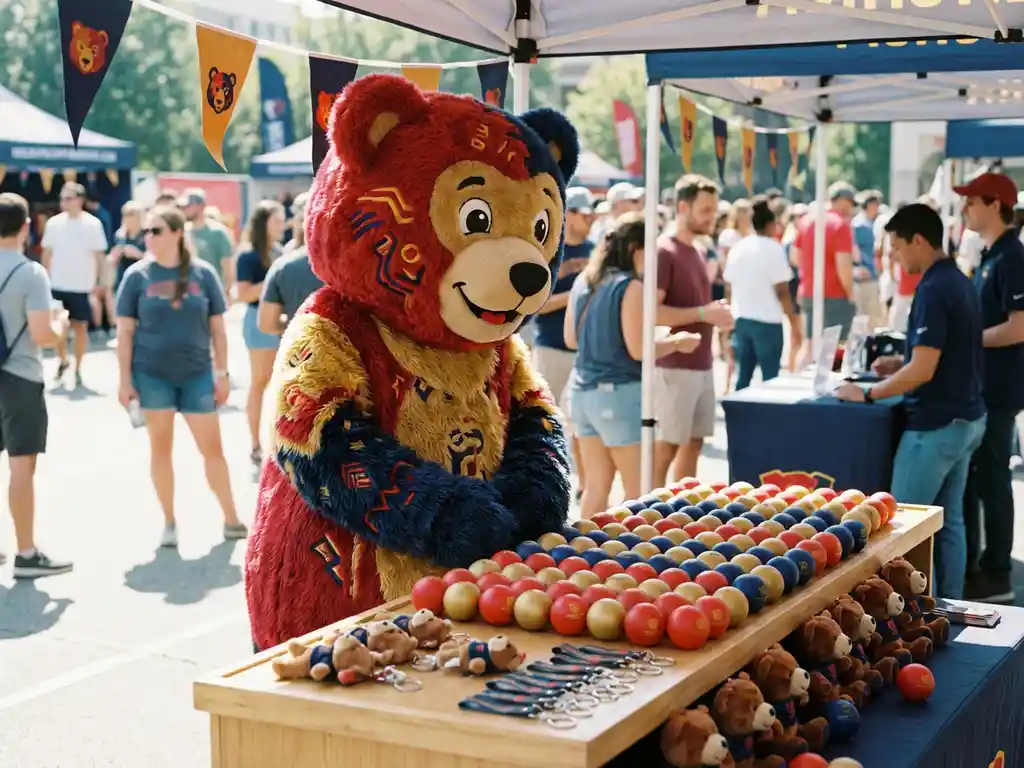
Promotional products have been a cornerstone of marketing for decades—and for good reason. When done right, a well-chosen branded item can do something a digital ad rarely achieves: it sticks around. It sits on a desk, gets squeezed during a stressful meeting, or travels in a bag to a trade show floor, keeping your brand visible long after the initial interaction. But just how effective are promotional products in advertising, and how do you make them work for your brand?
Whether you are a marketing manager planning your next campaign or a brand director looking to justify a promotional budget, this guide answers the questions that matter most. From measuring ROI to choosing the right product type, here is everything you need to know.
What are promotional products in advertising?
Promotional products are branded, physical items given to customers, prospects, or employees to increase brand awareness, drive engagement, and support marketing campaigns. They range from everyday office items and apparel to custom-shaped merchandise designed to reflect a brand’s identity. Unlike traditional advertising, they offer tangible, lasting value to the recipient.
What sets promotional products apart from other advertising formats is their physical presence. A billboard disappears from view the moment you drive past it. A social media ad vanishes with a scroll. A branded item stays in someone’s environment for weeks, months, or even years. That ongoing visibility is what makes promotional products such a powerful and cost-effective advertising tool.
Promotional products span an enormous range of categories, including apparel, drinkware, stationery, tech accessories, custom plush toys, inflatables, and tactile items like stress balls. The most effective ones are items that recipients actually use, which is why choosing the right product for your audience matters just as much as the design itself.
How effective are promotional products compared to other advertising?
Promotional products consistently outperform many traditional advertising formats in terms of recall and lasting impression. Because recipients interact with a physical object repeatedly over time, brand exposure is multiplied well beyond a single ad impression. Industry experience consistently shows that branded merchandise generates higher recall rates than TV, print, and online advertising combined.
The key advantage is what marketers call “dwell time”—the amount of time a person is exposed to a brand message. A digital banner ad might earn a fraction of a second of attention. A branded item used daily can deliver dozens of brand impressions every week, all without any additional spend after the initial investment.
Promotional products also create a sense of reciprocity. When someone receives a useful, high-quality item for free, they tend to feel positively toward the brand that gave it to them. That goodwill translates into stronger brand perception, increased loyalty, and a greater likelihood of referral. This emotional dimension is something that most digital formats simply cannot replicate.
Why do promotional products boost brand recognition?
Promotional products boost brand recognition because they create repeated, physical exposure to your brand in real-world environments. Every time a recipient uses or sees the item, your logo, colors, and message are reinforced. This repetition builds familiarity, and familiarity builds trust, which is the foundation of brand recognition.
There is also a psychological principle at work here known as the mere exposure effect: people tend to develop a preference for things they encounter frequently. A branded item that sits on someone’s desk or travels in their bag becomes part of their daily environment, subtly reinforcing your brand identity without any additional effort on your part.
The quality of the item matters enormously in this equation. A cheap, poorly made product can actually harm brand perception, while a well-crafted, visually distinctive item elevates how people see your brand. This is why investing in custom, high-quality promotional products pays dividends far beyond what the unit cost might suggest.
What types of promotional products work best for advertising?
The promotional products that work best for advertising are those that recipients use regularly, keep for a long time, and associate positively with your brand. Utility drives longevity, and longevity drives impressions. The most effective categories tend to be items that solve a small daily problem or bring a moment of delight.
Some of the top-performing product types include:
- Custom stress balls and tactile items — kept on desks and used repeatedly, generating consistent brand exposure in workplace environments
- Apparel and bags — worn or carried in public, turning recipients into walking brand ambassadors
- Drinkware — used daily at home, the office, or the gym, offering high-frequency brand contact
- Custom plush toys and mascots — emotionally engaging, memorable, and highly shareable on social media
- Stationery and tech accessories — practical, desk-based items with strong daily visibility
The best choice always depends on your audience and campaign goal. A trade show audience might respond well to a fun, eye-catching item they can take home, while a corporate gifting campaign might call for something more premium and polished. Knowing your audience is the starting point for every effective promotional product strategy.
How do you measure the ROI of promotional products?
You measure the ROI of promotional products by tracking brand recall, engagement uplift, lead generation, and conversion rates tied to campaigns that include branded merchandise. Because promotional products serve as a long-term brand touchpoint, ROI should be measured over a longer window than a single campaign, factoring in the cumulative impressions generated over the item’s lifespan.
Here is a practical approach to measuring promotional product ROI:
- Set clear campaign objectives — define whether you are targeting awareness, lead generation, customer retention, or event engagement before distributing any product
- Track distribution and reach — record how many items were distributed, to whom, and in what context
- Measure recall and sentiment — use post-event surveys or follow-up communications to gauge how well recipients remember your brand
- Monitor downstream behavior — track whether recipients visited your website, requested a quote, or made a purchase after receiving the item
- Calculate cost per impression — divide the total cost of the campaign by the estimated number of brand impressions generated over the item’s useful life
Cost per impression is often where promotional products shine. When you factor in that a quality item can generate hundreds of brand impressions over its lifetime, the cost per impression frequently rivals or beats digital advertising, with the added benefit of a positive emotional association attached to each one.
When should a company invest in promotional products?
A company should invest in promotional products when it wants to build lasting brand awareness, strengthen relationships with customers or partners, or create a memorable presence at events. Promotional products are especially effective when a brand needs to stand out in a crowded space or convert a one-time interaction into an ongoing brand relationship.
There are several moments when promotional products deliver particularly strong results:
- Trade shows and exhibitions, where standing out from competitors is essential
- Product launches, where you want to generate buzz and leave a lasting impression
- Corporate gifting seasons, where branded items reinforce relationships with clients and partners
- Employee onboarding, where branded merchandise builds team identity and culture
- Community events and sponsorships, where visibility and goodwill go hand in hand
The timing of your investment also matters. If you are ordering fully custom items, build in enough lead time for design, production, and delivery. Custom-shaped products like custom stress balls typically require 10 to 12 weeks after design approval, so planning ahead ensures your items arrive exactly when you need them.
How Promo Bears helps you get more from promotional products
We specialize in creating fully custom promotional products that do far more than carry a logo. Every item we produce is built around your brand’s unique identity, from custom mascot costumes and giant inflatables to tactile merchandise that keeps your brand in people’s hands every single day.
Our custom stress balls are a great example of what sets us apart:
- Fully custom shapes based on your own design or concept, not a generic mold with a sticker on it
- Precise PMS color matching for consistent branding
- Full-color printing available on round stress balls
- Built from durable, high-quality PU foam that holds fine detail and vibrant color
- Free concept artwork and unlimited revisions before production begins
- A dedicated project manager guiding your order from design to delivery
- Production completed in 10 to 12 weeks after design approval, with rush options available
With over 19 years of experience and more than 4,000 custom projects delivered to clients including NASA, Amazon, and Walmart, we know what it takes to create promotional products that genuinely work. Ready to see what we can create for your brand? Contact us and let us bring your brand to life.