
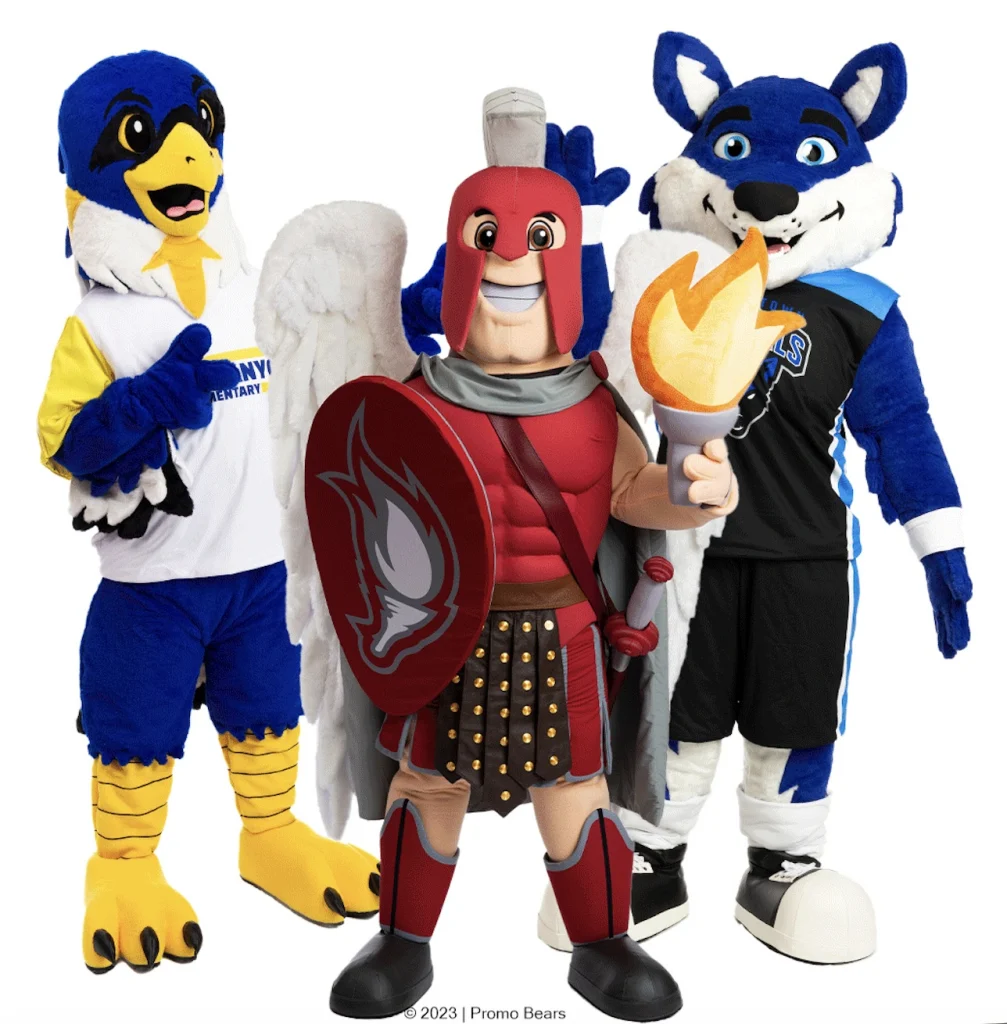
A mascot makes company culture visible by giving your values, personality, and team spirit a physical, recognizable form that people can see, feel, and connect with. Instead of keeping culture abstract, a mascot turns it into something tangible that shows up consistently across events, internal communications, and customer interactions. The sections below explore how that works in practice, from what it means for culture to be visible, to what you need to consider before designing one.
What does it mean for company culture to be visible?
Company culture is visible when the values, behaviors, and personality of an organization can be seen and experienced by both employees and outsiders, not just read about in a mission statement. It goes beyond what a company says about itself. Visible culture is felt in the way a brand shows up at events, how it communicates internally, and what it puts in front of customers every day.
Most organizations have a strong culture on paper. The challenge is translating that into something people actually notice. When culture stays internal or abstract, it rarely influences how customers perceive a brand or how employees feel about showing up to work. Making culture visible means closing the gap between what a company believes and what it actually projects.
Physical representations play a big role in this. A consistent visual identity, branded environments, and memorable characters all help communicate culture without requiring anyone to read a values document. That is where a mascot becomes genuinely useful. It carries personality, energy, and meaning in a format that works across almost any setting.
How does a mascot represent a company’s values and personality?
A mascot represents a company’s values and personality by embodying them in a character that people can see, interact with, and remember. Every design decision, from the mascot’s expression and posture to its colors and proportions, communicates something about who the organization is and what it stands for.
Think about what a mascot actually signals when done well. A bold, energetic character tells people the brand is confident and dynamic. A friendly, approachable one signals warmth and accessibility. A mascot with strong, clean design lines communicates professionalism and precision. These are not accidental impressions. They are the result of intentional design choices that translate brand values into a visual and physical form.
This is why mascot design is not just a creative exercise. It is a brand strategy decision. The character you put in front of customers and employees should reflect the same values you communicate in your marketing, your product, and your people. When those things align, the mascot reinforces culture rather than sitting separately from it.
Can a mascot improve employee engagement and team identity?
Yes, a mascot can genuinely improve employee engagement and team identity by creating a shared symbol that employees feel connected to. A well-designed character gives teams something to rally around, which strengthens a sense of belonging and makes abstract cultural values feel more concrete and personal.
Organizations that use mascots internally often find that employees feel more pride in representing the brand. When a character appears at company events, in internal campaigns, or as part of onboarding materials, it signals that the culture is something worth celebrating, not just describing. That kind of visible enthusiasm is contagious.
Team identity is also strengthened when a mascot becomes part of shared experiences. Whether it is at a company picnic, a product launch, or a sporting event, a mascot creates moments that employees remember and talk about. Those shared memories build connection in a way that a memo or a slide deck simply cannot.
What types of organizations benefit most from a culture mascot?
Organizations that benefit most from a culture mascot are those where community, loyalty, and emotional connection play a central role in how they operate or grow. This includes sports teams, universities, retailers, entertainment brands, and companies in customer-facing industries where brand experience matters as much as the product itself.
That said, the value of a culture mascot is not limited to consumer-facing brands. Consider the range of organizations where mascots create real impact:
- Sports teams and athletic programs that want to build fan loyalty and team spirit
- Universities and schools looking to strengthen campus identity and alumni pride
- Retailers and hospitality brands that want to make in-store or in-person experiences more memorable
- FMCG and consumer brands that use mascots to drive product recognition and emotional attachment
- Nonprofits and community organizations that need a relatable face to represent their mission
- Corporate brands running internal culture initiatives or large-scale employee events
What these organizations share is an understanding that culture and brand experience are not soft extras. They are strategic assets that influence how people feel about a brand and whether they come back.
How can a mascot be used across different brand touchpoints?
A mascot can be used across brand touchpoints by appearing in both physical and digital formats, making it one of the most flexible brand assets a company can invest in. From live events to social media content, internal communications to retail displays, a mascot travels well across contexts and keeps the brand personality consistent wherever it shows up.
In physical settings, a full custom mascot costume is the most impactful option. It creates real, in-person moments at trade shows, sporting events, store openings, and community activations. People react to a live mascot in a way they simply do not react to a logo on a banner.
Beyond the costume itself, mascot characters can extend into a wide range of merchandise and promotional products that keep the brand visible long after an event ends. These include:
- Plush toys that fans and customers take home and display
- Stress balls and keychains distributed at events or in welcome kits
- Mascot stickers used in packaging, swag bags, or retail environments
- Giant inflatables that create a visual landmark at outdoor activations
- Digital assets adapted from the mascot design for social media, email campaigns, and internal platforms
The key is consistency. When the same character appears across all of these touchpoints with the same personality and design, it builds recognition over time. That accumulated recognition is what turns a mascot from a fun idea into a genuine brand asset.
Custom Mascot Costume
Ready to bring your mascot to life?
Get a free quote and concept illustration — no commitment, response within 24 hours.
Request a Free Quote →What should a company consider before designing a culture mascot?
Before designing a culture mascot, a company should get clear on three things: what the mascot needs to represent, who it needs to connect with, and where it will actually be used. Without clarity on these points, even a beautifully designed character can miss the mark and fail to do the cultural work it was created for.
Start with values and personality. What does your organization stand for, and how do you want people to feel when they encounter your brand? The mascot’s design should answer those questions visually, through its expression, posture, color palette, and overall character. If your culture is bold and competitive, the mascot should reflect that. If it is warm and community-focused, the design should communicate warmth.
Next, think about your audience. A mascot that resonates with university students will look and feel different from one designed to engage corporate event attendees or families at a retail activation. Knowing your audience shapes every design decision, from how approachable the character looks to how it will be used in practice.
Finally, consider the use cases upfront. A mascot that will primarily live as a wearable costume has different design requirements than one that will be reproduced as a plush toy, a sticker, or a giant inflatable. Planning for multiple formats from the start means the character translates well across all of them, and you get more value from the investment.
How Promo Bears helps make company culture visible
We help organizations bring their culture to life through custom mascots and branded merchandise that work across every setting. Whether you need a full costume for live events or a range of products to keep your mascot visible year-round, we build everything around your specific design and brand identity.
Here is what working with us looks like:
- A free concept illustration based on your logo or design idea, with unlimited revisions until it is exactly right
- A dedicated project manager who guides your project from the first sketch to delivery at your door
- Custom mascot costumes ready in 12 to 16 weeks, with lifelike 3D eyes, a built-in ventilation system, and exceptional wearability
- A full range of mascot merchandise, including plush toys, stress balls, keychains, inflatables, and stickers, to extend your mascot across every brand touchpoint
- Over 4,000 mascots created for brands including NASA, Amazon, Walmart, and Red Bull
If you are ready to give your company culture a face that people will actually remember, get your free quote and let us show you what is possible.
Frequently Asked Questions
How long does it typically take to go from a mascot concept to a finished costume ready for use?
From initial concept to a finished, wearable mascot costume, most projects take between 12 and 16 weeks. This timeline covers the design and revision process, material sourcing, fabrication, and quality checks before shipping. If you have a specific event or launch date in mind, it is worth starting the process as early as possible to avoid any last-minute pressure and allow enough time for revisions to get the design exactly right.
What if our company does not have an existing mascot design — can we still get one created from scratch?
Absolutely. Many organizations come to the process without a mascot concept at all, and that is a perfectly normal starting point. A good mascot design partner will work with you to understand your brand values, audience, and use cases, then develop a concept from the ground up. Starting with a free concept illustration based on your logo or a general brief is a low-risk way to explore what your mascot could look like before committing to production.
How do we make sure the mascot actually resonates with our employees and does not feel forced or gimmicky?
The key is involving employees in the process early, even in a small way. Sharing design concepts for internal feedback, running a naming vote, or revealing the mascot at a company event rather than just sending an email all help build genuine buy-in. A mascot feels gimmicky when it is imposed from the top down without connection to real culture. When employees feel like the character represents something they actually believe in, the engagement tends to follow naturally.
Can a single mascot design realistically work across both a wearable costume and smaller merchandise like plush toys or stickers?
Yes, but only if the design is planned with multiple formats in mind from the start. A character with very fine details or complex color gradients may look great in a large costume but lose clarity when reproduced as a small sticker or keychain. Working with a designer who understands production requirements across formats ensures the character simplifies and scales cleanly, so you get consistent, recognizable results whether the mascot is six feet tall at a trade show or printed on a two-inch pin.
What are the most common mistakes companies make when introducing a mascot for the first time?
The most common mistake is treating the mascot as a one-time activation rather than an ongoing brand asset. A mascot builds recognition through repeated, consistent exposure, so launching it at one event and then shelving it defeats the purpose. Other common pitfalls include designing a character that reflects what leadership thinks is fun rather than what resonates with the actual audience, and failing to plan for how the mascot will be maintained, stored, and deployed across future events and campaigns.
Is a mascot a worthwhile investment for a smaller company or startup, or is it mainly for large, established brands?
Mascots can be just as effective for smaller organizations, and in some ways even more so, because they give a younger brand a distinctive personality at a stage when standing out matters most. The key is matching the scope of the investment to your current needs and growth plans. Starting with a strong character design and a versatile costume, then expanding into merchandise as the brand grows, is a practical approach that delivers value without overcommitting upfront.
How do we measure whether our mascot is actually having an impact on brand perception or employee engagement?
For employee engagement, simple internal surveys before and after introducing the mascot can reveal shifts in how employees describe the company culture and their pride in representing the brand. For external brand perception, tracking social media mentions, photo shares from events, and customer recall in post-event surveys are practical starting points. While a mascot’s impact is partly qualitative, consistent use across touchpoints combined with deliberate measurement will help you connect the character’s presence to real outcomes over time.