
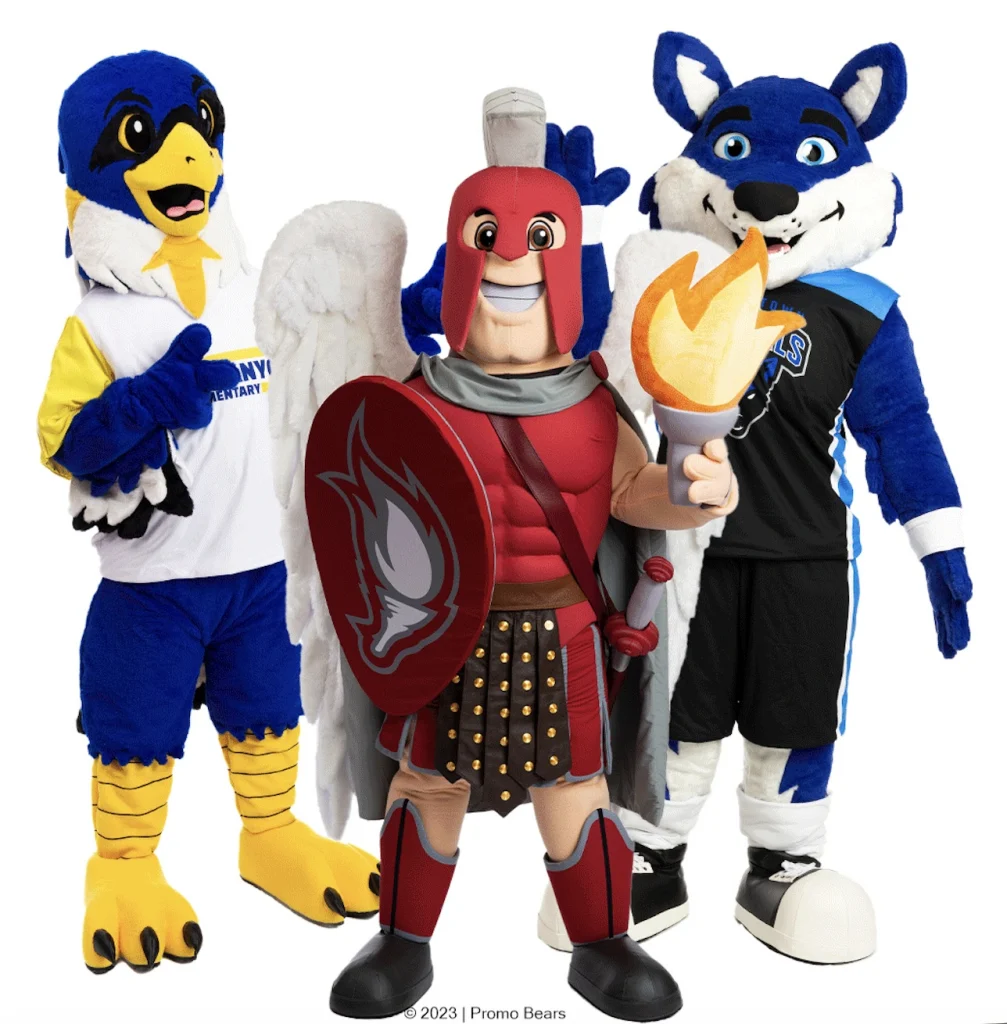
Some of the coolest mascots are bold, expressive characters that instantly communicate a brand’s personality, whether that’s a fierce sports team animal, a lovable corporate icon, or a spirited school figure. The best mascots share a few key traits: they are visually distinctive, emotionally resonant, and versatile enough to work across events, merchandise, and digital platforms. Below, we dig into what makes mascots truly memorable, highlight some all-time favorites, and show you how to build one that works for your brand.
What makes a mascot cool and memorable?
A cool mascot is one that people recognize instantly, connect with emotionally, and want to see again. The most memorable mascots combine a strong visual identity with a clear personality that reflects the values of the brand or team behind them. They are not just decorations, but active ambassadors that bring energy to every interaction.
Several factors set a truly great mascot apart from a forgettable one:
- Distinctive design: Bold colors, exaggerated features, and a silhouette that reads clearly from a distance make a mascot easy to spot in a crowd.
- Consistent personality: Whether fierce, friendly, or funny, the character’s personality should align with the organization it represents and stay consistent across every platform.
- Emotional connection: The best mascots make people feel something, pride, excitement, warmth, or nostalgia. That emotional hook is what turns a character into a cultural icon.
- Versatility: A great mascot works in a live costume, on a stress ball, on a plush toy, and on a social media graphic without losing its identity.
When all of these elements come together, a mascot stops being a marketing tool and becomes a genuine symbol of community and belonging.
What are the most iconic sports mascots of all time?
The most iconic sports mascots of all time include Benny the Bull of the Chicago Bulls, the Phillie Phanatic of the Philadelphia Phillies, and Uga the Bulldog of the University of Georgia. These characters have transcended their teams to become cultural figures in their own right, recognized far beyond their sport or home city.
What puts them in a league of their own is the combination of longevity, crowd interaction, and personality. The Phillie Phanatic, for example, is widely considered the gold standard in sports mascot design because of his absurd, lovable appearance and his reputation for keeping fans entertained regardless of the scoreboard. Benny the Bull is equally celebrated for his acrobatic courtside performances that have become as much a part of a Bulls game as the basketball itself.
In college sports, mascots carry enormous weight. Uga the Bulldog, the Big Al elephant of the Alabama Crimson Tide, and the Stanford Tree (unconventional as it is) all demonstrate how a mascot can become deeply tied to a school’s identity and fan culture. These characters fuel school spirit and are instantly recognizable to fans across the country.
What all of these mascots share is a strong foundation in the team’s identity combined with a character that performs well in real life, not just on a logo. They are designed to engage, entertain, and represent, and they do all three exceptionally well.
What are some of the coolest brand and corporate mascots?
Some of the coolest brand and corporate mascots include the GEICO Gecko, the Michelin Man, Tony the Tiger, and the Energizer Bunny. These characters have become so embedded in popular culture that many people recognize them independently of the products they represent, which is the ultimate measure of a successful brand mascot.
What makes corporate mascots particularly powerful is their ability to humanize a brand. The GEICO Gecko is charming and witty, making insurance feel approachable. The Michelin Man, known as Bibendum, has been in use since 1898 and remains one of the most recognized brand symbols in the world, proving that a well-designed mascot can outlast decades of changing trends.
In the food and beverage space, Tony the Tiger has been selling Frosted Flakes since 1952 with the same enthusiastic energy. The consistency of his character across generations is a masterclass in brand mascot longevity. Similarly, the M&Ms characters have evolved into a full cast of personalities, each representing a different product variant while maintaining a cohesive brand voice.
For B2B companies and organizations, mascots are increasingly being used to create memorable event experiences and branded merchandise that leaves a lasting impression. A well-executed brand mascot does not just look good on a banner; it shows up on stress balls, keychains, plush toys, and inflatables, turning every touchpoint into a brand moment.
What makes a school or university mascot stand out?
A school or university mascot stands out when it genuinely reflects the community it represents and performs with energy and enthusiasm at live events. The most beloved school mascots are not just logos brought to life; they are characters that students, alumni, and fans feel a real sense of pride in.
The strongest school mascots tend to share a few qualities. First, they have a design that is both intimidating enough to rally a crowd and approachable enough to engage with children and families at community events. Second, they are built for performance, meaning the costume is comfortable to wear, easy to move in, and visually striking from the bleachers.
Schools that invest in high-quality mascot costumes also tend to extend their mascot’s presence beyond game day. A mascot that appears on merchandise, in school communications, and at community events becomes a true symbol of school identity rather than just a halftime attraction. That kind of consistent presence is what transforms a school mascot from a costume into a cultural institution.
How do you come up with a cool mascot idea for your brand?
Coming up with a cool mascot idea starts with clearly defining what your brand stands for and who your audience is. The most effective mascots are not random characters; they are deliberate expressions of brand values, designed to resonate with a specific community or customer base.
Here is a practical process to develop a strong mascot concept:
- Define your brand personality. Is your brand bold and competitive, warm and community-driven, or innovative and forward-thinking? Your mascot’s character should reflect this clearly.
- Know your audience. A mascot for a children’s sports league needs a very different energy than one for a corporate brand targeting enterprise clients. Design with your audience’s emotional response in mind.
- Choose a character type with purpose. Animals, humans, objects, and abstract characters all carry different associations. A bear suggests strength and reliability. A fox suggests cleverness. Choose a character type that reinforces your brand’s core message.
- Think about versatility from the start. Your mascot will need to work as a costume, on merchandise, and in digital formats. Design with all of these applications in mind, not just one.
- Iterate with expert input. Great mascot design is a collaborative process. Working with experienced designers who understand both visual identity and physical costume production ensures the concept translates well across every format.
A strong mascot concept does not need to be complicated. The most iconic characters are often simple, clear, and immediately communicative. Clarity beats complexity every time.
What should a cool mascot costume actually look like?
A cool mascot costume should be visually bold, structurally well-built, and comfortable enough to perform in for extended periods. The best costumes feature lifelike 3D eyes, vivid colors, and a design that reads clearly from a distance, whether the mascot is on a sports field, at a trade show, or walking through a school hallway.
Beyond aesthetics, the physical construction of a mascot costume matters enormously. A costume that looks great in a render but overheats the performer within ten minutes, or one that restricts movement and makes interaction difficult, will not serve its purpose. The most effective mascot costumes are built with an integrated ventilation system to keep the performer comfortable and a design that allows natural, expressive movement.
Durability and ease of cleaning are also practical considerations that are easy to overlook during the design phase. A mascot that appears at dozens of events each year needs to hold up to regular use and be simple to maintain between appearances.
The finishing details are what elevate a good costume to a great one. Realistic eyes that create the illusion of expression, precise color matching to brand standards, and quality materials that photograph and film well all contribute to a mascot that looks as impressive in person as it does in promotional content.
How Promo Bears helps you create a mascot worth remembering
At Promo Bears, we specialize in bringing cool mascot concepts to life with a full-service approach that covers everything from initial design to final delivery. Whether you are a marketing manager building a brand mascot for a major campaign or a school looking to energize your community, we have the experience and the process to get it right.
Here is what working with us looks like:
- Free concept illustration: Every project starts with a complimentary design based on your logo, character idea, or brief, with unlimited revisions until it is exactly right.
- Expert mascot costume production: Our custom mascot costumes feature 3D realistic eyes, a built-in ventilation system, and are built for comfort and durability. Production takes 12 to 16 weeks, with rush options available.
- Full merchandise range: Beyond the costume, we can bring your mascot to life across stress balls (ready in 10 to 12 weeks), plush toys, keychains, stickers, giant inflatables (3 to 4 weeks), and more, creating a cohesive brand presence across every touchpoint.
- Dedicated project manager: One point of contact oversees your project from concept to delivery, keeping everything on track and on brief.
- Trusted by leading brands: We have created over 4,000 mascots for organizations including NASA, Amazon, Red Bull, and Walmart.
If you are ready to create a mascot that truly represents your brand and engages your audience, we would love to help you get started. Get your free quote today and see what we can create together.
Frequently Asked Questions
How much does it typically cost to create a custom mascot costume?
The cost of a custom mascot costume varies widely depending on complexity, materials, and the level of detail involved, but professional-grade costumes generally range from a few thousand dollars to well over $10,000. While it may be tempting to cut costs with a lower-budget option, investing in a quality build pays off in durability, performer comfort, and the overall impression your mascot makes at events. Think of it as a long-term brand asset rather than a one-time expense, since a well-made costume can last for many years with proper care.
What if my brand already has a logo — can it be turned into a mascot?
Absolutely, and this is actually one of the most common starting points for mascot development. A skilled design team can take the core visual elements of your existing logo — colors, shapes, and style — and translate them into a fully realized character with personality and dimension. The key is ensuring the mascot feels like a natural extension of your brand identity rather than a disconnected add-on, so working with designers who understand both brand strategy and character design is essential.
How do I know which type of mascot character — animal, human, or object — is right for my brand?
The right character type depends on the values and personality you want your mascot to communicate. Animals are the most versatile and universally appealing choice: predators like eagles or wolves signal strength and competitiveness, while bears or dogs tend to feel approachable and trustworthy. Human characters work well for brands that want to project relatability and professionalism, while object-based mascots (like the Michelin Man or the Mu0026Ms characters) can be highly memorable when executed creatively. A good rule of thumb is to choose a character type that your target audience will instinctively connect with on an emotional level.
What are the most common mistakes brands make when designing a mascot?
One of the most frequent mistakes is designing a mascot purely for one format — usually a flat logo or digital graphic — without considering how it will translate into a physical costume or merchandise. A design that looks great on screen can become impractical or lose its impact when built in 3D. Other common pitfalls include creating an overly complex design that is hard to reproduce consistently, neglecting the performer’s comfort and mobility, and failing to define a clear personality for the character before the design process begins. Starting with a well-defined brand brief and collaborating with experienced mascot professionals from day one can help avoid all of these issues.
How should we introduce a new mascot to our audience for maximum impact?
A strong mascot launch should be treated like any major brand moment — planned, promoted, and executed with intention. Consider unveiling your mascot at a high-visibility event, whether that’s a game, a company conference, or a community gathering, where it can make a live, in-person impression right away. Pair the debut with a social media campaign that gives the character a voice and backstory, and make sure branded merchandise featuring the mascot is available from day one to reinforce recognition. The goal is to make the first encounter memorable enough that your audience immediately starts associating the character with your brand.
Can a mascot work effectively for B2B or corporate brands, not just sports teams and schools?
Yes, and this is one of the most underutilized opportunities in corporate branding. While mascots are most commonly associated with sports and education, B2B companies are increasingly using them to stand out at trade shows, create memorable conference experiences, and build a more human, approachable brand identity. A well-designed corporate mascot can appear on branded merchandise like stress balls, keychains, and plush toys that prospects and clients actually keep, turning everyday objects into ongoing brand impressions long after the event is over.
How do we keep our mascot relevant and engaging over the long term?
Longevity comes from consistency and active deployment — the mascots that remain culturally relevant for decades are the ones that show up everywhere, not just at occasional events. Keep your mascot fresh by integrating it into seasonal campaigns, social media content, and new merchandise drops, while maintaining a consistent core personality that audiences can rely on. Avoid the temptation to redesign too frequently, as recognition builds over time; instead, focus on finding new contexts and creative applications that keep the character feeling current without abandoning what makes it familiar and beloved.