
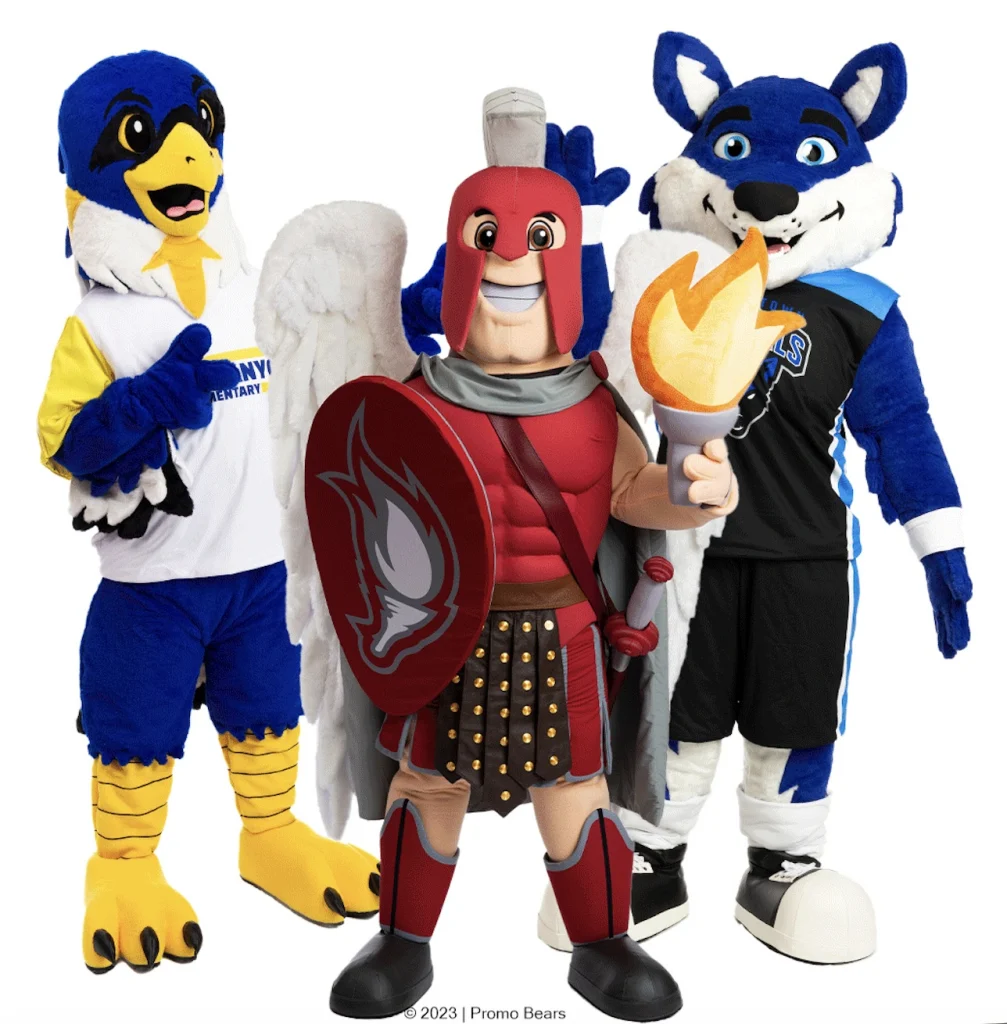
Yes, a mascot for a sports club genuinely boosts fan engagement. When fans can see, interact with, and cheer alongside a physical character that represents their team, their emotional connection to the club deepens in ways that logos and jerseys alone simply cannot achieve. The sections below walk through how mascots drive that engagement, what types work best, and how to get one made the right way.
How does a mascot actually increase fan engagement at sports events?
A sports club mascot increases fan engagement by giving supporters a living, breathing symbol of team identity they can physically connect with. Whether it is high-fiving kids in the stands, hyping up the crowd before tip-off, or posing for photos at tailgates, a well-designed mascot creates memorable moments that keep fans emotionally invested in the club beyond the final score.
The impact shows up in several concrete ways. A mascot gives younger fans a point of entry into the club’s culture, making games feel welcoming and fun rather than intimidating. For adult fans, the mascot reinforces tribal identity and gives them something to rally around during tense moments in a match.
Mascots also extend the club’s reach beyond the stadium. When fans share photos and videos with the mascot on social media, the club earns organic exposure it would otherwise have to pay for. That kind of content feels authentic because it is driven by genuine enthusiasm rather than a marketing brief.
What types of mascots work best for sports clubs?
The mascots that perform best for sports clubs are ones that feel like a natural extension of the team’s identity. Animal characters tend to dominate in sports because they project strength, speed, or tenacity. Think bears, eagles, wolves, and lions. Humanoid characters and original creatures can also work brilliantly when they have a strong personality that resonates with the fanbase.
Beyond character type, the format matters just as much as the design. Here are the most effective mascot formats for sports environments:
- Full-body costume mascots: The classic choice for in-stadium entertainment. They are interactive, photogenic, and instantly recognizable from the upper deck.
- Giant inflatable mascots: Perfect for stadium entrances, outdoor events, and pregame spectacle. They command attention and photograph beautifully.
- Plush toy mascots: A fan-favorite for merchandise tables. Kids love them, and they travel home with fans as a lasting reminder of the club.
- Mascot stickers and keychains: Low-cost, high-volume items that spread the mascot’s image far beyond the stadium.
The strongest clubs use a combination of these formats so the mascot shows up consistently across every fan touchpoint, from the parking lot to the gift shop to the family’s living room shelf.
How do mascots help sports clubs grow merchandise revenue?
A mascot gives your merchandise program a recognizable face that fans actually want to buy. Generic team-colored apparel competes with every other club on the rack. A distinctive mascot character creates demand for products that only your club can sell, which protects margin and builds loyalty at the same time.
Merchandise categories that perform especially well when anchored to a mascot include plush toys, keychains, enamel pins, and stickers. These are affordable enough for impulse purchases at the concession stand but meaningful enough to keep fans coming back for new designs season after season.
The key is consistency. When the mascot’s design is strong and well-executed across every product, the character becomes a collectible in its own right. Fans start seeking out mascot merchandise specifically rather than just browsing what is available. That shift from passive buyer to active collector is where real revenue growth happens.
Can a sports club mascot strengthen sponsor and brand partnerships?
Absolutely. A well-known mascot gives sponsors a high-visibility, crowd-friendly asset they can co-brand with, which makes your club a more attractive partner compared to clubs that only offer jersey patches and stadium signage. Sponsors get to associate their brand with a beloved character that fans already have positive feelings about.
Practical co-branding opportunities include sponsored mascot appearances at community events, co-branded mascot merchandise, and branded activations where the mascot interacts with fans in the sponsor’s name. These touchpoints feel genuine and entertaining rather than purely commercial, which is exactly what modern sponsors are looking for.
A mascot also signals that a club takes its brand experience seriously. That professionalism matters to corporate sponsors who are evaluating multiple clubs and want confidence that their investment will be represented well.
What should a sports club consider when designing a custom mascot?
Before committing to a design, a sports club should think carefully about three things: character personality, visual clarity at a distance, and long-term versatility. A mascot that looks great on paper but reads as a blur from the upper deck, or one that is too complex to reproduce affordably on merchandise, will underdeliver on its potential.
Here are the most important design considerations to work through before production begins:
- Character concept: Does the mascot reflect the club’s values, location, or team name in a way that feels authentic rather than generic?
- Silhouette strength: Can fans identify the mascot instantly from a distance based on its shape alone?
- Color palette: Does the mascot use the club’s colors in a way that is bold and legible across different backgrounds and lighting conditions?
- Expression and personality: Does the character communicate energy, warmth, or competitive spirit in a way that suits your fanbase?
- Scalability across formats: Will the design translate well from a full-body costume to a two-inch keychain without losing its identity?
Getting these decisions right before production starts saves significant time and cost. Working with designers who specialize in custom mascot design and understand how characters translate across different physical formats makes a real difference in the final result.
[div style=”all:initial; font-family: Inter, Arial, Helvetica, sans-serif !important; display:block !important; max-width:760px !important; margin:0 auto !important; padding:40px 20px !important; box-sizing:border-box !important; background:#f6f6f6 !important;”] [div style=”all:initial; display:block !important; box-sizing:border-box !important; background:#ffffff !important; border-left:5px solid #0676c6 !important; border-radius:0 8px 8px 0 !important; padding:28px 32px !important; margin:0 !important;”] [p style=”all:initial; display:block !important; font-family: Inter, Arial, Helvetica, sans-serif !important; font-size:12px !important; font-weight:700 !important; text-transform:uppercase !important; letter-spacing:1.5px !important; color:#fc9e07 !important; margin:0 0 8px 0 !important; padding:0 !important;”]Custom Mascot Costume[/p] [p style=”all:initial; display:block !important; font-family: Inter, Arial, Helvetica, sans-serif !important; font-size:20px !important; font-weight:800 !important; color:#001626 !important; margin:0 0 8px 0 !important; padding:0 !important; line-height:1.3 !important;”]Ready to bring your mascot to life?[/p] [p style=”all:initial; display:block !important; font-family: Inter, Arial, Helvetica, sans-serif !important; font-size:15px !important; font-weight:400 !important; color:#444444 !important; margin:0 0 20px 0 !important; padding:0 !important; line-height:1.6 !important;”]Get a free quote and concept illustration — no commitment, response within 24 hours.[/p] [a href=”https://www.promobears.nl/offerte-mascotte-pakken-op-maat/?_gl=1*crobhp*_up*MQ..*_gs*MQ..&gclid=CjwKCAjwmdLSBhANEiwAkREMN0fUadA_pnTLOIiY_V2RGMDDEgVqB_LzUlc5W0LwcOw8yCLygr6FEBoCOMIQAvD_BwE&gbraid=0AAAAAD86lTiNujiAIhFH-M3l3wY2DX0W4″ style=”all:initial; display:inline-block !important; font-family: Inter, Arial, Helvetica, sans-serif !important; font-size:13px !important; font-weight:700 !important; text-transform:uppercase !important; letter-spacing:0.5px !important; color:#ffffff !important; background:#fc9e07 !important; border:3px solid #fc9e07 !important; border-radius:60px !important; padding:11px 26px !important; text-decoration:none !important; cursor:pointer !important; box-sizing:border-box !important;”]Request a Free Quote →[/a] [/div] [/div]How long does it take to get a custom sports mascot made?
Production timelines vary depending on the type of mascot product you are ordering. A full custom mascot costume takes 12 to 16 weeks from design approval to delivery. If you are planning for a season opener or a specific event, building that lead time into your project schedule early is important.
Other mascot products have shorter timelines, which makes them useful for filling gaps while a costume is in production:
- Giant mascot inflatables: 3 to 4 weeks
- Mascot stickers: approximately 4 weeks
- Plush toys: 12 to 18 weeks depending on quantity and shipping method
- Keychains, enamel pins, and magnets: 3 to 6 weeks
- Stress balls: 10 to 12 weeks
Planning a phased rollout works well for many clubs. Launch with stickers and inflatables for the first home game, introduce the costume mascot once it is ready, and build out the full merchandise range over the course of the season.
How Promo Bears helps sports clubs strengthen club identity
We work with sports clubs of all sizes to bring mascot characters to life across every format, from full-body costumes to plush toys, inflatables, and fan merchandise. Every project starts with a free concept illustration based on your design idea, and we revise it as many times as needed until it is exactly right. Production only begins once you are fully satisfied.
What we bring to every sports club project:
- Over 19 years of experience in mascot design and costume production
- A dedicated project manager who oversees every step from concept to delivery
- 3D realistic eyes, a built-in ventilation system, and a comfortable fit as standard on every costume
- The full range of mascot merchandise, from giant inflatables to keychains and stickers, so your mascot shows up at every fan touchpoint
- Transparent pricing and a fixed quote based on your exclusive design before any commitment is made
If you are ready to give your fanbase a mascot they will love, get a free quote and let’s build something great together.
Frequently Asked Questions
How much does it typically cost to commission a custom sports club mascot?
Costs vary widely depending on the type and complexity of the product. A full-body custom mascot costume is the largest investment, typically ranging from a few thousand dollars upward depending on design complexity, materials, and features like ventilation systems and 3D eyes. Merchandise items like stickers, keychains, and plush toys are significantly more affordable and can be ordered in bulk to reduce per-unit costs. The best approach is to request a fixed quote based on your specific design before committing, so there are no surprises during production.
What if our club doesn't have an existing mascot character — where do we even start?
Start by thinking about what your club represents: your team name, your city or region, your values, and the personality you want fans to associate with you. From there, a mascot design specialist can translate those ideas into a character concept, often providing a free initial illustration to get the creative process going. You don’t need a fully formed idea to begin — even a rough direction like ‘a fierce wolf that feels approachable to kids’ is enough to kick things off. The design process is iterative, so the character evolves through feedback until it feels exactly right.
How do we make sure our mascot actually gets used and doesn't just sit in a storage room?
The clubs that get the most out of their mascot treat it as a scheduled program rather than a prop. Assign a dedicated performer or rotate trained staff, build the mascot into your game-day run-of-show, and plan appearances at community events, school visits, and sponsor activations throughout the season. Creating a content calendar that includes mascot moments — pregame hype, halftime interactions, social media appearances — keeps the character visible and relevant. A mascot that shows up consistently becomes a fan expectation rather than an occasional surprise.
Can we update or refresh our mascot's look down the line without starting from scratch?
Yes, and many clubs do exactly this as their brand evolves. A refresh typically involves updating colors, refining facial expressions, or modernizing the overall design while keeping the core character recognizable to long-time fans. Working with a designer who retains your original design files makes this process much smoother and more cost-effective. The key is to evolve the mascot gradually rather than overhauling it entirely, so you preserve the emotional equity fans have already built with the character.
What common mistakes do sports clubs make when introducing a new mascot?
The most common mistake is launching a mascot without a clear activation plan, which means the character appears once or twice and then fades into the background. Another frequent misstep is choosing a design that looks great digitally but doesn’t translate well to a physical costume or small merchandise formats — silhouette strength and scalability should be tested before production begins. Clubs also sometimes underestimate the importance of the performer inside the costume; even the best-designed mascot falls flat without an energetic, crowd-aware person bringing it to life. Finally, skipping the merchandise rollout means missing a significant revenue and brand-building opportunity from day one.
How do we measure whether our mascot is actually improving fan engagement?
Track both quantitative and qualitative signals. On the quantitative side, monitor merchandise sales tied to mascot products, social media engagement on posts featuring the mascot, and attendance trends at events where the mascot is present versus absent. Qualitatively, pay attention to fan feedback, how often the mascot appears in fan-generated content, and whether sponsors are proactively requesting mascot integrations in their partnership packages. Running a simple pre- and post-season fan survey that includes questions about the mascot experience can also give you clear, actionable data to guide future investment.
Is a mascot costume worth the investment for a smaller or community-level sports club?
Absolutely — in fact, smaller clubs often see a proportionally larger impact because a mascot can quickly become the defining element of their brand identity in a way that is harder to achieve for larger clubs with more established equity. For budget-conscious clubs, a smart entry point is to start with lower-cost mascot products like stickers, inflatables, or a plush toy to build fan familiarity with the character before investing in a full costume. This phased approach lets the mascot earn its place in the fanbase organically while keeping upfront costs manageable. Once the character has traction, the costume becomes a much easier investment to justify.