
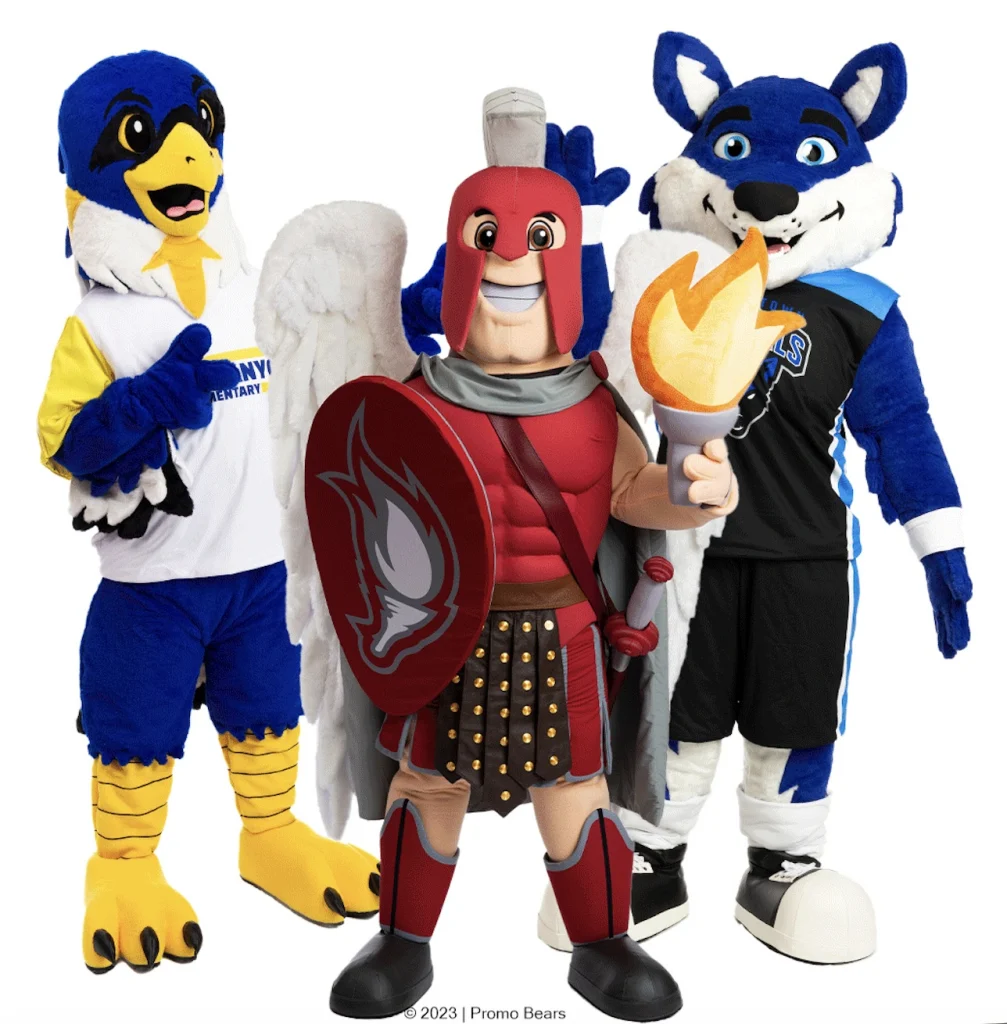
A sports club should invest in a custom mascot costume when it has an established identity it wants to bring to life, a growing fan base it wants to energize, and recurring events where a mascot can consistently show up and make an impact. The timing matters because a mascot works best as part of a long-term brand strategy, not a one-off purchase.
Whether you’re a minor league baseball team, a college athletic program, or a community soccer club, a well-designed mascot can strengthen club identity, drive merchandise sales, and give fans something to rally around. The sections below walk through the most common questions clubs ask before making this investment.
What are the signs a sports club is ready for a mascot costume?
A sports club is ready for a mascot costume when it has a clear brand identity, a consistent home venue or event schedule, and an audience that shows up regularly. If fans already recognize your team colors and logo, a mascot is the natural next step to turn that recognition into a living, breathing experience.
Here are the clearest signs your club is at that point:
- You have a named mascot character but no physical costume to bring it to life
- Your matchday atmosphere feels flat, and you want to give fans more to engage with
- You’re launching a rebrand or a new season and want to make a memorable statement
- Youth programs or community outreach events are part of your calendar
- Your social media team is looking for fresh, shareable content
- Merchandise sales have plateaued and you want a new product anchor
If two or more of these apply to your club, the investment is very likely to pay off. The key is having enough touchpoints throughout the year where the mascot can appear consistently, because a costume that only comes out twice a season has a much harder time building the kind of emotional connection that drives real fan loyalty.
How does a mascot costume boost fan engagement at live events?
A mascot costume boosts fan engagement at live events by creating a physical focal point that fans of all ages can interact with. Unlike a logo on a screen or a banner on a wall, a mascot moves through the crowd, poses for photos, high-fives kids, and generates spontaneous moments that no marketing campaign can script.
The effect is especially strong with younger fans. Children who meet a mascot at a game form an emotional connection with the club that often lasts for years. That early loyalty is one of the most valuable things a sports organization can build, and a mascot is one of the most cost-effective ways to create it.
At the practical level, a mascot also gives your event team a tool for crowd management, halftime entertainment, and sponsor activations. Mascots can carry branded signs, interact with promotional games, and anchor photo opportunities that sponsors love to attach their name to. That makes the costume an asset that generates value well beyond the initial purchase.
What’s the difference between a custom mascot and a generic one?
The difference between a custom mascot and a generic one is ownership and fit. A generic mascot is a pre-made costume, often a standard animal shape with minimal branding applied. A custom mascot is designed from scratch around your club’s specific character, colors, and personality, making it uniquely yours and impossible to confuse with any other team.
Generic costumes are cheaper upfront, but they come with real limitations:
- No exclusivity: Another club in your region could be using the exact same base costume
- Poor color matching: Pre-made suits rarely align precisely with your brand colors
- Limited character expression: Generic designs don’t capture the specific attitude or story behind your mascot
- Lower quality perception: Fans and sponsors notice the difference between a polished custom build and an off-the-shelf product
- No revision process: You get what you get, with no opportunity to refine the design before production
A custom mascot, by contrast, starts with a concept illustration based on your logo or design idea. You work through revisions until the character looks exactly right, and production only begins once you’ve approved the final design. The result is a costume that genuinely represents your club rather than approximating it.
How much does a custom mascot costume cost for a sports club?
The cost of a custom mascot costume for a sports club varies based on the complexity of the design, the materials used, and the features included. Entry-level custom costumes typically start at a few thousand dollars, while highly detailed or large-format builds can run significantly higher. Getting a fixed quote based on your specific design is always the right first step.
Several factors influence the final price:
- Design complexity: More intricate characters with moving parts or detailed textures cost more to produce
- Size: Standard costumes fit wearers between 5’7″ and 6’1″, but custom sizing is available and may affect cost
- Features: Built-in ventilation systems, 3D realistic eyes, and premium fabric finishes add to the quality and the price
- Turnaround time: Rush production options are available but typically carry an additional fee
Production for a custom mascot costume takes 12 to 16 weeks from design approval to delivery, so it’s worth planning well ahead of the season or event you’re targeting. Requesting a free concept illustration before committing to anything is a smart way to understand the scope and get an accurate quote for your specific project.
Which sporting events benefit most from a mascot appearance?
Sporting events that benefit most from a mascot appearance are those with large crowds, extended dwell time, and a family-friendly audience. Season openers, playoff games, rivalry matchups, youth tournaments, and community days all create the kind of high-energy environment where a mascot can have the biggest impact.
Beyond the obvious game-day appearances, certain event types are particularly well suited to mascot involvement:
- Fan appreciation days: The mascot becomes a centerpiece for photos, autograph sessions, and crowd interaction
- Youth clinics and camps: Kids connect instantly with a mascot character, making these events more memorable
- Sponsor activations: Brands love pairing their name with a recognizable mascot for on-field or in-stadium promotions
- Media days and press events: A mascot adds visual energy to photos and video content that gets shared widely
- Charity events and school visits: Mascots carry the club’s identity into the community and build goodwill beyond the stadium
The more events you have on the calendar where the mascot can appear, the stronger the return on your investment. A costume that shows up consistently across multiple touchpoints builds the kind of recognition that a single appearance simply cannot achieve.
How do sports clubs use mascots beyond matchday?
Sports clubs use mascots beyond matchday for community outreach, merchandise, social media content, school visits, sponsor partnerships, and off-season brand building. A mascot costume is not a matchday-only asset. It is a year-round brand tool that keeps the club visible and emotionally connected to its audience even when the season is quiet.
Some of the most effective off-field uses include:
- Hospital and school visits that generate goodwill and local press coverage
- Branded merchandise like plush toys, keychains, and stickers that fans can take home
- Social media content featuring the mascot in behind-the-scenes or seasonal moments
- Parades, fairs, and community festivals where the club wants a visible presence
- Corporate sponsor events where the mascot adds entertainment value to activations
Clubs that think of their mascot as a brand character rather than a costume get far more value from the investment. When the mascot has a consistent personality, a name, and a presence across channels, it becomes a genuine asset that supports everything from ticket sales to sponsorship conversations. That’s the real opportunity for clubs that want to strengthen club identity and grow their audience over time.
How Promo Bears helps sports clubs bring their mascot to life
We work with sports clubs of all sizes to design and produce custom mascot costumes that genuinely represent who they are. Here’s what makes working with us different:
- Every project starts with a free concept illustration based on your logo or character idea
- You get unlimited revisions until the design is exactly right before production begins
- Every costume includes 3D realistic eyes, a built-in ventilation system, and premium materials for comfort and durability
- A dedicated project manager guides you from first sketch to final delivery
- Standard production takes 12 to 16 weeks, with rush options available for tighter timelines
- We also produce mascot merchandise like plush toys, stickers, and keychains to extend your mascot’s reach beyond the stadium
If your club is ready to invest in a mascot for sports club use that will strengthen club identity and energize your fan base, we’d love to show you what’s possible. Get your free concept illustration and a fixed quote with no upfront commitment.
Frequently Asked Questions
How do we choose the right person to wear the mascot costume at events?
Look for someone who is physically comfortable in a confined, warm costume and has natural energy and expressiveness — since they can’t use facial expressions, all communication happens through body language and movement. Ideally, your performer should be enthusiastic, reliable, and comfortable interacting with crowds of all ages, especially children. Many clubs train a small rotation of two or three performers so the mascot can appear consistently without burning out a single person, which also protects continuity if someone is unavailable on game day.
What are the most common mistakes clubs make when commissioning a custom mascot costume?
The most common mistake is rushing the design phase to meet a deadline, which often results in a costume that doesn’t accurately reflect the club’s brand or character. Another frequent misstep is underestimating how often the mascot will actually be used — clubs that don’t plan a regular appearance schedule rarely get full value from the investment. Finally, skipping the ventilation and comfort features to cut costs tends to backfire, because an uncomfortable performer gives a poor performance, and a poor performance undermines the mascot’s impact on fans.
How should we care for and maintain a custom mascot costume to extend its lifespan?
After each use, the costume should be aired out thoroughly and stored in a cool, dry environment away from direct sunlight, which can fade colors over time. Most custom mascot costumes can be spot-cleaned between appearances, with more thorough cleaning done periodically according to the manufacturer’s care instructions. Keeping a maintenance log and inspecting the costume before each event — checking seams, eyes, and ventilation components — helps catch minor issues before they become costly repairs. With proper care, a high-quality custom mascot costume can last five to ten years.
Can a mascot costume be updated or modified after it's been produced if our branding changes?
Yes, many mascot costume manufacturers can make modifications to an existing costume if your club undergoes a rebrand or wants to refresh the character’s look. Common updates include re-dyeing or replacing fabric panels to match new brand colors, updating logos or embroidered details, and adding or adjusting accessories. That said, significant structural changes are more complex and costly, so it’s worth building some flexibility into the original design if you anticipate a rebrand in the near future. Discussing this possibility upfront with your manufacturer is the best way to understand your options before committing to a design.
How do we measure the ROI of a mascot costume investment?
ROI on a mascot costume can be measured across several dimensions: merchandise sales tied to the mascot character, sponsorship revenue from activations that feature the mascot, and attendance trends at events where the mascot appears regularly. Softer but equally important metrics include social media engagement on mascot-related content, fan sentiment, and youth program enrollment growth — all of which reflect the long-term brand value the mascot is building. Setting a baseline before the mascot launches and tracking these metrics season over season gives you a clear picture of the cumulative return on your investment.
What should we prepare before reaching out to a mascot costume manufacturer for a quote?
Before reaching out, it helps to have a clear sense of your mascot character — even a rough sketch, your existing logo, or a written description of the character’s personality and physical traits gives the manufacturer something concrete to work from. You should also know your approximate budget range, your target delivery date, and the primary use cases for the costume (game days, community events, school visits, etc.), as these details directly influence design recommendations and production timelines. The more context you can provide upfront, the more accurate and useful your initial concept illustration and quote will be.
Is it worth investing in mascot merchandise at the same time as the costume, or should that come later?
Launching mascot merchandise alongside the costume debut is generally the smarter move, because it lets you capitalize on the excitement and visibility of the initial reveal while the character is fresh in fans’ minds. Items like plush toys, keychains, and stickers are low-cost entry points that give fans an immediate way to take the mascot home, which reinforces the emotional connection and generates revenue from day one. Starting with a small, focused merchandise range and expanding based on what sells best is a practical approach that minimizes upfront risk while still making the most of the launch momentum.