
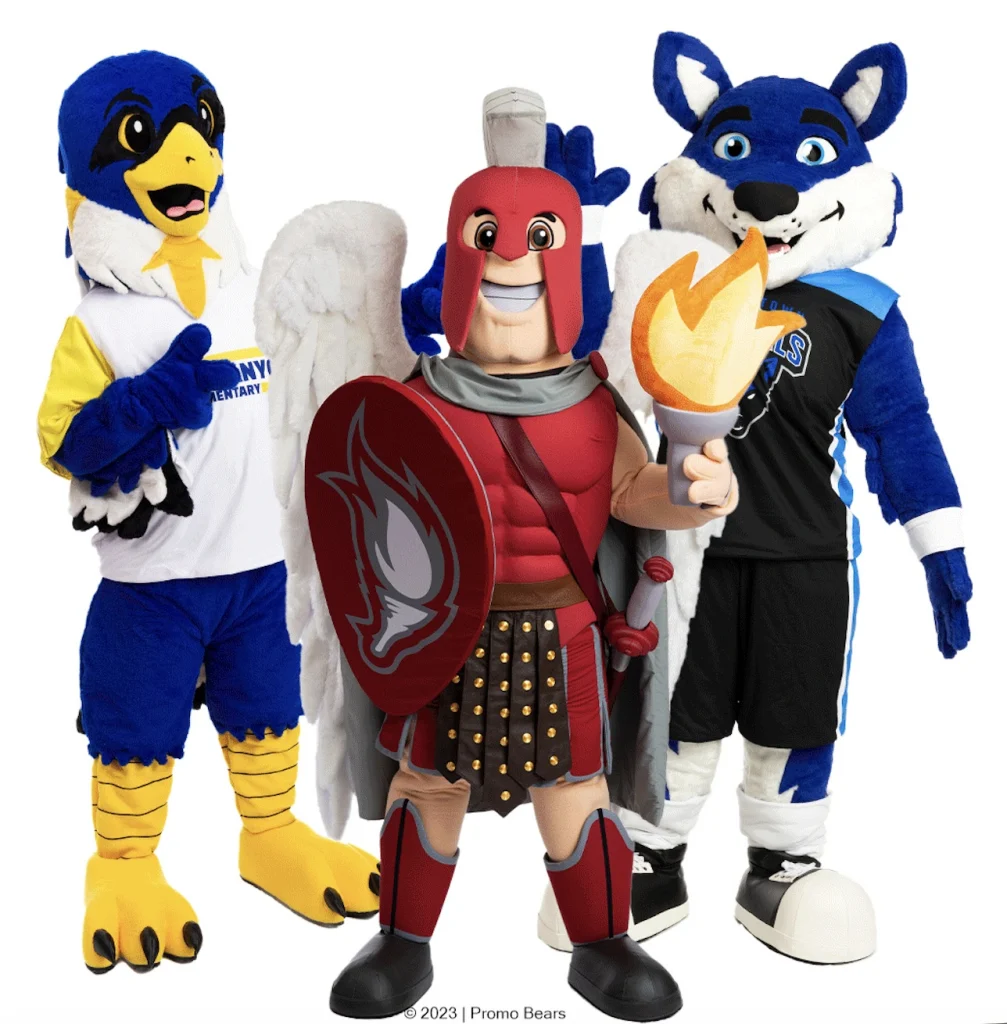
Choosing the right promotional tool comes down to matching the product to your goal. If you need broad visibility at a one-time event, a fast-turnaround item like a custom inflatable or branded giveaway makes sense. If you want to build lasting brand recognition, a high-quality asset like a custom mascot costume delivers far more long-term value. The questions below walk you through the key decisions so you can invest with confidence.
What counts as a promotional tool for a brand?
A promotional tool is any branded item or experience that increases awareness, drives engagement, or creates a memorable connection with your audience. This includes physical merchandise, wearable costumes, inflatables, and smaller giveaway items. The defining characteristic is that the item carries your brand identity and does something useful for your marketing goals, whether that is attracting attention at an event or keeping your brand visible long after the interaction ends.
In practical terms, promotional tools span a wide range:
- Custom mascot costumes that become the face of your brand at events and activations
- Giant inflatables that create visual impact from a distance
- Plush toys, stress balls, and keychains that serve as take-home brand reminders
- Stickers, enamel pins, and temporary tattoos that fans and customers wear voluntarily
- Branded bags, sports accessories, and apparel that extend your reach into everyday life
What separates a strong promotional tool from a forgettable one is how well it reflects your brand identity. Generic items with a small logo printed in one color rarely leave an impression. Fully custom products, built around your specific design and color palette, do the heavy lifting of brand storytelling for you.
How do your brand goals shape which promotional tool you need?
Your brand goal is the single most important factor when you compare promotional tools. A brand trying to generate buzz at a sports event needs something visually dominant and interactive. A brand focused on customer retention needs something people will hold onto and use repeatedly. Matching the tool to the goal prevents wasted budget and ensures the product actually moves the needle on what matters to you.
Here is a practical way to think about it:
- Goal: event visibility and foot traffic — Giant inflatables, mascot costumes, and inflatable arches pull attention from across a venue and give people a reason to stop and engage.
- Goal: brand recall and word of mouth — Plush toys, custom stress balls, and enamel pins travel home with your audience and keep your brand in their environment.
- Goal: social media engagement — Mascot costumes and oversized inflatables are highly photogenic. People naturally share them, extending your reach without additional spend.
- Goal: community building and fan culture — Mascot merchandise like stickers, keychains, and plush figures turns supporters into brand ambassadors who proudly display their affiliation.
The clearer your goal, the easier the selection becomes. Vague briefs like “we want something fun” lead to generic products that underperform. Specific briefs like “we need to drive dwell time at our trade show booth” point you directly toward the right category of branded merchandise alternatives.
What’s the difference between one-off merchandise and a long-term brand asset?
One-off merchandise is designed for a single campaign or event. It is typically lower in cost, faster to produce, and intended to be given away or used once. A long-term brand asset, by contrast, is a product built for repeated, ongoing use that becomes part of your brand identity over time. The distinction matters because the two require very different levels of investment, customization, and planning.
Stickers, temporary tattoos, and printed bags are classic one-off items. They serve a moment, create a touchpoint, and move on. Their production timelines are short, often under four to six weeks, which makes them ideal for campaigns with tight deadlines.
A custom mascot costume is the clearest example of a long-term brand asset. It takes 12 to 16 weeks to produce because it is built entirely to your specification, with 3D realistic eyes, an integrated ventilation system, and materials chosen for repeated wear. Once it exists, it becomes a living representation of your brand that can appear at hundreds of events, generate social content year after year, and build the kind of emotional recognition that no printed giveaway can replicate.
The right question to ask yourself is: do we need this product to work once, or do we need it to work for years? The answer determines your budget, your timeline, and the level of customization worth pursuing.
Which promotional products work best for large-scale events and activations?
For large-scale events, the most effective promotional products are the ones that create a visual anchor, invite interaction, and generate shareable moments. Size, movement, and personality all drive engagement in crowded environments where you are competing for attention from every direction.
Giant mascot inflatables are among the highest-impact options available. They are visible from a distance, immediately communicate brand personality, and take approximately three to four weeks to produce, making them accessible even for events with moderate lead times. Inflatable arches and player tunnels serve a similar function at sporting events and outdoor activations, with comparable production windows.
For activations where human interaction is the priority, a custom mascot costume transforms your brand into a character that people want to photograph, hug, and talk about. The experience is inherently social, and the content it generates online extends the reach of the activation far beyond the venue itself.
Smaller giveaway items complement these anchor pieces well. Enamel pins, stickers, and keychains can be produced in three to six weeks and give attendees something tangible to take home. Stress balls are another strong option for events, with a production timeline of 10 to 12 weeks, so they require earlier planning but deliver a product that is genuinely useful and keeps your brand visible long after the event ends.
How do you evaluate a promotional products supplier before committing?
Before committing to a supplier, evaluate them on four things: the quality of their portfolio, the transparency of their pricing, the strength of their project management process, and their ability to deliver consistently across multiple product types. A supplier who excels at one product but struggles with others creates coordination headaches and inconsistent brand presentation.
Start by asking these questions:
- Do they offer a free concept illustration before you commit? A reputable supplier will show you what your product will look like before you place an order, with revisions included until the design is right.
- Is pricing fixed based on your specific design? Vague estimates that shift after approval waste time and erode trust. Look for a supplier who gives you a firm quote tied to your actual brief.
- Do they assign a dedicated project manager to your account? A single point of contact who oversees your project from design to delivery dramatically reduces the risk of miscommunication and delays.
- What does their quality control process look like? Strong suppliers share result photos before shipping so you can approve the final product before it leaves the facility.
- Can they handle multiple product types under one roof? If you need a mascot costume, a set of plush toys, and branded giveaways for the same campaign, a full-service supplier saves you the coordination cost of managing multiple vendors.
A supplier’s client list also tells you a lot. If globally recognized organizations trust them with their brand, that is a meaningful signal of consistent quality and professional capability. When you compare promotional products suppliers, look beyond the product catalog and assess the service structure behind it.
How do you measure the ROI of a custom promotional product?
Measuring the ROI of a custom promotional product means tracking the outcomes it was designed to drive, not just the cost of producing it. The metrics that matter depend on the goal you set before ordering. Visibility-focused products are measured differently from retention-focused ones, and that distinction should shape how you evaluate success.
For event-based products like inflatables and mascot costumes, useful indicators include foot traffic to your booth or activation area, social media mentions and tagged posts generated during the event, and the number of new contacts or leads captured in the same timeframe. These are not always easy to attribute directly to the product, but comparing events where you used a high-impact visual anchor against those where you did not gives you a directional read on the difference it makes.
For take-home merchandise like plush toys, stress balls, and keychains, the relevant measure is repeat exposure. A product that lives on someone’s desk or bag creates dozens of brand impressions over months without any additional cost. The longer the product stays in use, the lower the effective cost per impression becomes.
The most honest way to evaluate ROI is to set your success criteria before the product is produced. Decide what a successful outcome looks like, whether that is a target number of social shares, a measurable lift in event leads, or an increase in brand recall scores, and then measure against that benchmark after the campaign.
How Promo Bears helps you choose and create the right promotional tool
We work with marketing managers and brand directors across North America who need more than a product catalog. They need a partner who understands brand strategy, delivers consistent quality, and manages the entire process so they can focus on the campaign itself.
Here is what working with us looks like in practice:
- A free concept illustration based on your logo or design idea, with unlimited revisions before production begins
- A fixed quote tied to your specific design, with no vague estimates that shift later
- A dedicated project manager who oversees your project from first sketch to final delivery
- A full product range under one roof, from custom mascot costumes (12 to 16 weeks) to stress balls (10 to 12 weeks) to fast-turnaround giveaways like stickers (7 to 10 days) and giant mascot inflatables (3 to 4 weeks)
- Quality control sign-off with result photos before your order ships
Whether you are planning a major event activation or building out a full suite of branded merchandise alternatives for the year ahead, we have the experience and the product range to make it work. With over 4,000 custom mascots created for clients including NASA, Amazon, and Walmart, we know what it takes to deliver at the highest level.
Ready to find the right promotional tool for your brand? Get a free quote and let us show you what is possible.
Frequently Asked Questions
How far in advance should I start planning my promotional products order?
Your lead time depends entirely on the product type. Fast-turnaround items like stickers can be ready in as little as 7 to 10 days, while giant mascot inflatables take 3 to 4 weeks and stress balls require 10 to 12 weeks. Custom mascot costumes have the longest production window at 12 to 16 weeks, so if one is part of your campaign, it should be the first thing you order. A good rule of thumb is to add a buffer of at least two weeks on top of any quoted production timeline to account for shipping and any last-minute event changes.
Can I use the same promotional products across multiple events and campaigns?
Yes, and for long-term brand assets like custom mascot costumes, that is exactly how you maximize your investment. A well-built mascot costume is designed for repeated wear across hundreds of events, making the cost per activation significantly lower over time. One-off items like stickers and enamel pins can also be reprinted with updated designs for different campaigns while keeping the same core mascot or brand character consistent, which reinforces recognition across every touchpoint.
What if I don't have a mascot or character yet — can I still order a mascot costume?
Absolutely. Many brands develop their mascot character as part of the costume creation process itself. A reputable supplier will work with you from a basic concept, logo, or brand brief to develop a character design through concept illustrations before any production begins. This is actually an ideal time to define your mascot’s personality and visual identity, since the design decisions made during this stage will inform how the character is used across all future branded merchandise and marketing materials.
What are the most common mistakes brands make when ordering promotional products?
The most common mistake is leaving the order too late, especially for higher-complexity products like mascot costumes or stress balls that require significant lead time. The second most frequent error is prioritizing low unit cost over quality, which results in products that break quickly, look off-brand, or get discarded rather than kept. Brands also frequently skip the step of defining a clear goal before ordering, which leads to generic products that do not move any measurable needle. Setting your success criteria upfront and matching the product to a specific objective prevents all three of these pitfalls.
How many units should I order for a giveaway campaign?
A useful starting point is to estimate your expected event attendance and target a distribution rate of 20 to 40 percent, since not every attendee will want or take a giveaway item. For trade shows, ordering slightly more than you think you need is wise because running out mid-event creates a missed opportunity for brand impressions. Many suppliers offer better per-unit pricing at higher quantities, so if you have multiple events planned within the same year, consolidating your order upfront can reduce overall costs significantly.
Can promotional products be used effectively for internal employee engagement, not just external marketing?
Yes, and this is an often-overlooked application. Branded merchandise like custom plush figures, enamel pins, and apparel can be used for employee onboarding kits, team milestones, internal competitions, and company culture initiatives. A mascot costume is also highly effective at internal events like company celebrations or team-building days, where it reinforces brand pride from the inside out. Employees who feel connected to a brand identity become natural ambassadors when they engage with customers and partners.
What should I do if the final product doesn't match what was approved during the design stage?
This situation is best prevented by choosing a supplier with a formal quality control process that includes result photos before shipping, so you can approve the physical product before it ever leaves the facility. If a discrepancy does occur, document it immediately with photos and contact your project manager with a clear description of how the final product differs from the approved design. A professional supplier will work with you to resolve the issue, whether through a replacement, adjustment, or credit, which is why having a dedicated point of contact throughout the process is so valuable.