
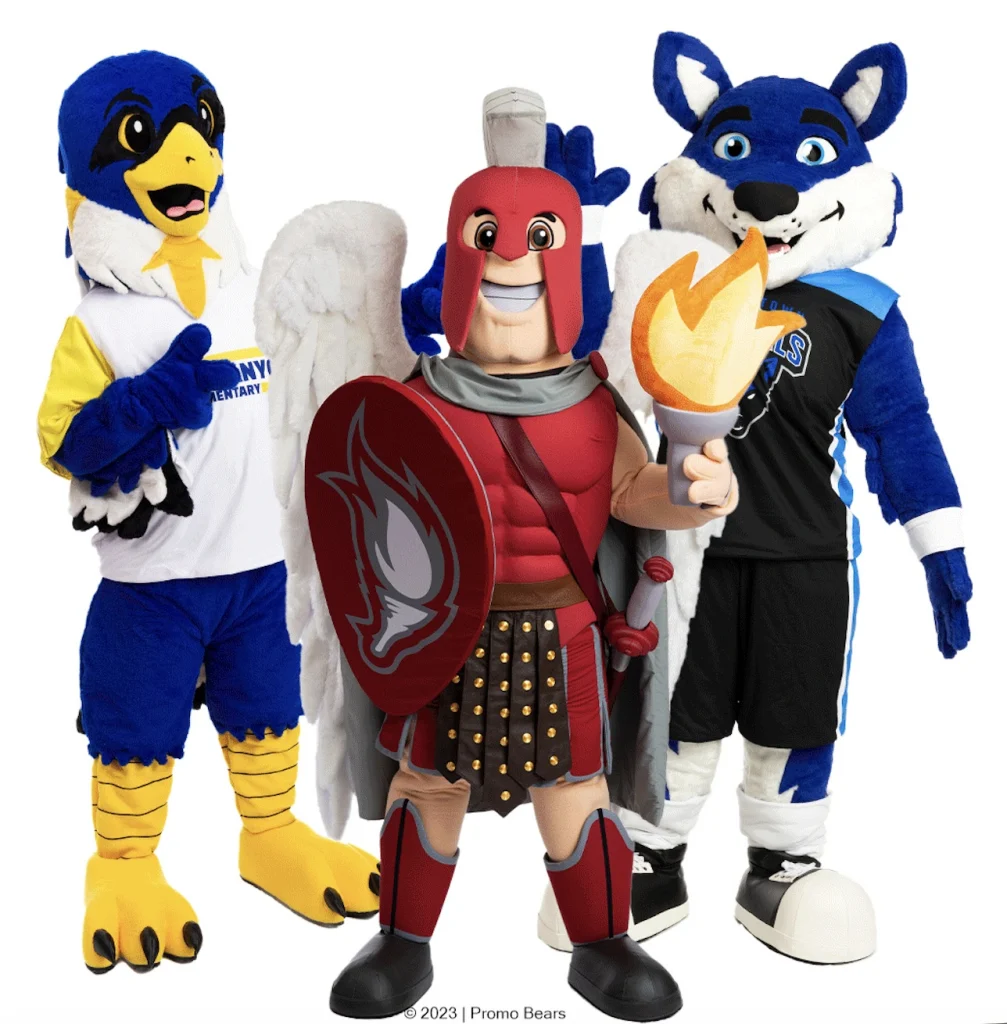
To brief a mascot designer for a sports club project, you need to share your club’s core identity: team name, colors, logo files, and the character concept you have in mind. A strong brief also covers where the mascot will be used, what personality it should project, and any practical requirements like costume sizing or event schedules. The sections below walk through every question your brief should answer before work begins.
What information does a mascot designer need before starting?
Before a mascot designer can sketch a single line, they need a clear picture of who you are and what you want the mascot to do. At minimum, your brief should include your club name, official colors with PMS or hex codes, existing logo files, the character concept, intended use cases, and your target audience. Without these, the designer is guessing.
Think of the brief as a foundation. The more solid it is, the faster the design process moves and the fewer rounds of revision you will need later. Here is what to gather before your first conversation with a designer:
- Club name, location, and founding story if relevant to the character
- Official brand colors and any existing logo or style guide
- The mascot character concept (animal, creature, or human figure)
- Where the mascot will appear: games, school events, social media, merchandise
- The age group of your primary audience
- Any characters or styles you love or want to avoid
- Your timeline and key event dates
A designer who receives all of this upfront can produce a concept illustration that genuinely reflects your club identity rather than a generic sports character. That saves everyone time and keeps the project on track.
How do you define a mascot’s personality in a creative brief?
To define your mascot’s personality in a creative brief, write three to five adjectives that describe how you want the character to feel, then back each one up with a real-world example. Words like “fierce,” “playful,” “determined,” or “approachable” become actionable when you pair them with a reference image, a rival club’s mascot to avoid, or a description of how the character behaves on the sideline.
Personality drives every visual decision a designer makes, from the angle of the eyebrows to the stance of the body. A mascot for a youth soccer club needs to feel warm and welcoming. A mascot for a competitive college team needs energy and edge. Both can be the same animal, but the personality brief is what separates them.
A useful exercise is to answer these three questions in your brief:
- If your mascot walked into a room, what would people immediately feel?
- What three words would fans use to describe the character after seeing it at a game?
- Is the mascot a hero, a team player, a crowd entertainer, or a combination?
These answers give the designer emotional direction that goes far beyond color choices, and they help you strengthen club identity from the very first sketch.
What’s the difference between a mascot costume brief and a character design brief?
A character design brief defines how the mascot looks as a two-dimensional illustration: proportions, colors, expressions, and personality. A mascot costume brief adds a layer of physical reality by specifying how that character translates into a wearable, three-dimensional costume, including performer height, ventilation needs, visibility requirements, and how the costume will be cleaned and stored.
Many sports clubs only write a character brief and assume the costume will follow naturally. That gap causes problems. A character design with tiny eyes and a narrow head may look great on a poster but create serious visibility issues inside a costume. Features that work in illustration, like floating hands or an oversized jaw, may need structural engineering to function in real life.
If your end goal is a wearable mascot for a sports club, your brief needs to cover both dimensions from the start. Share the character design goals alongside the practical costume requirements so the design team can balance creativity with real-world wearability. Keep in mind that a custom mascot costume typically takes 12 to 16 weeks to produce after the design is approved, so building both briefs early protects your event timeline.
Custom Mascot Costume
Ready to bring your mascot to life?
Get a free quote and concept illustration — no commitment, response within 24 hours.
Request a Free Quote →Should you include a budget range in your mascot design brief?
Yes, you should always include a budget range in your mascot design brief. Sharing a realistic range upfront helps the designer recommend the right approach, materials, and scope without wasting time on concepts that will never get approved. It also signals that you are a serious client ready to move forward.
Many clubs hesitate to share budget information because they worry it will anchor the price too high. In practice, the opposite is more common: designers who do not know your budget may present options that are either far too expensive or too basic for your actual needs.
Your budget range does not need to be a precise number. A range communicates the same information with less risk. It also gives the designer room to suggest where to invest more (the costume head, which carries the most visual impact) and where to economize (accessories or secondary merchandise items). A transparent budget conversation at the brief stage leads to faster approvals and fewer surprises at the quote stage.
How many revision rounds should a mascot brief allow for?
A well-structured mascot brief should plan for at least two to three rounds of revisions at the concept illustration stage before any production begins. The first round addresses major direction, the second refines details, and a third catches final adjustments. Beyond three rounds, revisions usually signal that the original brief was not specific enough.
The number of revision rounds you need is directly tied to the quality of your brief. Clubs that invest time in a detailed brief with clear personality notes, color references, and style examples typically reach approval faster than clubs that start with a vague idea and refine it through repeated feedback loops.
When working with a professional mascot supplier, unlimited revisions at the illustration stage are a reasonable expectation before production locks in. What you want to avoid is requesting major structural changes after the costume enters production, because at that point, changes become expensive and time-consuming. Get the design right on paper first, then approve production with confidence.
What are the most common mascot brief mistakes sports clubs make?
The most common mascot brief mistakes sports clubs make include starting without a defined character concept, sharing only a logo with no personality guidance, ignoring the practical costume requirements, and setting an unrealistic timeline. Each of these gaps slows the project down and often leads to a mascot that misses the mark.
Here are the specific mistakes to watch for and how to avoid them:
- Skipping the personality brief: Sending a logo and expecting the designer to invent the character. Personality must come from the club, not the designer.
- No reference images: Describing a mascot in words alone leaves too much room for misinterpretation. Include visual references for styles you like and dislike.
- Ignoring the performer: Not specifying the height range of the person wearing the costume leads to a costume that fits no one well.
- Unrealistic timelines: Expecting a finished costume in a few weeks. Custom mascot costumes take 12 to 16 weeks after design approval. Plan your event calendar around that reality.
- No use case list: Failing to specify whether the mascot needs to work at outdoor games, on social media, or as a merchandise character. Each use case has different design implications.
- Leaving out the budget: Hoping the designer will figure out the budget from context. A clear range leads to better recommendations and faster decisions.
Avoiding these mistakes does not require a lengthy document. A focused, one-page brief that covers character concept, personality, colors, use cases, performer specs, timeline, and budget range gives a designer everything they need to produce a mascot that genuinely represents your club.
How Promo Bears helps sports clubs create the perfect mascot brief
We work with sports clubs at every stage of the mascot creation process, starting with a free concept illustration based on your logo or design idea. That first illustration is where your brief comes to life, and we revise it as many times as needed until the design is exactly right before a single stitch of production begins.
Here is what working with us on a mascot for a sports club looks like:
- Free concept illustration with unlimited revisions until you are fully satisfied
- A dedicated project manager who guides you from brief to delivery
- Lifelike 3D eyes, a built-in ventilation system, and a design built for real-world comfort
- Standard sizing for performers between 5’7″ and 6’1″, with custom sizing available
- Production in 12 to 16 weeks with rush options available
- Quality control photos shared before the costume ships, with a care manual included
A well-briefed mascot does more than look great at games. It becomes a long-term brand asset that builds fan loyalty, drives merchandise sales, and makes your club instantly recognizable. If you are ready to bring your mascot concept to life, get a free quote and we will turn your brief into a character your fans will love.
Frequently Asked Questions
How long should a mascot design brief actually be?
A strong mascot brief does not need to be long — one to two focused pages is ideal. What matters is that it covers the essential elements: character concept, personality adjectives with references, official colors, use cases, performer specs, timeline, and budget range. A concise, well-organized brief is far more useful to a designer than a lengthy document full of vague descriptions or contradictory ideas.
Can we start the mascot design process if we haven't finalized our team logo yet?
Yes, you can begin the mascot design process before your logo is finalized, but you should share whatever brand elements you do have — color palette, team name, and any early logo concepts. A skilled mascot designer can work from a direction rather than a finished asset, and in some cases the mascot character and logo are developed in parallel. Just make sure any logo changes are communicated to the designer before the design is locked in for production.
What visual references should we include in our mascot brief?
Include both positive and negative references — images of mascots, illustration styles, or character designs you love, and equally important, examples of what you want to avoid. These can be professional sports mascots, animated characters, or even general art styles. Visual references eliminate ambiguity far more effectively than written descriptions alone, and they give the designer a concrete creative target to aim for from the very first concept sketch.
How do we handle mascot design by committee when our board has conflicting opinions?
Designate a single point of contact or a small decision-making group of two to three people before the project begins, and agree internally on the core brief elements before the designer is ever involved. Conflicting feedback delivered mid-project is one of the most common causes of revision overruns and delayed timelines. Present consolidated, unified feedback at each revision stage rather than forwarding individual opinions separately to the designer.
What file formats should we ask for when the final mascot character design is delivered?
Request the final mascot artwork in vector format (AI or EPS) as well as high-resolution PNG files with a transparent background. Vector files allow you to scale the mascot to any size without quality loss, which is essential for merchandise, signage, and digital use. A layered source file (such as a PSD or AI file) is also worth requesting so you have flexibility to adapt the character for different expressions or seasonal variations in the future.
Is it possible to update or refresh a mascot design later without starting from scratch?
Yes, mascot redesigns and refreshes are common, especially as clubs grow or rebrand. The key is retaining the original character’s recognizable core features — the species, color palette, or signature expression — while modernizing the style or proportions. If you are planning for long-term use, ask your designer to deliver a style guide alongside the final artwork so that future updates stay consistent with the original character’s identity.
What should we do if our mascot will be used by multiple performers of different sizes?
Specify the full height range of all potential performers in your costume brief, not just the primary wearer. A costume built for a single performer size will be uncomfortable or unwearable for anyone outside that range, which limits your flexibility at events. Professional mascot suppliers can design costumes with adjustable interior components or produce multiple costume sizes to accommodate a broader performer roster, so raising this requirement early ensures the solution is built into the design from the start.