
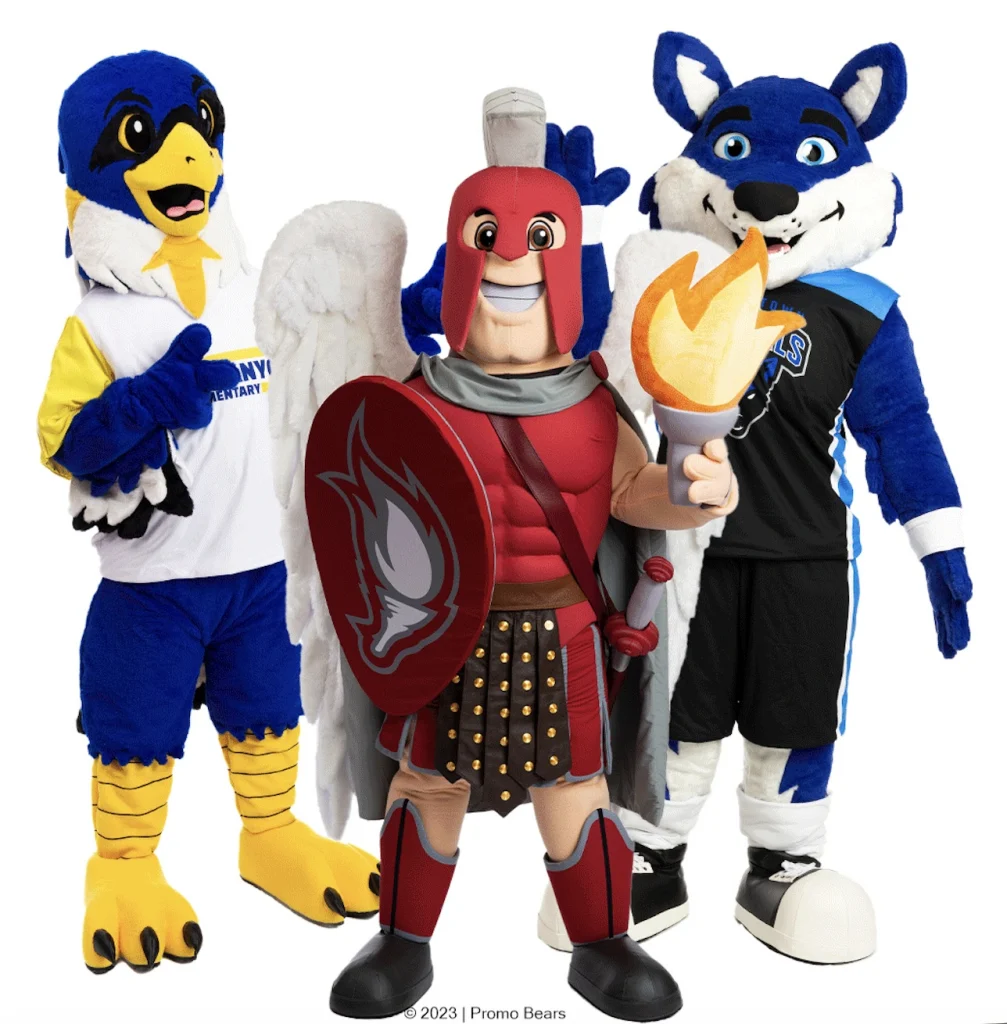
The most iconic mascot of all time is widely considered to be Mickey Mouse, but when it comes to brand mascots specifically, Ronald McDonald, the Michelin Man, and Tony the Tiger consistently top the list. What separates truly iconic mascots from forgettable ones is a combination of strong visual identity, emotional connection, and consistent brand alignment over many years. This article unpacks what makes mascots legendary, which ones have stood the test of time, and what your brand can learn from them.
What makes a mascot truly iconic?
A truly iconic mascot has three core qualities: instant visual recognition, a personality that reflects the brand it represents, and the emotional power to make people feel something. When someone can identify a mascot from a silhouette alone, and associate it with a clear set of values or feelings, that mascot has achieved iconic status.
Visual simplicity plays a major role. The most recognized mascots in history use bold colors, distinctive shapes, and expressive faces that communicate character at a glance. Think of the Michelin Man’s stacked white rings or the Geico Gecko’s bright green color. Neither design is complicated, but both are unmistakable.
Personality consistency is equally important. An iconic brand mascot behaves the same way across every touchpoint, whether it appears on a billboard, a product package, a social media post, or a live event. That consistency builds familiarity, and familiarity builds trust.
Finally, emotional resonance sets legendary mascots apart from average ones. The best mascots make people smile, feel nostalgic, or connect with a deeper brand story. Emotion is what turns a logo character into a cultural symbol.
Who are the most iconic mascots of all time?
The most iconic mascots of all time span both entertainment and brand marketing, and include Mickey Mouse, Ronald McDonald, the Michelin Man, Tony the Tiger, the Geico Gecko, and Smokey Bear. Each of these characters has maintained relevance across generations by evolving visually while staying true to their core personality.
Entertainment mascots that became cultural icons
Mickey Mouse, created in 1928, is arguably the most recognized character on the planet. He started as a cartoon character but became the face of an entire entertainment empire. His design has been refined over the decades, but his cheerful, optimistic personality has never changed. That continuity is precisely what makes him enduring.
Brand mascots that shaped consumer culture
The Michelin Man, known as Bibendum, has represented Michelin tires since 1898, making him one of the oldest brand mascots still in active use. Tony the Tiger, created in 1952 for Kellogg’s Frosted Flakes, became synonymous with energy and enthusiasm. Ronald McDonald transformed a fast food chain into a global family brand. Each of these mascots succeeded because they embodied a clear, consistent brand promise and were given the space to develop a genuine personality over time.
What’s the difference between a sports mascot and a brand mascot?
A sports mascot primarily exists to energize fans, build team spirit, and create a memorable game-day experience, while a brand mascot serves a commercial purpose by representing a company’s values, building customer loyalty, and driving purchasing decisions. Both need strong visual identities, but their goals and audiences differ significantly.
Sports mascots are often physical characters performed live at events. They interact directly with crowds, entertain children, and rally supporters behind a team. Their success is measured in crowd energy and community connection. Think of the Philadelphia Phillies’ Phillie Phanatic or the NBA’s various team mascots, all of which are known for their outrageous, high-energy personalities.
Brand mascots, on the other hand, need to work across a much wider range of media and contexts. They appear in television commercials, on product packaging, on websites, and at trade shows. A brand mascot must communicate the company’s core message clearly and consistently across all of those environments, which requires a more carefully designed and versatile character.
That said, the line between the two is increasingly blurred. Many sports teams have developed their mascots into full brand assets, using them on merchandise, in digital content, and across social media to build year-round engagement beyond the season.
Why do some mascots last for decades while others disappear?
Mascots that last for decades share a common trait: they are treated as long-term brand investments rather than short-term marketing tactics. When a company commits to a mascot consistently, updating it thoughtfully over time without abandoning its core identity, that character builds the kind of deep familiarity that advertising alone cannot buy.
Mascots that disappear tend to fail for predictable reasons. Some are created reactively, designed to chase a trend rather than express a timeless brand truth. Others are abandoned when marketing leadership changes and a new team wants to put its own stamp on the brand. A few simply never connect emotionally because the design was too generic or the personality too thin.
Longevity also requires adaptability. The Michelin Man has been redesigned multiple times since 1898, each update modernizing his look while keeping his recognizable form. Mickey Mouse has evolved from a 1920s cartoon into a sophisticated global icon. The mascots that survive are the ones whose owners understand that evolution and consistency are not opposites. You can refresh a mascot’s visual style while keeping its personality and values completely intact.
How do iconic mascots boost brand recognition and revenue?
Iconic mascots boost brand recognition by giving a company a human-like face that people can connect with emotionally, and they drive revenue by increasing brand recall, encouraging loyalty, and making marketing more memorable. Research across the marketing industry consistently shows that people respond more strongly to characters than to abstract logos or text-based branding.
A well-designed brand mascot works across multiple revenue-driving functions at once:
- It increases brand recall by giving consumers a distinctive visual anchor that stays in memory longer than a wordmark or color palette alone
- It builds emotional loyalty by creating a sense of relationship between the customer and the brand
- It drives merchandise revenue through plush toys, keychains, stickers, and other branded products that fans genuinely want to own
- It creates shareable content that extends organic reach across social media without requiring paid promotion
- It elevates event presence, making trade show booths, sponsorships, and live activations more engaging and memorable
At events and in retail environments, a physical mascot costume creates an immediate focal point. People stop, take photos, and share those moments online. That kind of organic word-of-mouth is extraordinarily difficult to generate through traditional advertising, and a mascot delivers it naturally.
What should a brand consider when creating its own iconic mascot?
When creating a brand mascot, the most important considerations are brand alignment, visual distinctiveness, personality depth, and long-term usability across multiple formats. A mascot that looks great on a t-shirt but fails to translate into a costume, an inflatable, or a digital animation will limit your brand’s flexibility from the start.
Start with your brand’s core values and ask what kind of character would naturally embody them. A financial services company and a children’s snack brand need very different mascot personalities, even if both benefit from having one. The character’s visual design should reflect those values at a glance, without requiring explanation.
Consider scalability early in the process. The best mascots work at every size and in every medium, from a tiny keychain to a giant inflatable at a stadium event. If your mascot design is too complex to reproduce cleanly at small sizes, it will create production problems down the line.
Think about versatility of personality as well. A mascot needs enough character depth to carry different types of content, whether that’s a playful social media post, a serious brand campaign, or an energetic live appearance. Flat, one-note characters tend to feel stale quickly.
Finally, commit to consistency. Decide on your mascot’s name, backstory, color palette, and behavioral traits before you launch, and then protect those elements across every application. The brands with the most iconic mascots treat their characters with the same care they give to their core logo.
How Promo Bears helps you build your own iconic brand mascot
We at Promo Bears have spent over 19 years helping brands, schools, sports teams, and organizations across North America bring their mascot ideas to life. Whether you are starting from a rough concept or a fully developed character, we provide the end-to-end support you need to create something genuinely iconic.
Our process starts with zero upfront commitment. You receive a free concept illustration based on your logo or design idea, with unlimited revisions until the design is exactly right. From there, we handle everything through a dedicated project manager who oversees production from design approval to delivery at your door.
Here is what we offer to help your mascot become a true brand asset:
- Custom mascot costumes built to your approved design, featuring lifelike 3D eyes, an integrated ventilation system, and exceptional wearability, ready in 12 to 16 weeks
- Giant mascot inflatables that create a powerful visual presence at events, stadiums, and retail locations, produced in 3 to 4 weeks
- Plush toys and branded merchandise including keychains, stickers, and stress balls that turn your mascot into a revenue-generating product line
- Mascot stickers produced in approximately 4 weeks, perfect for giveaways, packaging, and fan engagement
Every product goes through thorough quality control before it ships, and result photos are shared for your final approval. We serve clients across the United States and Canada and have created over 4,000 mascots for organizations ranging from local schools to globally recognized brands.
If you are ready to create a mascot that your audience will remember for years, get a free quote and let us show you what is possible. You can also explore our full range of custom mascot products to see how we can bring your brand to life.
Frequently Asked Questions
How much does it typically cost to create a custom brand mascot from scratch?
The cost of a custom brand mascot varies depending on the type of product you need. A professional mascot costume generally ranges from a few thousand dollars to well over ten thousand, depending on complexity, materials, and features like ventilation systems and lifelike eyes. Merchandise items like plush toys, keychains, and stickers are significantly more affordable and can be ordered in bulk to reduce per-unit costs. The best approach is to request a free quote based on your specific design and product needs so you get an accurate estimate without any upfront commitment.
What if I don't have a fully developed mascot design yet — can I still get started?
Absolutely. Many brands come to the process with nothing more than a rough idea, a logo, or a general personality concept, and that is enough to begin. A professional mascot creator can produce a free concept illustration based on your input, which you can then refine through revisions until the design feels right. Starting without a finished design is actually quite common, and the collaborative illustration phase often leads to stronger, more intentional characters than those designed entirely in-house.
How do I make sure my mascot stays relevant as my brand evolves over time?
The key is to distinguish between your mascot’s visual style and its core personality. Visual elements like color shading, proportions, and outfit details can be modernized periodically to keep the character feeling fresh, while the mascot’s name, fundamental traits, and emotional tone should remain consistent. Brands like Michelin and Kellogg’s have successfully refreshed their mascots multiple times over decades without losing recognition precisely because they updated the look without changing the character. Build a simple brand guide for your mascot from day one that documents its personality, voice, and visual rules, so any future updates stay anchored to its original identity.
What are the most common mistakes brands make when introducing a new mascot?
The most common mistake is launching a mascot without a clear, long-term commitment to using it consistently across all brand touchpoints. A mascot that appears in one campaign and then disappears builds no familiarity and delivers no return on investment. Other frequent missteps include designing a character that is too complex to reproduce across different formats, choosing a personality that does not authentically reflect the brand’s values, and failing to give the mascot a name or backstory that makes it feel like a real character. Treating a mascot as a short-term tactic rather than a long-term brand asset is the fastest way to waste the investment.
Can a small business or local organization benefit from having a mascot, or is it only worth it for large brands?
Mascots are arguably even more impactful for small businesses and local organizations because they create an outsized sense of personality and community connection that larger competitors often lack. A local sports team, school, restaurant, or retail shop can use a mascot to build genuine emotional loyalty within its community, generate shareable social media content, and stand out at local events without a massive advertising budget. The investment scales with your needs, and even a single mascot costume or a set of branded merchandise can deliver meaningful brand recognition at the local level.
How do I use my mascot effectively on social media to grow brand awareness?
The most effective social media mascot content puts the character in relatable, entertaining, or behind-the-scenes situations that feel native to the platform rather than purely promotional. Short videos of the mascot interacting with staff, attending events, or reacting to trending topics tend to generate strong organic engagement. User-generated content is also a powerful tool — encourage fans and customers to share photos with your mascot costume at events and repost that content to build community. Consistency matters here too: a mascot that appears regularly across your social channels becomes a recognizable fixture that audiences actively look forward to seeing.
What is the typical turnaround time for getting a mascot costume produced, and how should I plan around it?
A custom mascot costume typically takes 12 to 16 weeks from design approval to delivery, so planning well ahead of your intended launch date or key event is essential. If you also need supporting products like inflatables or merchandise, factor in their individual production timelines as well, since coordinating all elements to arrive together requires early coordination. It is a good idea to build in a buffer of at least two to four weeks beyond the estimated delivery date to allow time for any final adjustments, staff training on wearing the costume, and content creation before your public debut.