
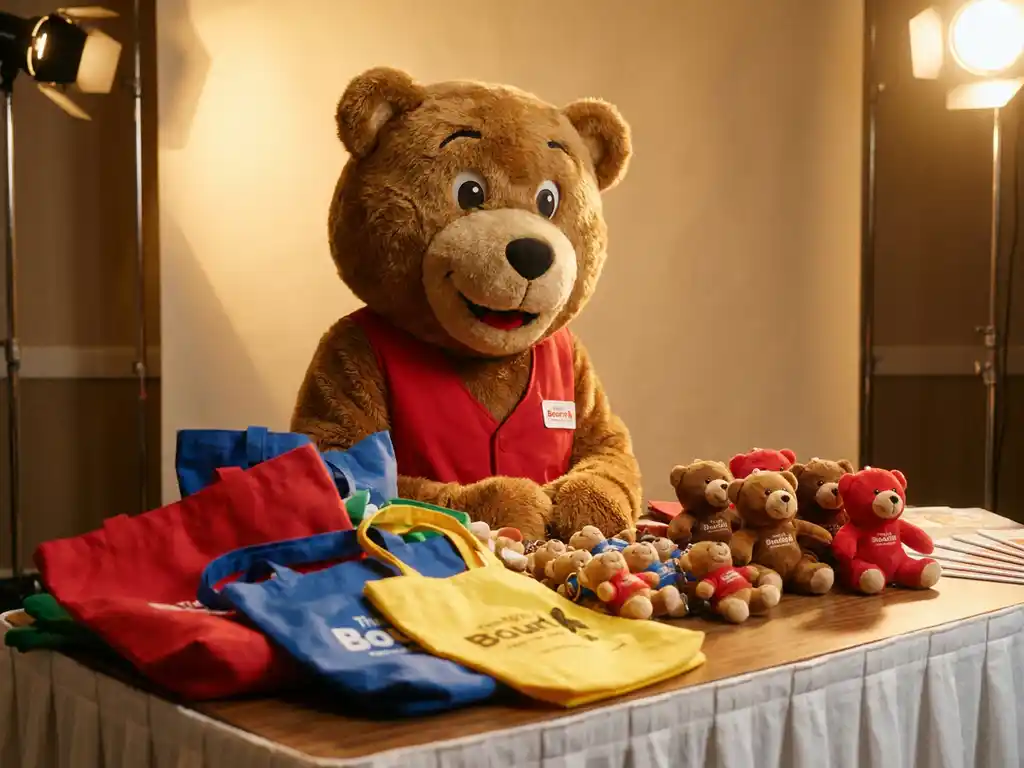
Companies give swag because it works. Branded merchandise puts your name, logo, and message directly into the hands of customers, employees, and prospects in a way that digital advertising simply cannot replicate. A well-chosen item creates a tangible, lasting connection between a person and a brand. The sections below break down exactly how and why company swag delivers real value across a range of situations.
What counts as company swag?
Company swag refers to any branded item a business gives away to promote its identity, reward loyalty, or create goodwill. This includes physical products carrying a company’s logo, colors, or message, distributed free of charge to employees, customers, event attendees, or prospects. The term covers everything from everyday office items to wearables, novelty gifts, and custom-shaped promotional products.
Common categories of company swag include:
- Wearables such as branded T-shirts, caps, and hoodies
- Desk and office items like notebooks, pens, and mugs
- Tech accessories including USB drives, phone stands, and chargers
- Novelty and tactile items such as custom stress balls, keychains, and fidget toys
- Bags, tote bags, and reusable water bottles
- Stickers, pins, and collectible merchandise
The defining quality of swag is that it serves a dual purpose: it offers genuine utility or enjoyment to the recipient while continuously reinforcing brand visibility. The best swag items are ones people actually use, display, or interact with regularly.
How does swag help companies build brand recognition?
Company swag builds brand recognition by turning everyday objects into repeated, passive brand impressions. Every time someone uses a branded mug, wears a logo T-shirt, or squeezes a custom stress ball at their desk, they reinforce a mental association with that brand. Unlike a digital ad that disappears after a few seconds, a physical item stays in someone’s environment for weeks, months, or even years.
This is why the quality and relevance of the item matter enormously. A cheap, forgettable giveaway does little for recognition. A distinctive, well-crafted item that reflects the brand’s personality creates a genuine impression, not just a fleeting one. When recipients use swag in public or share it on social media, that visibility extends even further, reaching audiences the company never directly targeted.
Consistency also plays a role. When swag aligns with a company’s visual identity through accurate colors, clear logos, and on-brand messaging, it reinforces the same signals that customers encounter across all other brand touchpoints. Over time, that consistency builds familiarity, and familiarity builds trust.
Why do companies give swag to employees?
Companies give swag to employees to build a sense of belonging, reinforce company culture, and turn their workforce into brand ambassadors. When employees receive high-quality branded merchandise, it signals that the company values them. That feeling of appreciation has a direct impact on morale, engagement, and retention.
Employee swag also serves a practical promotional function. When a staff member wears a branded hoodie at the gym, carries a company tote bag on the commute, or has a logo item visible during a video call, they are extending the brand’s reach into spaces no marketing budget can easily buy. This organic visibility is authentic and credible in a way that paid advertising rarely achieves.
Onboarding kits are one of the most effective uses of employee swag. A thoughtfully assembled welcome pack on a new hire’s first day creates an immediate emotional connection with the company. It communicates that this is a place that pays attention to detail and takes pride in its identity, which sets a positive tone from day one.
What types of events is swag most effective for?
Company swag is most effective at events where face-to-face interaction creates a natural opportunity for a tangible brand moment. The physical exchange of a well-chosen item reinforces the conversation, the handshake, and the memory of meeting the brand in person. Not all events are equal, though, and matching the right swag to the right context is what separates memorable giveaways from forgotten clutter.
The events where swag consistently delivers the strongest results include:
- Trade shows and exhibitions: High foot traffic and competitive environments make distinctive, tactile items essential for standing out and giving visitors something to carry away.
- Corporate conferences and summits: Premium swag in delegate bags signals quality and leaves a lasting impression on influential attendees.
- Product launches and brand activations: Swag tied to a specific product or campaign reinforces the launch message and extends excitement beyond the event itself.
- Sports and community events: Branded merchandise distributed at sponsored events builds goodwill with local audiences and connects the brand to positive shared experiences.
- Employee events and team days: Swag given at internal gatherings strengthens team identity and creates a shared sense of pride in the organization.
The key variable at any event is relevance. Swag that connects logically to the event theme, the audience’s interests, or the brand’s core message will always outperform a generic giveaway, regardless of how much it costs to produce.
How do companies measure the ROI of swag campaigns?
Companies measure the ROI of swag campaigns by tracking specific outcomes tied to the distribution of branded merchandise, including lead generation, customer retention, event engagement, and brand recall. While swag does not always produce an immediate, direct revenue signal the way a digital ad click might, it contributes measurable value across several dimensions when tracked deliberately.
Practical ways to assess swag ROI include monitoring how many trade show leads came from a booth where swag was distributed, surveying recipients about brand recall after an event, or tracking repeat purchase behavior among customers who received a gift. Unique QR codes or landing page URLs printed on swag items can also create a direct digital bridge between a physical item and a measurable online action.
The longer-term value of swag lies in its cost per impression. A single branded item that someone keeps and uses for a year generates hundreds or thousands of brand impressions at a fraction of the cost of equivalent paid media. For marketing managers under pressure to justify promotional spend, this durability makes well-chosen swag a genuinely defensible investment.
What makes a swag item worth keeping versus throwing away?
A swag item is worth keeping when it offers genuine utility, quality, or emotional appeal to the recipient. Items get thrown away when they feel cheap, redundant, or irrelevant. The decision happens almost instantly, often right at the moment of receiving the item, which is why the physical quality and perceived value of swag matter just as much as the branding on it.
The factors that determine whether swag survives beyond the event bag are:
- Usefulness: Items that solve a small everyday problem, like a quality pen, a reusable bag, or a desk toy, earn a permanent spot in someone’s environment.
- Quality of materials: Flimsy construction signals low brand standards. Durable, well-made items communicate that the company takes quality seriously.
- Distinctiveness: Generic round stress balls with a one-color logo are easy to ignore. A fully custom-shaped item that reflects the brand’s identity or mascot is genuinely interesting and far more likely to be kept.
- Emotional connection: Items tied to a positive experience, a meaningful event, or a brand someone genuinely likes carry sentimental value that extends their lifespan significantly.
- Relevance to the recipient: The best swag is chosen with the audience in mind, not just the brand’s preferences.
The single biggest mistake companies make with swag is prioritizing cost per unit over perceived value per recipient. A smaller quantity of genuinely impressive items will always outperform a large volume of forgettable ones.
How Promo Bears helps companies get swag right
We specialize in custom promotional products that are designed to be kept, not discarded. At Promo Bears, we bring over 19 years of experience in custom design and production to every project, helping brands create merchandise that genuinely reflects their identity and resonates with their audience.
Our custom stress balls are a strong example of what sets us apart. Rather than offering standard shapes with a basic logo print, we produce fully custom-shaped stress balls built 100% to your specifications, using high-quality PU foam that captures fine details and vibrant colors. Key highlights include:
- Fully custom shapes based on your logo, mascot, or product concept
- Specific PMS color matching for precise brand accuracy
- Free concept artwork with unlimited revisions before production begins
- Optional physical prototype approval before committing to a bulk order
- A dedicated project manager guiding your order from design to delivery
- Production in 10 to 12 weeks after design approval, with rush options available
Every project starts with a free concept illustration, so you can see exactly what your swag will look like before a single unit is produced. If you are ready to create company swag that people actually want to keep, request a free quote today and let us show you what is possible.
Frequently Asked Questions
How much should a company budget for a swag campaign?
Budget depends heavily on your goals, audience size, and the type of event or campaign. A general rule of thumb is to prioritize perceived value over volume — spending $10–$20 per item on a smaller, high-quality selection will typically outperform spending $2–$3 per item on a large batch of generic giveaways. For trade shows, factor in the cost per qualified lead rather than cost per item distributed, which reframes swag as a lead-generation investment rather than a pure expense.
What are the most common mistakes companies make when ordering custom swag?
The most common mistakes are ordering too generically, waiting too long, and skipping the proofing process. Many companies choose items based on what’s cheapest or most familiar rather than what their specific audience will actually find useful or impressive. Ordering without requesting a physical prototype or artwork proof is another costly error — color inaccuracies and shape details that look fine on screen can look very different in production, so always approve a sample before committing to a bulk run.
How far in advance should I order custom swag for an event?
For fully custom-shaped or highly detailed items, plan for at least 12–16 weeks ahead of your event date to allow time for design approval, prototype review, production, and shipping. Standard custom swag with simpler branding can often be turned around in 6–8 weeks, but cutting timelines too close increases the risk of rushed decisions and quality compromises. If you have a hard deadline, ask your supplier upfront about rush production options and any associated costs.
Can swag be effective for virtual or remote audiences, not just in-person events?
Absolutely — swag sent directly to remote employees, virtual event attendees, or online customers can be just as impactful as in-person distribution, sometimes more so because the recipient wasn’t expecting a physical touchpoint. Branded unboxing experiences, welcome kits mailed to new hires, or surprise gifts sent to loyal customers create a memorable moment that digital-only communication simply cannot replicate. The key is pairing the physical item with a clear, personal message that connects the gift to a specific reason or occasion.
How do I choose the right swag item for my specific target audience?
Start by thinking about where your audience spends their time and what problems they encounter in their daily routine — the best swag solves a small, real problem or adds a moment of enjoyment to their day. A tech-savvy audience might appreciate a quality desk accessory or cable organizer, while a fitness-oriented crowd would value a branded water bottle or gym bag. Avoid choosing items based purely on what you like as a brand; the recipient’s lifestyle and preferences should always drive the decision.
Is it worth ordering a physical prototype before committing to a bulk swag order?
Yes, especially for custom-shaped or fully bespoke items where fine details, color accuracy, and material feel are critical to the final impression. A prototype lets you catch issues — such as colors that don’t match your brand guidelines, proportions that look off, or materials that feel cheaper than expected — before they are replicated across hundreds or thousands of units. The upfront cost of a prototype is almost always far less than the cost of reprinting or discarding a bulk order that misses the mark.
How can small businesses with limited budgets still use swag effectively?
Small businesses can maximize swag impact by being highly selective — focusing on one or two genuinely impressive items rather than trying to cover every category. Targeting swag distribution strategically, such as giving premium items only to high-value prospects, top customers, or new hires, ensures the investment goes where it will generate the most goodwill and visibility. Starting with a smaller minimum order quantity from a supplier who offers custom options at accessible run sizes is also a practical way to test what resonates before scaling up.