
Evaluating branded merchandise alternatives for events comes down to three core criteria: brand fit, production lead time, and the lasting impression the item leaves on recipients. The best option is rarely the cheapest or the most generic. It is the one that reflects your brand identity, travels well in someone’s daily life, and gives people a reason to remember you long after the event ends. This article walks through the most useful questions to ask when comparing your options, from product types and recall value to supplier vetting and ROI.
What criteria matter most when comparing event merchandise options?
When comparing promotional tools for events, the criteria that matter most are brand alignment, perceived quality, portability, and post-event longevity. An item that looks great on a table but ends up in a trash can by the end of the day delivers no return. The goal is to find merchandise that people actually keep, use, and associate with your brand.
Here are the key criteria to weigh before making a decision:
- Brand fit: Does the item reflect your brand’s personality and values? A tech company handing out beach balls sends a mixed message.
- Quality perception: Low-quality items can actively damage brand perception. Recipients make quick judgments about your brand based on what you hand them.
- Portability: Items that are easy to carry home from an event have a much higher chance of being kept and used.
- Customization depth: Can the product be fully tailored to your design, or are you limited to a logo slapped on a standard shape?
- Lead time: Does the production timeline fit your event schedule? Some products take a few weeks; others take several months.
- Cost per impression: Think beyond unit cost. A higher-priced item that someone uses for years delivers far more impressions than a cheap item that gets discarded.
Balancing these factors against your budget and timeline gives you a practical framework for comparing branded merchandise alternatives side by side.
What are the most common types of branded merchandise used at events?
The most common types of branded merchandise used at events include apparel, drinkware, tote bags, stationery, and small giveaways like keychains, stickers, and enamel pins. These are popular because they are familiar, easy to produce in volume, and relatively affordable at scale.
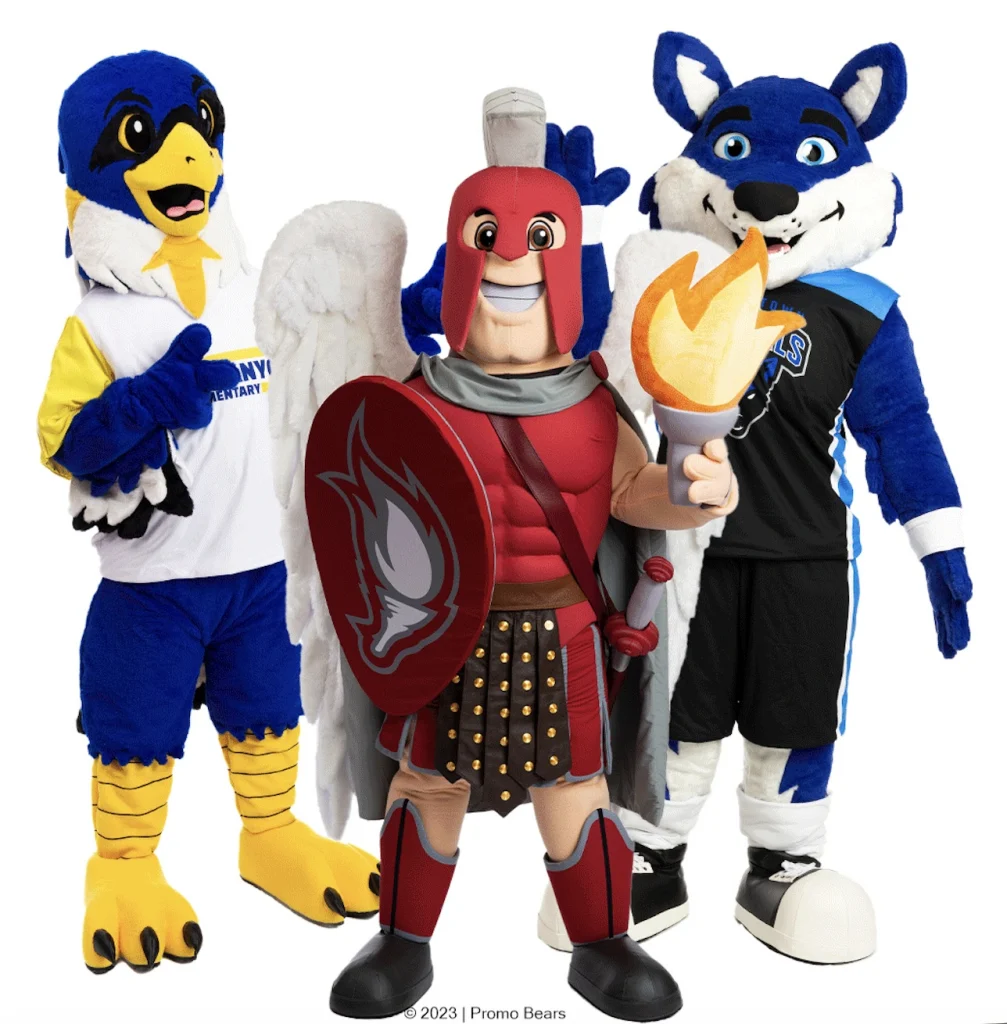
Beyond the standard lineup, many brands are investing in more distinctive formats to stand out. Custom plush toys, mascot-branded merchandise, and inflatable displays are increasingly common at sports events, brand activations, and trade shows. These formats do more than fill a bag. They create a visual moment that draws people in and generates organic social sharing.
From a production standpoint, timelines vary significantly across product types. Stickers can be ready in as little as 7 to 10 days. Enamel pins and keychains typically take 3 to 6 weeks. Plush toys and stress balls require longer lead times, often 10 to 18 weeks depending on customization and shipping method. Planning your merchandise selection around your event date is just as important as choosing the right product.
How does custom mascot merchandise compare to standard branded giveaways?
Custom mascot merchandise consistently outperforms standard branded giveaways in terms of emotional connection, memorability, and brand recognition. While a pen or tote bag communicates your logo, mascot merchandise communicates your brand’s personality. That distinction matters enormously in competitive event environments where dozens of brands are vying for attention at the same time.
Standard giveaways are transactional. They fulfill a function and carry a logo. Custom mascot merchandise, on the other hand, tells a story. A plush version of your mascot, a mascot sticker set, or a mascot-themed stress ball becomes something people genuinely want to keep. Children pick them up first, which means they travel home and stay in households for years.
The trade-off is lead time and investment. Custom mascot merchandise requires a design phase and longer production windows. Mascot stickers take around 4 weeks. Custom stress balls take 10 to 12 weeks. Giant mascot inflatables can be ready in 3 to 4 weeks and serve a completely different purpose: creating an unmissable presence at the event itself rather than a take-home item.
For brands that already have a mascot, the decision is straightforward. Extending that character into merchandise is one of the most cost-effective ways to reinforce brand identity across multiple touchpoints at a single event.
Which event merchandise options deliver the best brand recall?
The event merchandise options that deliver the best brand recall are those that people interact with repeatedly after the event. Wearable items, functional desk accessories, and character-driven products like plush toys or mascot figures consistently score highest for long-term recall because they stay visible in daily life.
Brand recall is driven by frequency of exposure. An item someone sees on their desk every morning creates far more impressions over a year than a brochure they read once. This is why functional items tend to outperform decorative ones in recall studies, and why character-based merchandise outperforms generic logo items in emotional association.
Inflatables and large-format displays work differently. They do not travel home, but they create a powerful in-event impression that drives social media sharing. A giant inflatable mascot at a brand activation can generate hundreds of organic photos and tags in a single afternoon, extending reach far beyond the physical attendees.
The strongest recall strategy combines both: something visually impactful at the event itself paired with a quality take-home item that keeps your brand in front of recipients long after they leave.
What questions should you ask a promotional merchandise supplier before committing?
Before committing to a promotional merchandise supplier, you should ask about customization depth, minimum order quantities, production timelines, quality control processes, and what happens if the final product does not match the approved design. Getting clear answers to these questions upfront prevents costly surprises later.
Here is a practical list of questions to work through:
- Can I see a concept illustration or prototype before production begins? Reputable suppliers offer this as a standard step, not an add-on.
- What is the exact production timeline, including prototyping and shipping? Ask for this broken down by phase, not just a total estimate.
- How many revisions are included in the design process? Unlimited revisions are a sign of a supplier confident in their process.
- What is the minimum order quantity, and does it align with my event needs? Custom products often require higher minimums due to tooling and setup costs.
- Who is my point of contact throughout the project? A dedicated project manager makes a significant difference in communication and accountability.
- What does your quality control process look like before shipping? Ask whether result photos are shared for approval before the order is dispatched.
- Are rush options available if my timeline is tight? Not all suppliers can accommodate this, so confirm early.
A supplier who answers these questions clearly and confidently is one worth working with. Vague answers or reluctance to commit to specifics are warning signs worth taking seriously.
How do you calculate ROI on branded event merchandise?
To calculate ROI on branded event merchandise, divide the value generated by the campaign by the total cost of the merchandise, then multiply by 100. The challenge is defining what “value generated” means for your specific goals, whether that is leads captured, social impressions, customer retention, or direct sales attributed to the event.
A straightforward way to frame it is to think in terms of cost per impression. Take the total spend on a merchandise item and divide it by the estimated number of times that item will be seen or used over its lifetime. A plush toy that sits on a child’s shelf for three years generates thousands of brand impressions at a fraction of a penny each. A cheap pen that breaks in a week generates almost none.
For events specifically, it helps to track a few measurable outputs alongside your merchandise distribution. How many leads were captured at the booth? Did social media mentions increase during or after the event? Did attendees who received merchandise engage more with your brand afterward? These signals help you build a clearer picture of what the investment actually produced.
The most useful ROI calculation is not always the most precise one. Even a rough estimate that shows a quality item outperforming a cheap alternative by a factor of five in impressions per dollar is enough to justify the investment decision.
How Promo Bears helps you choose and create the right event merchandise
We work with marketing managers and brand teams across North America to turn brand identities into merchandise that actually gets kept. Whether you need a quick turnaround on stickers and enamel pins or a fully custom mascot costume and inflatable for a major brand activation, we handle the entire process from concept to delivery.
Here is what working with us looks like in practice:
- A free concept illustration based on your logo or design idea, with unlimited revisions
- A dedicated project manager who oversees every stage of production
- Custom stress balls produced to your exact shape and PMS color specifications, ready in 10 to 12 weeks
- Custom mascot costumes featuring 3D realistic eyes and a built-in ventilation system, ready in 12 to 16 weeks
- Giant mascot inflatables ready in 3 to 4 weeks for high-impact event presence
- Thorough quality control with result photos shared before shipping
We have created over 4,000 mascots and custom merchandise pieces for brands including NASA, Amazon, Walmart, and Red Bull. If you are comparing branded merchandise options for an upcoming event and want a partner who can deliver across multiple product types without compromising on quality, we would love to show you what is possible. Get a free quote and receive a concept illustration with no upfront commitment required.
Frequently Asked Questions
How far in advance should I start ordering branded merchandise for an event?
The safest rule of thumb is to begin the ordering process at least 3 to 4 months before your event date, especially if you are ordering custom products like plush toys, stress balls, or mascot costumes. This buffer accounts for the design and approval phase, production time, shipping, and any unexpected delays. For simpler items like stickers or enamel pins, a 6 to 8 week lead time is usually sufficient, but starting earlier always gives you more room to course-correct if something needs to be revised.
What is a realistic budget per person for branded event merchandise?
A practical per-person budget for event merchandise typically falls between $3 and $15 for standard giveaways, and $20 or more for premium or custom items targeted at high-value prospects or VIP attendees. Rather than applying a flat budget across the board, consider tiering your merchandise strategy: a high-impact take-home item for engaged booth visitors and a lighter item like a sticker or pin for general foot traffic. This approach maximizes the return on your total spend without inflating costs for every attendee.
Can I order multiple types of merchandise from a single supplier, or is it better to use specialists?
Working with a single supplier who can handle multiple product types — such as plush toys, inflatables, and stress balls — is generally more efficient and reduces coordination risk, especially when you are working toward a single event deadline. It means one point of contact, consistent brand standards across all items, and a simpler approval process. The caveat is that the supplier needs to demonstrate genuine expertise across those categories, not just the ability to source them. Ask to see examples of each product type before committing.
What are the most common mistakes brands make when ordering event merchandise?
The most common mistakes are underestimating lead times, prioritizing unit cost over quality, and choosing items that are not relevant to the audience or the event context. Ordering too late is the most damaging because it forces rushed decisions, limits your customization options, and can result in items arriving after the event has already started. Choosing the cheapest available option is the second most costly mistake — low-quality items reflect poorly on your brand and are far less likely to be kept, which eliminates any long-term impression value.
How do I know if a custom merchandise item is worth the higher upfront investment compared to a standard giveaway?
The key question to ask is: will this item still be in someone’s home, office, or daily life six months from now? If the answer is yes, the cost-per-impression math almost always favors the custom item. A standard pen might cost $1 and get used for a week; a custom mascot plush might cost $12 but sit on a desk or child’s shelf for years, generating thousands of brand exposures. If your goal is long-term brand recall rather than just volume distribution, the premium is typically justified.
Is branded merchandise still effective in a digital-first marketing environment?
Yes — and in some ways, physical merchandise is more valuable precisely because digital channels are so saturated. A well-made physical item cuts through in a way that a digital ad cannot: it occupies real space in someone’s environment and creates a tangible, repeated brand association. Additionally, high-quality or visually striking merchandise like giant inflatables or custom mascot items actively drives digital engagement by generating organic social media content from event attendees, effectively bridging the physical and digital channels.
What should I do if my brand does not have an existing mascot but I want character-driven merchandise?
You do not need an existing mascot to benefit from character-driven merchandise — many brands create a custom character specifically for an event or campaign. A good merchandise supplier with design capabilities can help you develop a character concept that aligns with your brand values and visual identity, starting from nothing more than your logo and a brief. The character can then be translated into multiple product formats — plush, stress ball, inflatable — creating a cohesive and memorable merchandise suite without requiring a long-term brand mascot commitment.