
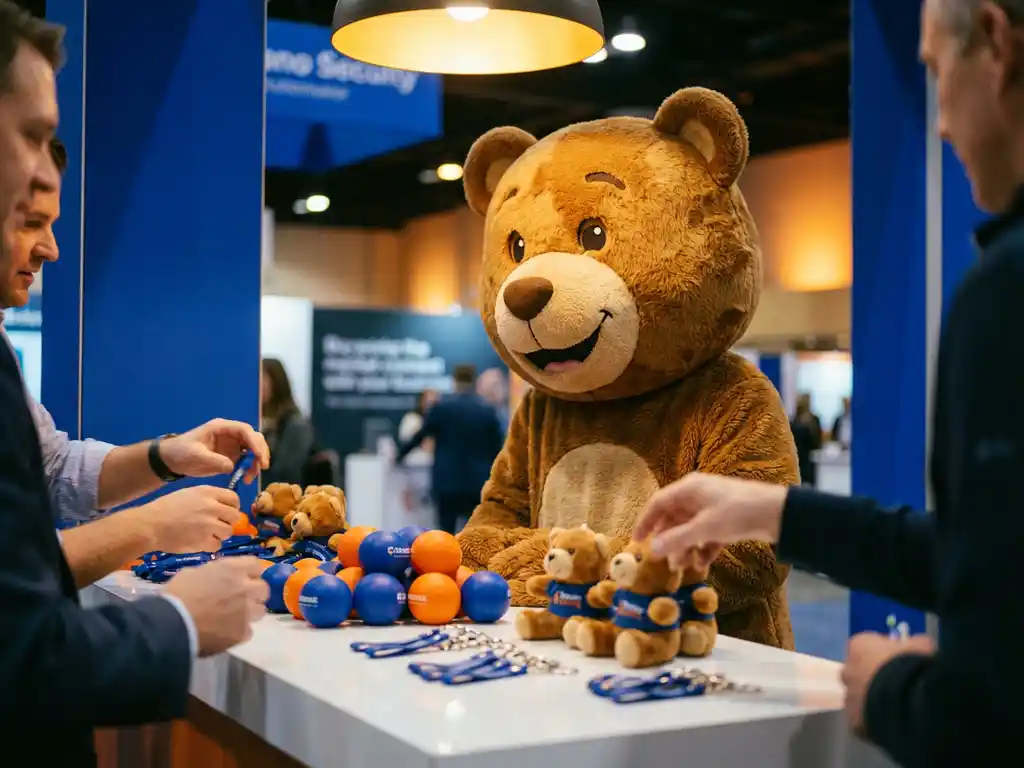
Promotional products have been a cornerstone of brand marketing for decades, and for good reason. When done right, a well-chosen branded item can do something that most digital ads simply cannot: It stays in the room, on the desk, or in the hands of your audience long after the initial interaction. But how exactly do these tangible tools shape buying behavior, and how can your brand make the most of them?
Whether you are a marketing manager planning your next trade show strategy or a brand director looking to justify a promotional budget, understanding the psychology and mechanics behind promotional products is essential. This guide answers the most important questions directly, so you can make smarter decisions for your brand.
What are promotional products and how do they work?
Promotional products are branded physical items given to customers, prospects, or partners to increase brand awareness, reinforce loyalty, and drive purchasing behavior. They work by creating a tangible, lasting connection between a brand and its audience—every time someone uses or sees the item, the brand stays top of mind.
Unlike a digital ad that disappears after a few seconds, a promotional product occupies physical space in someone’s daily life. A branded stress ball on a desk, a custom tote bag at the grocery store, or a logo keychain attached to someone’s keys all serve as constant, passive reminders of your brand. This repeated exposure builds familiarity, and familiarity builds trust.
The mechanism is straightforward: The item creates a positive association through the act of giving, and then continues to reinforce that association every time it is used. This combination of reciprocity and repeated visibility is what makes promotional products uniquely powerful in a brand’s marketing toolkit.
Why do promotional products influence purchasing decisions?
Promotional products influence purchasing decisions because they trigger the principle of reciprocity, build brand recall through repeated physical exposure, and create an emotional connection that digital channels struggle to replicate. When someone receives a useful, high-quality branded item, they feel positively toward the brand and are more likely to choose it when making a purchase.
The psychology behind this is well established. Receiving a gift, even a small one, creates a sense of obligation and goodwill. When your brand is the source of that gift, that positive feeling transfers directly to your product or service. This is especially powerful at trade shows, corporate events, and customer onboarding moments, where first impressions matter most.
There is also a practical dimension. A useful promotional item keeps your brand visible at the exact moment a purchasing decision might be made. A branded pen on someone’s desk, a custom stress ball within reach during a stressful workday, or a logo-printed water bottle during a morning commute all place your brand in moments of daily life. That consistent presence has a measurable effect on recall and preference.
What types of promotional products have the biggest impact?
The promotional products with the biggest impact are those that combine daily utility, high visibility, and strong brand alignment. Items that people use regularly generate the most impressions over time, while products that are well made reflect positively on the brand behind them.
High-impact categories include:
- Apparel and wearables — T-shirts, hats, and bags turn recipients into walking brand ambassadors.
- Desk and office items — Stress balls, pens, and notebooks stay visible in professional environments for months.
- Drinkware — Branded bottles and mugs are used daily, generating consistent impressions.
- Custom-shaped items — Products that reflect a brand’s mascot, logo, or product shape are memorable and shareable.
- Event-specific items — Products tied to a specific campaign or event create a lasting memory anchor.
The key factor is relevance. A promotional product that aligns with your audience’s lifestyle or work environment will be kept and used far longer than a generic item. Quality also matters enormously. A poorly made product signals a poorly run brand, while a durable, well-crafted item communicates professionalism and care.
How do promotional products compare to digital advertising?
Promotional products and digital advertising serve different but complementary roles. Digital ads offer scale, targeting precision, and real-time analytics, while promotional products offer physical permanence, emotional resonance, and a level of brand recall that screens simply cannot match. The most effective brand strategies use both.
Digital advertising is excellent at reaching large audiences quickly and driving immediate clicks or conversions. However, it is also fleeting. An ad disappears the moment someone scrolls past it, and ad fatigue is a genuine challenge in today’s saturated digital landscape. Promotional products, by contrast, continue working long after the initial distribution. A custom item can generate brand impressions over months or even years.
Where promotional products outperform digital ads
Physical branded items create a sensory experience that digital channels cannot replicate. Holding, touching, and using a product creates a stronger memory trace than viewing an image on a screen. This makes promotional products particularly effective for building deep brand loyalty rather than just awareness.
Promotional products also perform well in environments where digital advertising has limited reach, such as trade show floors, in-person events, or direct mail campaigns. They bridge the gap between online brand presence and real-world brand experience in a way that digital alone cannot achieve.
How can brands measure the ROI of promotional products?
Brands can measure the ROI of promotional products by tracking specific metrics before and after distribution, including brand recall rates, lead generation at events, website traffic from campaign-specific URLs, and conversion rates tied to promotional giveaways. The key is to define your goal before distributing the product.
Here is a practical framework for measuring impact:
- Set a clear objective — Are you driving trade show leads, increasing repeat purchases, or improving brand awareness? Your goal determines your metric.
- Use campaign-specific tracking — Include a QR code, unique URL, or promo code on the item to trace direct responses.
- Survey recipients — Follow-up surveys asking whether recipients remember the brand and whether they made a purchase are a reliable qualitative measure.
- Compare event performance — Track lead volume and quality at events where promotional products were distributed versus those where they were not.
- Calculate cost per impression — Divide the total cost of the campaign by the estimated number of times the item will be seen. Long-lasting items like custom stress balls or branded drinkware often deliver an exceptionally low cost per impression over their lifespan.
The longer an item is used, the better the ROI. This is why investing in quality products that people genuinely want to keep is not just a creative decision but a financial one.
What mistakes should brands avoid with promotional products?
The biggest mistakes brands make with promotional products are choosing items based on price alone, neglecting design quality, distributing without a clear strategy, and selecting products that do not align with their audience or brand identity. These errors waste budget and can even damage brand perception.
Cheap, poorly made items send the wrong message. If your brand is associated with quality and professionalism, a flimsy product undercuts that positioning instantly. Audiences notice the difference between a thoughtful, well-crafted item and a generic throwaway, and they respond accordingly.
Distributing without a strategy is equally costly. Handing out products at random without a clear goal, target audience, or follow-up plan means you are spending money without a path to results. Every promotional product campaign should have a defined audience, a distribution moment that makes sense, and a way to connect the item back to a broader marketing goal.
Finally, ignoring customization is a missed opportunity. Generic products with a simple logo print are forgettable. Items that reflect your brand’s personality, mascot, or unique visual identity create a far stronger impression and are much more likely to be kept, used, and shared.
How Promo Bears helps you drive results with promotional products
We specialize in fully custom promotional products designed to make your brand impossible to ignore. From custom mascot costumes to branded inflatables, our end-to-end service covers every stage, from concept to delivery. And when it comes to everyday promotional items, our custom stress balls are among our most popular and impactful options.
Here is what makes our custom stress balls stand out:
- Fully custom shapes based on your own design, logo, mascot, or product concept
- Precise PMS color matching for consistent branding
- Full-color printing available on round stress balls
- Made from durable, high-quality PU foam for a product that lasts
- Free concept artwork and unlimited revisions before production begins
- A dedicated project manager from design to delivery
- Worldwide shipping to the USA, Canada, Europe, Australia, and beyond
Production takes 10 to 12 weeks after design approval, with rush options available for time-sensitive campaigns. Whether you are preparing for a trade show, a corporate giveaway, or a seasonal campaign, our team is ready to bring your brand to life in a form your audience will actually want to keep.
Ready to get started? Contact us today and let us show you what a truly custom promotional product can do for your brand.