
You can improve brand recognition on a marketing budget by focusing on high-visibility, repeatable touchpoints that keep your brand in front of the right people without requiring massive spend. The most effective approach combines physical brand presence, consistent visual identity, and tools that create lasting impressions. Below, we break down the key questions marketers ask when trying to stretch their brand budget further.
What are the most cost-effective ways to build brand recognition?
The most cost-effective ways to build brand recognition are promotional products, a consistent social media presence, community involvement, and referral programs. These tactics create repeated exposure at a relatively low cost per impression. Unlike paid advertising, which stops the moment your budget runs out, physical branded items and word-of-mouth continue working long after the initial investment.
Here are some of the highest-return tactics for building recognition without overspending:
- Promotional merchandise: Branded items like keychains, stickers, and stress balls travel with your audience and generate impressions over time.
- Community sponsorships: Local events and school partnerships put your brand in front of engaged, relevant audiences at a fraction of digital ad costs.
- Consistent visual branding: A recognizable logo, color palette, and tone applied across every touchpoint reinforce memory without spending a dollar more.
- Referral programs: Happy customers who recommend your brand are the most credible marketing channel you have.
- Content marketing: Helpful articles, videos, and guides build trust and drive organic search traffic over time.
The common thread across all of these is repetition and relevance. Brand recognition builds through repeated exposure to the same visual and emotional signals. The more often your target audience sees, touches, or hears about your brand in a meaningful context, the stronger that recognition becomes.
How do promotional products help increase brand visibility?
Promotional products increase brand visibility by putting your logo and identity directly into the hands of your target audience. Unlike a digital ad that disappears after a scroll, a physical branded item stays in someone’s environment for weeks, months, or even years. Every time they use it, they see your brand again, and so does everyone around them.
The visibility effect compounds when products are used in public. A branded tote bag at a grocery store, a custom stress ball on a desk, or a mascot sticker on a laptop can all generate impressions far beyond the original recipient. This is passive brand exposure that costs you nothing after the initial investment.
Promotional products also create an emotional connection. Receiving something physical feels more personal than seeing a banner ad. That sense of goodwill makes people more likely to remember your brand positively, which is exactly what you want when building recognition over time.
What’s the difference between brand recognition and brand awareness?
Brand recognition is the ability of your audience to identify your brand from visual cues like your logo, colors, or mascot. Brand awareness is the broader understanding that your brand exists and what it stands for. Recognition is a component of awareness, but they are not the same thing.
Think of it this way: a person might be aware that a company exists because they heard about it once, but they cannot pick out its logo in a lineup. That is awareness without recognition. Conversely, someone might instantly recognize a logo without knowing much about what the company actually does. That is recognition without deep awareness.
For most marketing budgets, recognition should come first. It is easier to measure, faster to build, and directly tied to purchase behavior. When a customer recognizes your brand at the point of decision, whether that is a store shelf, a search results page, or an event, they are more likely to choose you over an unfamiliar competitor.
How can a custom mascot improve brand recognition?
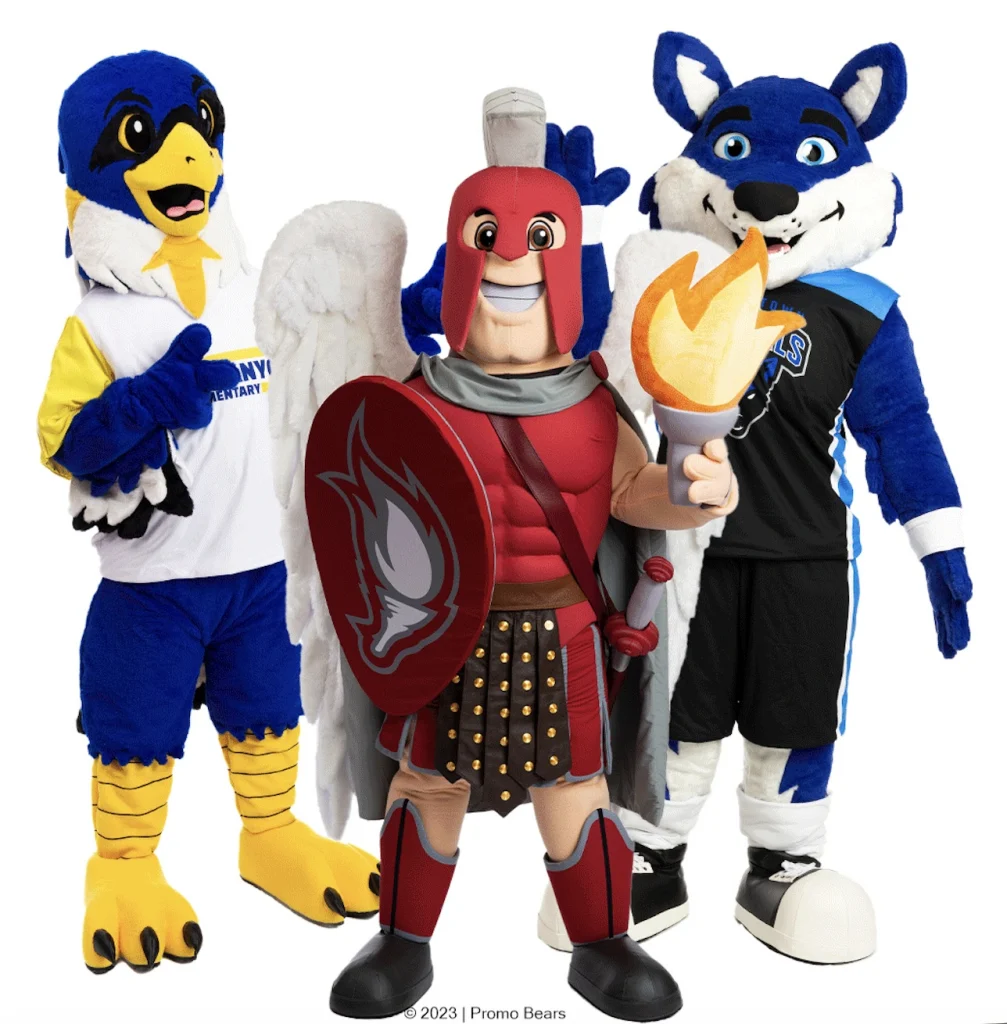
A custom mascot improves brand recognition by giving your brand a distinct, memorable visual identity that people associate with you instantly. Mascots are processed faster than text and remembered longer than logos alone. They create a consistent character that shows up across your events, merchandise, social media, and physical spaces, reinforcing your brand every single time.
Mascots work especially well for recognition because they are inherently human and approachable. People form emotional connections with characters in a way they simply do not with abstract logos. That emotional link is what turns casual exposure into genuine recognition and, eventually, brand loyalty.
A mascot also scales across multiple formats. The same character can appear on a custom mascot costume at a live event, on plush toys sold as merchandise, on stickers distributed at trade shows, and as a giant inflatable outside your store. Each of those touchpoints reinforces the same visual identity, which is exactly how strong brand recognition is built.
Which marketing budget allocation gets the best brand recognition results?
The marketing budget allocation that gets the best brand recognition results typically combines a strong visual identity foundation with a mix of physical presence and digital reinforcement. There is no single perfect split, but brands that invest in tangible, reusable brand assets alongside targeted digital content tend to outperform those that focus exclusively on paid advertising.
A practical framework for a recognition-focused budget might look like this:
- Brand identity and assets: Invest first in a strong logo, color system, and brand character. Everything else builds on this foundation.
- Physical brand presence: Allocate a portion to promotional products, mascot costumes, or inflatables that generate real-world visibility at events and in retail environments.
- Owned content: Maintain a consistent presence on the channels your audience actually uses, whether that is social media, email, or search.
- Paid amplification: Use paid channels to boost content that is already performing well organically, rather than relying on paid ads as your primary recognition driver.
- Measurement and iteration: Reserve a small portion for tracking what is working so you can shift budget toward the highest-performing tactics each quarter.
The key principle is that recognition is built through repetition. Spreading your budget across tactics that all reinforce the same visual and emotional signals will always outperform a single high-spend channel used in isolation.
How do you measure whether your brand recognition is improving?
You measure brand recognition improvement through a combination of direct surveys, search data, and behavioral signals. The most reliable method is a brand recognition survey that shows respondents your logo, mascot, or other visual assets and asks whether they can identify your brand. Running this survey at regular intervals gives you a clear trend line over time.
Beyond surveys, several indirect signals indicate that recognition is growing:
- Branded search volume: An increase in people searching directly for your brand name suggests growing recognition.
- Direct website traffic: People who type your URL directly already know who you are.
- Social media mentions and tags: Unprompted mentions indicate your brand is top of mind.
- Event engagement: Higher foot traffic at your branded booth or mascot appearance compared to previous events.
- Referral traffic: More people arriving via word of mouth signals that others are recommending you unprompted.
The most important thing is to establish a baseline before you launch a new recognition campaign. Without a starting point, you cannot accurately measure progress. Set your benchmark, run your campaign, and then measure the same indicators again after 90 days to see what moved.
How Promo Bears helps you improve brand recognition
We specialize in giving brands a physical presence that people actually remember. From custom mascot costumes that take 12 to 16 weeks to produce, to promotional items like stress balls (ready in 10 to 12 weeks), stickers (7 to 10 days), and giant mascot inflatables (3 to 4 weeks), we cover the full range of branded touchpoints that drive recognition at events, in retail, and on campus.
Here is what working with us looks like:
- A free concept illustration based on your logo or design idea, with unlimited revisions.
- A dedicated project manager who handles everything from design to delivery.
- High-quality products built to represent your brand at its best, every single time.
- A full range of merchandise formats so your mascot or brand character shows up consistently across every channel.
If you are ready to give your brand a presence that people recognize and remember, we would love to help you get started. Get your free quote and see what we can create for you.
Frequently Asked Questions
How long does it typically take to see measurable brand recognition improvements after launching a campaign?
Most brands begin seeing measurable shifts in brand recognition within 90 to 180 days of consistently applying a multi-channel strategy. However, the timeline depends heavily on your starting baseline, campaign frequency, and how many touchpoints you are activating simultaneously. Physical assets like mascot costumes and promotional products tend to accelerate recognition faster in local or event-heavy markets because they create repeated in-person impressions that digital alone cannot replicate.
What are the most common mistakes brands make when trying to build recognition on a limited budget?
The most common mistake is inconsistency — using different logos, color palettes, or messaging across channels, which forces your audience to relearn your brand every time they encounter it. Another frequent error is treating paid advertising as the primary recognition driver and abandoning it the moment budget tightens, which resets all the progress made. The most budget-efficient approach is to invest first in reusable, long-lasting brand assets — like a strong visual identity, a mascot, and quality promotional products — that continue generating impressions long after the initial spend.
Can small businesses and startups realistically compete with larger brands on recognition?
Absolutely — and in many cases, smaller brands have a structural advantage in local and niche markets. A startup that shows up consistently at community events with a memorable mascot, distributes quality branded merchandise, and maintains a cohesive visual identity can build stronger local recognition than a large national brand with no physical presence in that community. The key is to dominate a specific, well-defined audience rather than trying to reach everyone at once.
How do I choose the right promotional products to maximize brand visibility?
Choose promotional products based on three criteria: relevance to your audience’s daily life, portability or public use, and durability. Items that travel with people — like tote bags, stickers, keychains, and drinkware — generate far more impressions than items that stay hidden in a drawer. You should also consider how well the product aligns with your brand’s personality; a tech company giving out custom USB drives reinforces their identity in a way that a generic pen simply would not.
Is a mascot a good investment for B2B brands, or is it primarily a B2C strategy?
Mascots are increasingly effective in B2B contexts, particularly for brands that attend trade shows, conferences, or industry events where standing out in a crowded exhibit hall is critical. A well-designed mascot creates an immediate visual anchor that draws foot traffic and makes your booth more memorable than competitors relying solely on banners and brochures. B2B mascots work best when they reflect the brand’s professional tone — think approachable and distinctive rather than cartoonish — and are supported by consistent use across digital content, merchandise, and event materials.
How many brand touchpoints does someone typically need before they reliably recognize a brand?
Research generally supports the idea that it takes between 5 and 7 consistent exposures before a brand becomes reliably recognizable to a new audience member, though this number can vary based on the distinctiveness of your visual identity and the context of each exposure. High-impact touchpoints — like seeing a mascot at a live event or receiving a physical branded item — tend to carry more memory weight than passive digital impressions. This is why combining physical presence with digital reinforcement accelerates recognition faster than either channel used alone.
What should I prioritize first if I'm starting a brand recognition strategy from scratch?
Start with your brand identity foundation: a distinctive logo, a defined color palette, and a clear brand character or mascot concept. Without a consistent visual system in place, every dollar you spend on promotional products, events, or content marketing is less effective because there is no unified identity for your audience to recognize and remember. Once your visual identity is locked in, your next priority should be acquiring at least one high-visibility physical asset — such as a mascot costume or a set of branded promotional items — so you can begin generating real-world impressions at your next event or activation.