
The 3 7 27 rule of branding states that it takes 3 exposures for someone to recognize your brand, 7 exposures for them to remember it, and 27 exposures before they trust it enough to take action. This framework reflects how human memory and trust are built gradually through repeated, consistent contact with a brand. The sections below break down how the rule works, where it comes from, and how to apply it to real marketing campaigns.
How does the 3 7 27 rule actually work?
The 3 7 27 rule works as a progression model for brand familiarity. At 3 exposures, a person begins to recognize your brand as something they have seen before. At 7 exposures, recognition deepens into memory, meaning they can recall your brand without a prompt. At 27 exposures, that memory has been reinforced enough to build genuine trust, which is the threshold at which most people feel comfortable enough to buy, engage, or recommend.
The rule is not a guarantee that every person will convert after exactly 27 touchpoints. It is a framework that helps marketers understand the scale of effort required to move someone from a complete stranger to a confident customer. The gap between 7 and 27 is where most brands underinvest, stopping their campaigns too early and wondering why awareness does not translate into sales.
Each stage demands a different type of content and channel. Early exposures are about visibility and consistency. Later exposures are about depth, trust signals, and proof of value.
Where does the 3 7 27 branding rule come from?
The 3 7 27 rule is widely attributed to branding strategist and author Kristen Sheridan, though it builds on decades of marketing research into consumer psychology and the science of persuasion. It evolved from earlier concepts like the rule of 7, which has roots in advertising theory from the 1930s, and was refined to reflect the layered nature of modern brand trust rather than simple awareness.
The core insight behind the rule draws from cognitive science: the brain filters out most of what it encounters as irrelevant noise. Repetition signals relevance. The more times someone encounters a consistent brand message, the more the brain categorizes that brand as familiar and therefore safe. The jump from 7 to 27 reflects the additional reinforcement needed to move past passive recognition into active trust, which is a much higher cognitive and emotional bar.
While the exact numbers are a model rather than a laboratory measurement, the underlying principle is well supported by behavioral research on familiarity, preference, and decision-making.
What counts as a brand exposure under this rule?
A brand exposure is any moment when a person encounters your brand in a meaningful and recognizable way. This includes seeing your logo, hearing your brand name, interacting with your product, watching an ad, reading a social post, receiving branded merchandise, or spotting your mascot at an event. The key word is meaningful: a glancing impression that does not register consciously may not count as a full exposure in the way the rule intends.
Quality matters as much as quantity. A branded stress ball sitting on someone’s desk creates dozens of passive impressions over weeks or months, which is why physical branded merchandise can be one of the most efficient exposure-builders available to marketers. A single piece of merchandise can generate far more touchpoints than a single digital ad, and it does so in an environment where the person has chosen to keep the item.
Exposures across different channels and formats tend to compound more effectively than repeated exposures on a single channel. A person who sees your brand on social media, then receives a branded product, then encounters your mascot at an event is building a richer, more layered memory than someone who simply sees the same banner ad multiple times.
How does the 3 7 27 rule apply to physical brand activations?
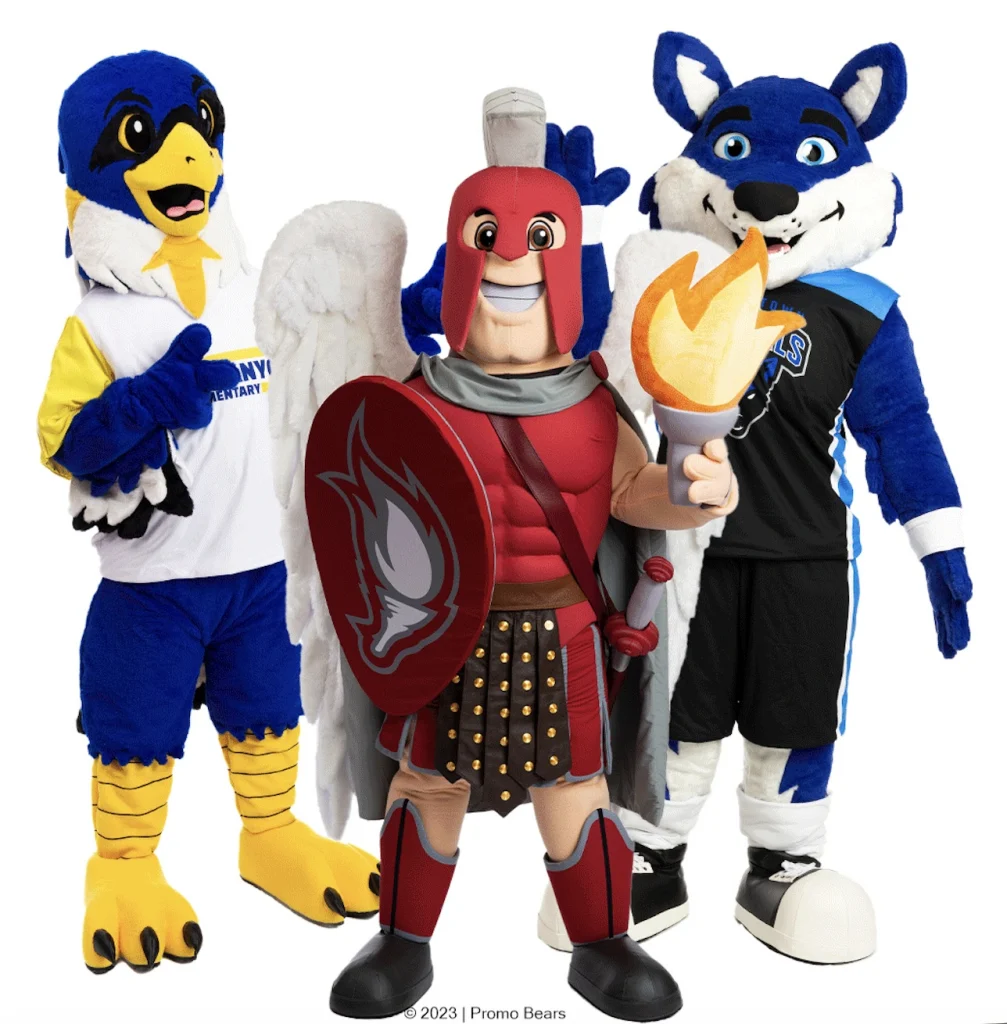
Physical brand activations are one of the most powerful ways to stack multiple exposures into a single moment. When someone attends an event, a well-executed brand presence can generate several distinct touchpoints in the space of an hour: they see your signage, interact with a team member in branded apparel, receive a piece of merchandise, and perhaps encounter a giant inflatable or a custom brand mascot that makes the experience genuinely memorable.
That concentration of exposure is significant under the 3 7 27 framework because emotional intensity amplifies memory formation. A person who laughs with a mascot character, takes a photo, and walks away with a branded plush toy has experienced something far more memorable than a passive digital impression. Those emotionally charged touchpoints may carry more weight than several standard exposures.
Physical activations also extend their reach beyond the event itself. Branded merchandise travels home with the recipient and continues generating exposures in their personal environment. Social media posts from attendees extend the reach to audiences who were not present. A single well-planned activation can contribute a meaningful cluster of touchpoints toward that 27-exposure threshold.
What’s the difference between the 3 7 27 rule and the rule of 7?
The rule of 7 states that a prospect needs to see or hear your marketing message at least 7 times before they take action. The 3 7 27 rule is a more granular version that breaks the journey into three distinct psychological stages: recognition at 3, recall at 7, and trust at 27. The rule of 7 focuses on a single conversion threshold, while the 3 7 27 rule maps the full arc of a brand relationship.
In practical terms, the rule of 7 is useful for short-term campaign planning where the goal is a specific conversion, such as a product launch or a promotional offer. The 3 7 27 rule is more useful for long-term brand building, where the goal is to move an audience from strangers to loyal advocates over time.
Both rules agree on one thing: a single exposure is almost never enough. The difference is in how ambitiously you plan your touchpoint strategy. Brands that operate under the rule of 7 may stop too soon. Brands that understand the 3 7 27 rule build campaigns designed to sustain contact long enough to generate real trust.
How many brand touchpoints should a campaign realistically target?
A realistic campaign should target at least 7 touchpoints for short-term conversion goals and 20 or more for trust-based brand building. The exact number depends on your industry, your audience’s familiarity with your category, and the quality and emotional weight of each touchpoint. High-impact physical experiences count for more than low-attention digital impressions, so a campaign that mixes channels intelligently can reach the trust threshold more efficiently.
Here are the key factors that influence how many touchpoints your campaign needs:
- Audience familiarity: If your audience already knows your category well, fewer exposures are needed to build brand recognition within it.
- Touchpoint quality: Emotionally engaging experiences, such as live events and branded merchandise, carry more memory weight than passive impressions.
- Channel diversity: Exposures across multiple formats and environments reinforce each other more effectively than repetition on a single channel.
- Consistency: Every touchpoint must look and feel like the same brand. Inconsistent visuals or messaging reset the familiarity clock.
- Campaign duration: Trust is built over time. A campaign spread across several months will generally outperform a short burst of high-frequency activity.
A practical approach is to map your campaign against the three stages of the 3 7 27 rule. Plan your first three touchpoints for broad awareness, your next four for deeper engagement and recall, and your remaining touchpoints for trust-building content such as testimonials, product demonstrations, in-person experiences, and branded merchandise that stays in the recipient’s environment long after the campaign ends.
How Promo Bears helps you hit your brand touchpoint goals
Reaching 27 meaningful brand exposures requires a strategy that goes beyond digital ads. Physical branded products and mascot experiences give your brand a presence in the real world that keeps generating impressions long after the initial contact. That is exactly where we come in.
At Promo Bears, we help marketing teams and brand directors build touchpoint-rich campaigns through a full range of custom promotional products and mascot experiences:
- Custom mascot costumes ready in 12 to 16 weeks, designed to create high-impact, emotionally memorable brand moments at events and activations.
- Giant mascot inflatables delivered in 3 to 4 weeks, ideal for outdoor events, retail environments, and sports activations where visibility is everything.
- Custom stress balls produced in 10 to 12 weeks with fully custom shapes and PMS color matching, built to sit on desks and generate passive brand impressions for months.
- Plush toys, keychains, stickers, and more to give your audience something tangible to take home, share, and remember.
Every project starts with a free concept illustration and unlimited revisions, so you see exactly what you are getting before production begins. A dedicated project manager handles everything from design to delivery, making us the kind of end-to-end partner that takes the complexity out of multi-product campaigns.
Ready to build a campaign that actually reaches your audience 27 times? Get your free quote and let us help you make every touchpoint count.
Frequently Asked Questions
How long does it typically take to reach 27 brand exposures with a real audience?
The timeline varies widely depending on your campaign frequency, channel mix, and budget, but most trust-building brand campaigns are designed to run over 3 to 6 months. A high-frequency digital campaign might technically deliver 27 impressions in days, but passive, low-attention exposures do not carry the same psychological weight as meaningful touchpoints. A more realistic approach is to plan for consistent, quality contact over several months, mixing channels like social media, email, live events, and physical branded merchandise to build genuine familiarity rather than just impression volume.
Can I apply the 3 7 27 rule to a small business or startup with a limited budget?
Absolutely — in fact, the 3 7 27 rule is especially useful for small businesses because it encourages strategic prioritization over spray-and-pray spending. Rather than spreading a limited budget thin across every channel, focus on a smaller audience and reach them more deeply and consistently. A combination of organic social content, email nurturing, and a single high-quality physical touchpoint like a branded product can move a targeted audience through all three stages without requiring an enterprise-level budget.
What's the biggest mistake brands make when trying to apply the 3 7 27 rule?
The most common mistake is treating all exposures as equal and simply counting impressions rather than evaluating their quality and memorability. Brands often assume that running a high-volume ad campaign automatically moves people toward trust, but low-attention digital impressions accumulate slowly toward that 27-exposure threshold. The smarter approach is to deliberately mix high-impact touchpoints — such as live activations, mascot experiences, and branded merchandise — with digital channels so that each exposure carries more cognitive and emotional weight.
How do I know which stage of the 3 7 27 framework my audience is currently in?
You can estimate your audience’s stage using a combination of brand awareness surveys, engagement metrics, and behavioral data. Low brand recall in surveys and minimal organic search volume for your brand name suggests most of your audience is still in the recognition phase (0–3 exposures). Rising direct traffic, branded search queries, and social mentions indicate you are entering the recall phase (7 exposures). High conversion rates, repeat purchases, and referral activity are strong signals that a segment of your audience has crossed into the trust phase at or beyond 27 exposures.
Does the 3 7 27 rule apply differently for B2B versus B2C brands?
Yes — while the underlying psychology is the same, B2B brand relationships typically require more touchpoints and a longer timeline to reach the trust threshold because purchase decisions involve more stakeholders, higher risk, and longer evaluation cycles. In B2B contexts, trust-building touchpoints like case studies, in-person events, branded gifts, and direct relationship-building carry disproportionate weight compared to passive digital impressions. B2C brands with lower-stakes purchases may find that a well-executed mix of digital and physical touchpoints can reach the trust threshold faster, especially when merchandise or event experiences are involved.
How should I sequence different types of touchpoints across the three stages of the rule?
A practical sequencing strategy is to use broad, high-visibility touchpoints in the recognition phase — think social ads, out-of-home placements, and event signage — to get your brand in front of new audiences. In the recall phase, shift toward more engaging formats like video content, email sequences, and in-person interactions that encourage people to spend more time with your brand. In the trust phase, prioritize proof-based content such as testimonials, product demonstrations, and physical branded merchandise that lives in the recipient’s environment and keeps reinforcing your brand long after the initial interaction.
Can branded merchandise alone carry a campaign to the 27-exposure threshold?
Branded merchandise is one of the most efficient single touchpoints available because a well-chosen item — like a custom stress ball on a desk or a plush toy on a shelf — generates dozens of passive impressions over weeks or months from a single distribution moment. However, merchandise works best as a powerful anchor within a broader multi-channel campaign rather than a standalone strategy. Pairing physical products with digital touchpoints, live activations, and consistent brand messaging creates the layered, cross-format exposure pattern that builds trust most effectively.